Cleansing oil · Beauty of Joseon
Beauty of Joseon Ginseng Cleansing Oil: I won't rebuy it, and you still might need it
Heads up: some links below are affiliate links, which means I may earn a small commission if you buy through them — at no extra cost to you. I bought this bottle with my own money, and my honest opinion is never for sale.
The short answer
I am going to start with the part most reviews put at the end. I am not buying Beauty of Joseon Ginseng Cleansing Oil again, because the smell is not for me. The texture is lovely, it rinses clean, it is well made. The smell just is not mine.
Now the part that matters more than my nose. Of the Korean oils I have read closely, this is the only one with no fragrance listed anywhere on the label. If you have to avoid fragrance, that may make this the one bottle here you can actually use, strong smell and all. Won't repurchase — scent
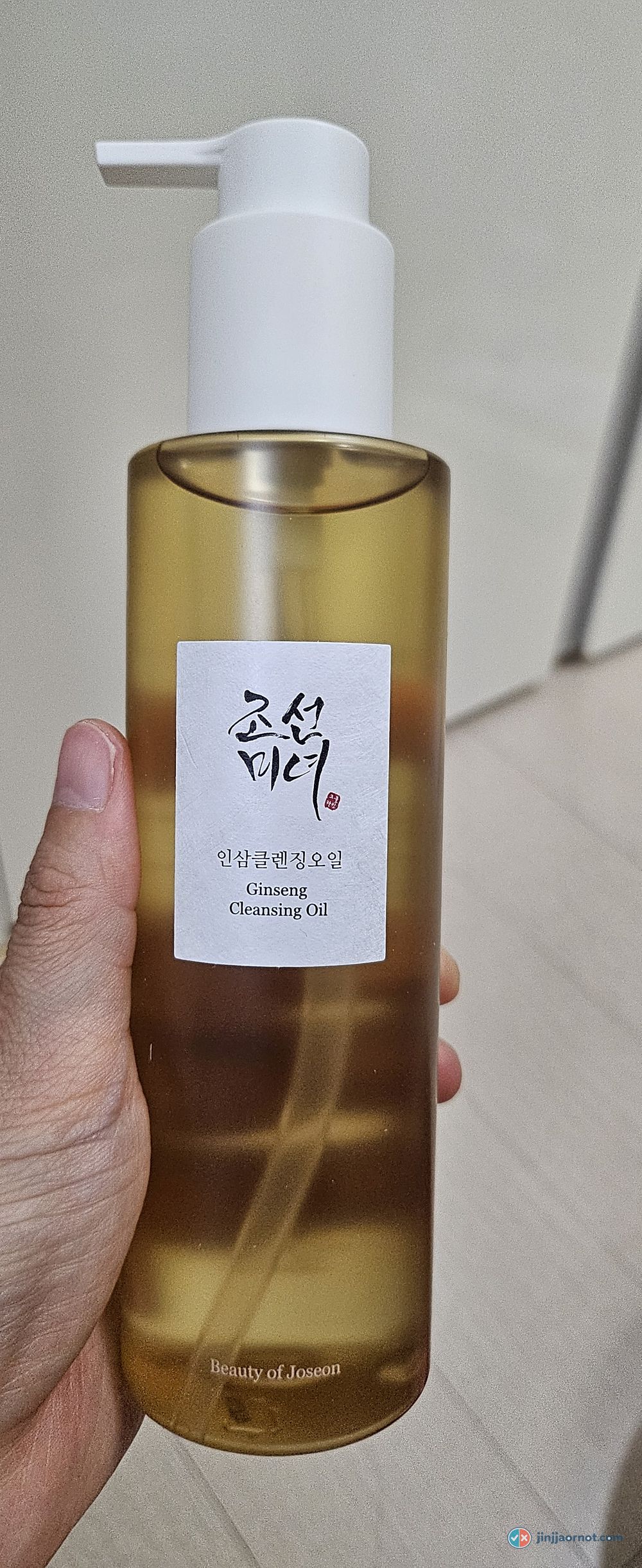
No fragrance listed, and the strongest smell of the five
This sounds like a contradiction and it is not one. It is the most useful thing on this page.
Added fragrance is an ingredient a brand puts in to make a product smell a certain way, and it has to be declared. Smell is whatever the bottle happens to smell like. A formula full of aromatic plant oils can be honestly fragrance-free and still fill your bathroom.
That is exactly what is happening here. The scent comes from the plants themselves, and the list names them: sage, mugwort, basil, black cumin. The label is accurate. My nose is also accurate. Both things are true.
The ginseng is not where you think it is
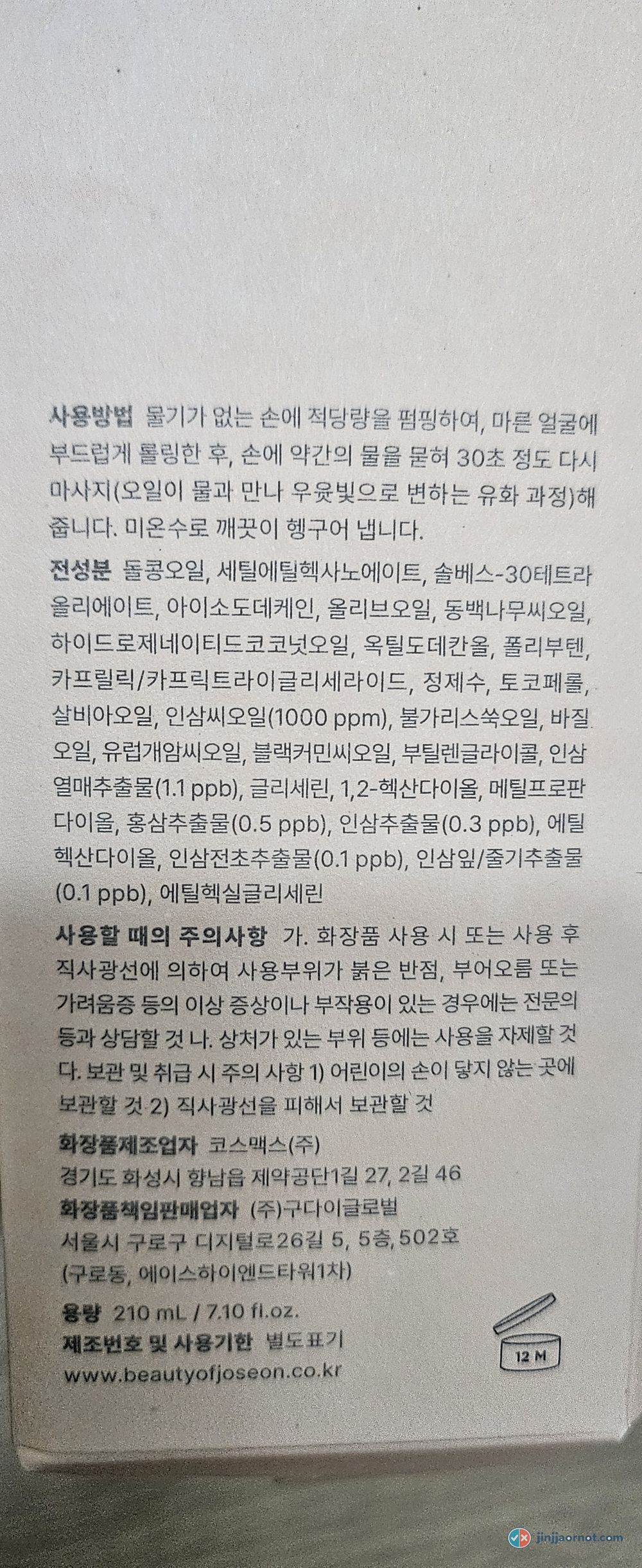
Read the first line and the product changes shape. Wild soybean oil is the first ingredient. Which means this oil is built on the same base that ma:nyo puts in its product name.
| On the Korean label | Printed | As a percentage |
|---|---|---|
| Wild soybean oil | 1st ingredient | — |
| Ginseng seed oil | 1,000 ppm | 0.1% |
| Ginseng berry extract | 1.1 ppb | 0.00000011% |
The ginseng seed oil at 1,000ppm is a real, ordinary use level and I am not going to pretend otherwise. But the five ginseng extracts the brand story rests on, root, berry, red ginseng, leaf and stem, are printed in parts per billion, which is a thousand times smaller again.
None of that is a scandal. Plant extracts are often used at low levels by design, and Korea makes the brand print the number, which is why you get to see it at all. It just means one thing for your shopping: do not buy this bottle for the ginseng. Buy it for the soybean-oil base and the empty fragrance line.
How it behaves
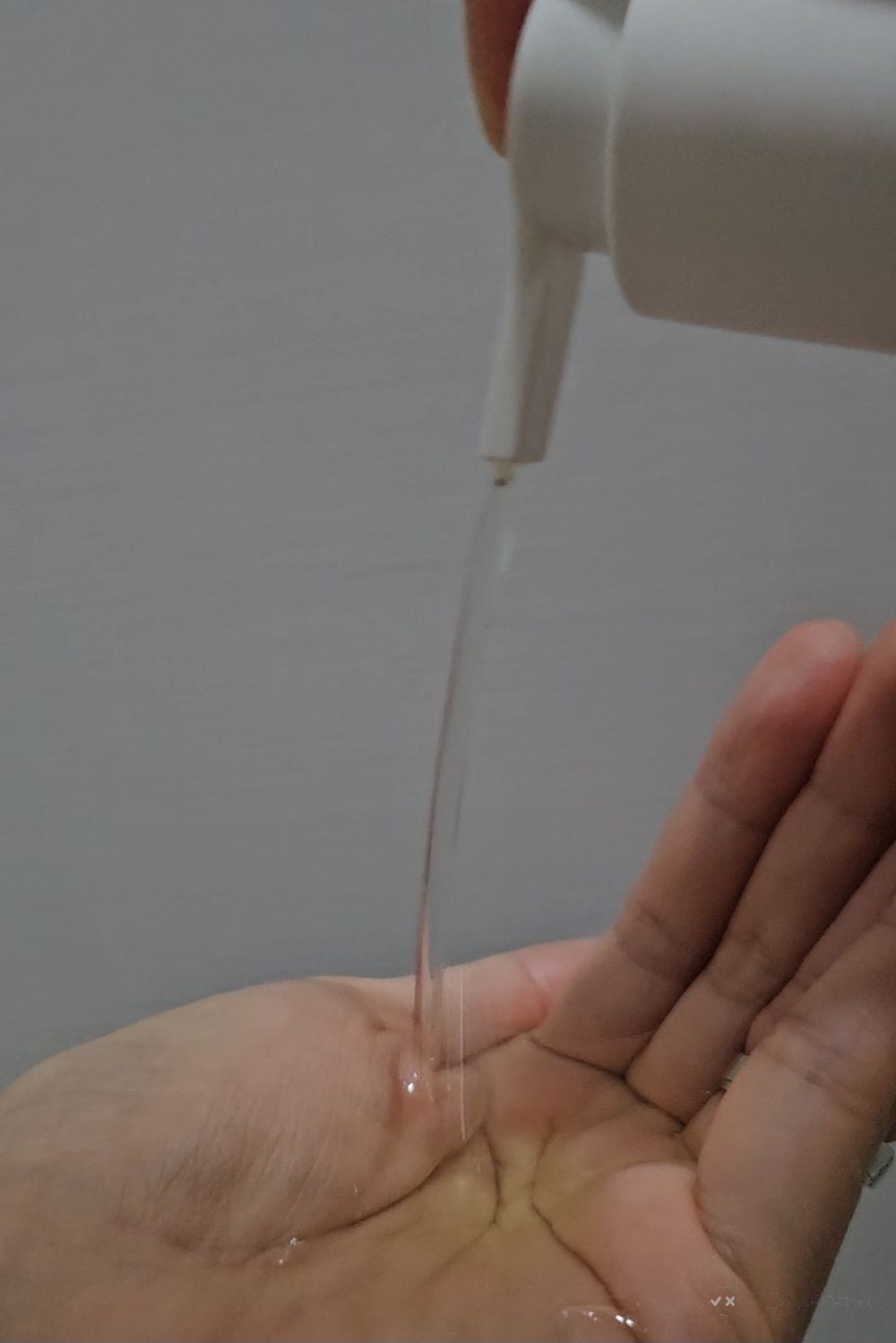
Light, quick, and it rinses without leaving anything behind. The brand walks you through an emulsifying step and stops there, which is worth following: roll it on dry skin, add water, work it for about thirty seconds, then rinse.
On cleaning power I could not separate it from the other four. That is the useful result rather than a disappointing one, because it means the only things left to choose on are weight and smell, and you already know which way the smell goes here.
So who is this bottle for
Buy it if fragrance is on your do-not-use list. Of the three Korean oils I read closely, it is the only one with nothing of the sort declared, and that is a real, checkable fact rather than a brand claim.
Buy it if you want a plant-oil base. Anua and celimax both open with a synthetic ester. This one opens with soybean oil. If that distinction matters to you, this is your bottle of the group.
Buy it if a herbal, almost medicinal smell sounds good to you rather than bad. Plenty of people like exactly that, and for them this is a genuinely good oil that happens to be 210ml, the largest bottle of the five.
Skip it if you are buying ginseng, and skip it if strong smells put you off — in which case the comparison has the one I could not detect any scent from at all.
Also on Stylevana
Beauty of Joseon Ginseng Cleansing OilUS →These are affiliate links, tracked through Awin — if you buy through one I may earn a small commission, at no extra cost to you. The button opens a search rather than a fixed product page, because Stylevana re-issues its product addresses. Search checked 29 Aug 2026.
Questions people ask
Does Beauty of Joseon Ginseng Cleansing Oil have fragrance?
No fragrance is listed anywhere on the Korean label, and it is still the strongest-smelling of the five Korean oils I tested. The smell comes from the plant oils in the formula, including sage, mugwort, basil and black cumin. No added fragrance and no smell are two different things, and this bottle is the clearest example of that I own.
How much ginseng is actually in it?
Ginseng seed oil is printed at 1,000ppm, which is 0.1%, and it sits about thirteen ingredients down the list. The five ginseng extracts the brand story is built on, root, berry, red ginseng, leaf and stem, are printed in parts per billion. The berry extract is 1.1ppb.
What is the first ingredient in Beauty of Joseon Ginseng Cleansing Oil?
Wild soybean oil. Not ginseng. That makes it the odd one out among the Korean oils I compared, because the other two I read closely both open with a synthetic ester instead of a plant oil.
Is it worth buying for the ginseng?
No, and that is the honest answer. Buy it because it is a plant-oil-based cleansing oil with no listed fragrance, or because you like a herbal smell. If ginseng itself is what you are paying for, the figures on the back do not support that.
Why won't you buy it again?
The smell. The texture is lovely, it pours in a thread rather than a drip, it rinses clean and it is well made. The herbal scent is simply not for me, and that is a preference rather than a fault in the product.
Who should buy this one?
Anyone who has to avoid listed fragrance, because of the three Korean oils I read closely this is the only one with none declared. Anyone who wants a plant-oil base instead of a synthetic ester. And anyone who finds a herbal, almost medicinal smell appealing rather than off-putting.