Heads up: some links below are affiliate links, so I may earn a small commission if you buy through them — at no extra cost to you. I bought this with my own money, at Korean retail.
Anua Heartleaf Cleansing Oil: I'd buy it again, and not for the heartleaf
The short answer
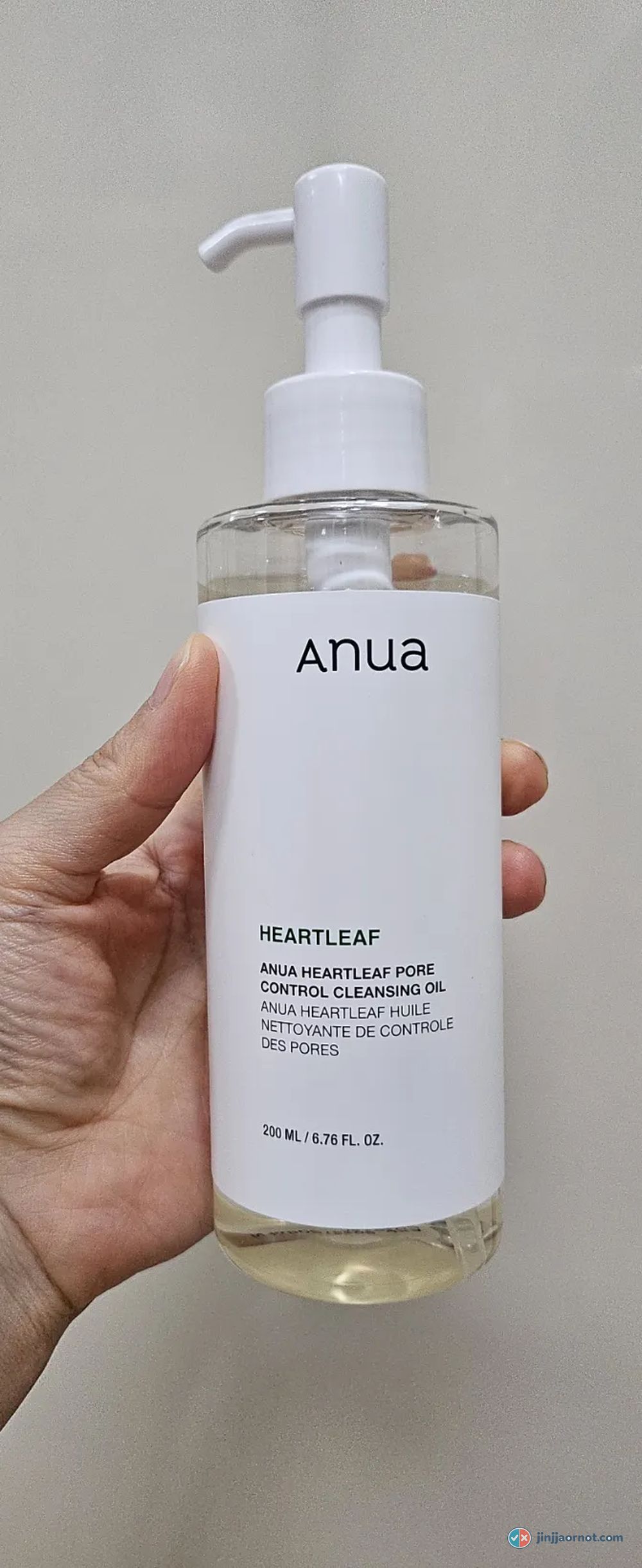
Buy it for the texture, not the ingredient on the front. Anua's Heartleaf Pore Control Cleansing Oil is the lightest cleansing oil I've used, it takes makeup off without dragging, and the scent is easy to live with. The heartleaf itself is printed on the Korean bottle at 10,000 ppb — which is 10 ppm, or 0.001%. Both of those things are true at once, and the gap between them is the most interesting thing about this bottle. Will buy again
The number on the Korean bottle
Korean cosmetics law has a rule that matters here: if a brand puts an ingredient in the product name, it has to print how much of that ingredient is actually in there. Anua named this oil after heartleaf, so the amount is on the label, in the ingredient list, in Korean.
It says 10,000 ppb.
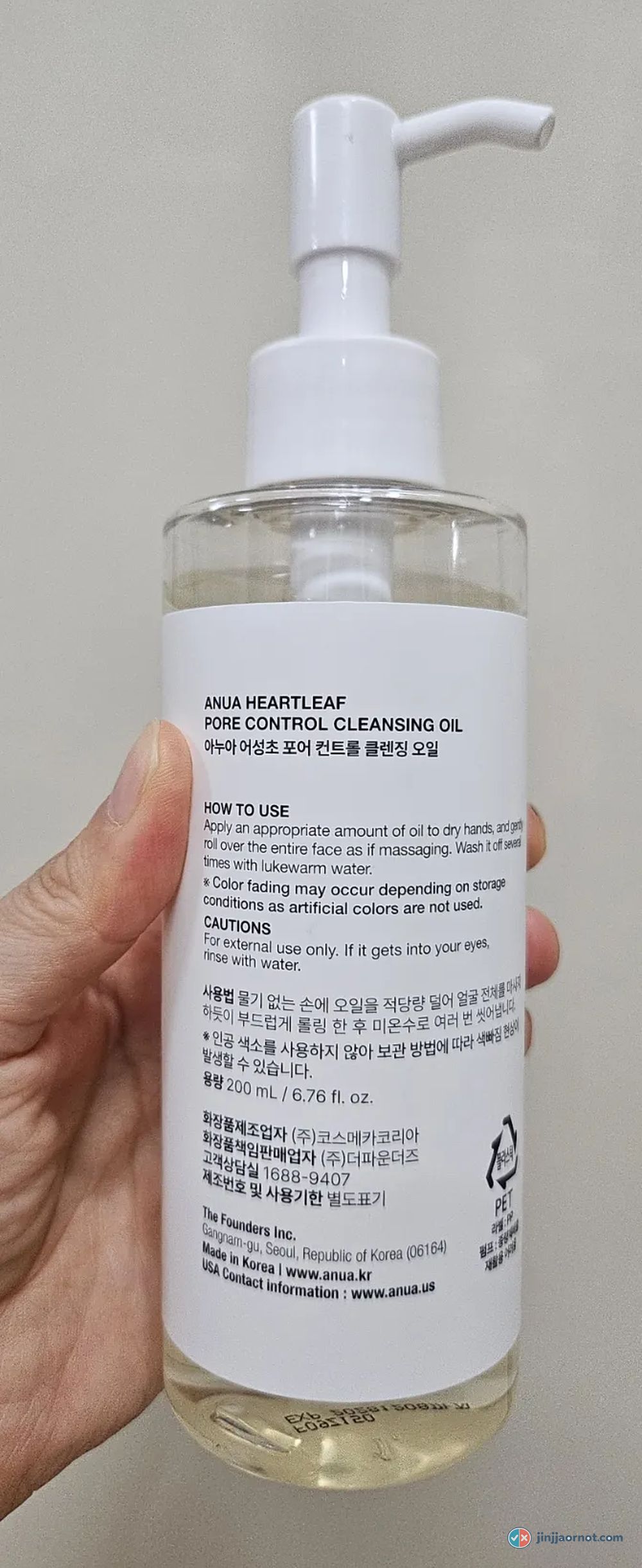
Parts per billion is an unusual unit to see on a cosmetic, and it's worth slowing down on. A part per million is a thousand parts per billion. So 10,000 ppb is 10 ppm — 0.001% of the bottle.
For scale, here are the three oils I've tested that print a figure for their headline ingredient, drawn on a linear scale:
Linear scale. The last bar really is that small — Anua's headline ingredient is present at roughly one hundred and fiftieth of celimax's.
The first ingredient on the list is ethylhexyl palmitate, an ester. That's the product. The heartleaf is a finishing touch measured in millionths.
None of that is a lie
I want to be careful here, because "trace amount" gets used as an accusation and it shouldn't be.
An anhydrous cleansing oil is made of esters and emollients, because those are the things that dissolve makeup. A water-soluble botanical extract has almost nothing to dissolve into in that base. Anua could not have put 30% heartleaf extract in this bottle even if it wanted to — the format won't hold it. Every cleansing oil on the Korean market has the same physics.
Which leads to the genuinely useful conclusion: if heartleaf is what you're buying, buy the foam instead. Anua sells both, often in the same set.
The same ingredient, in the same box, at 33%
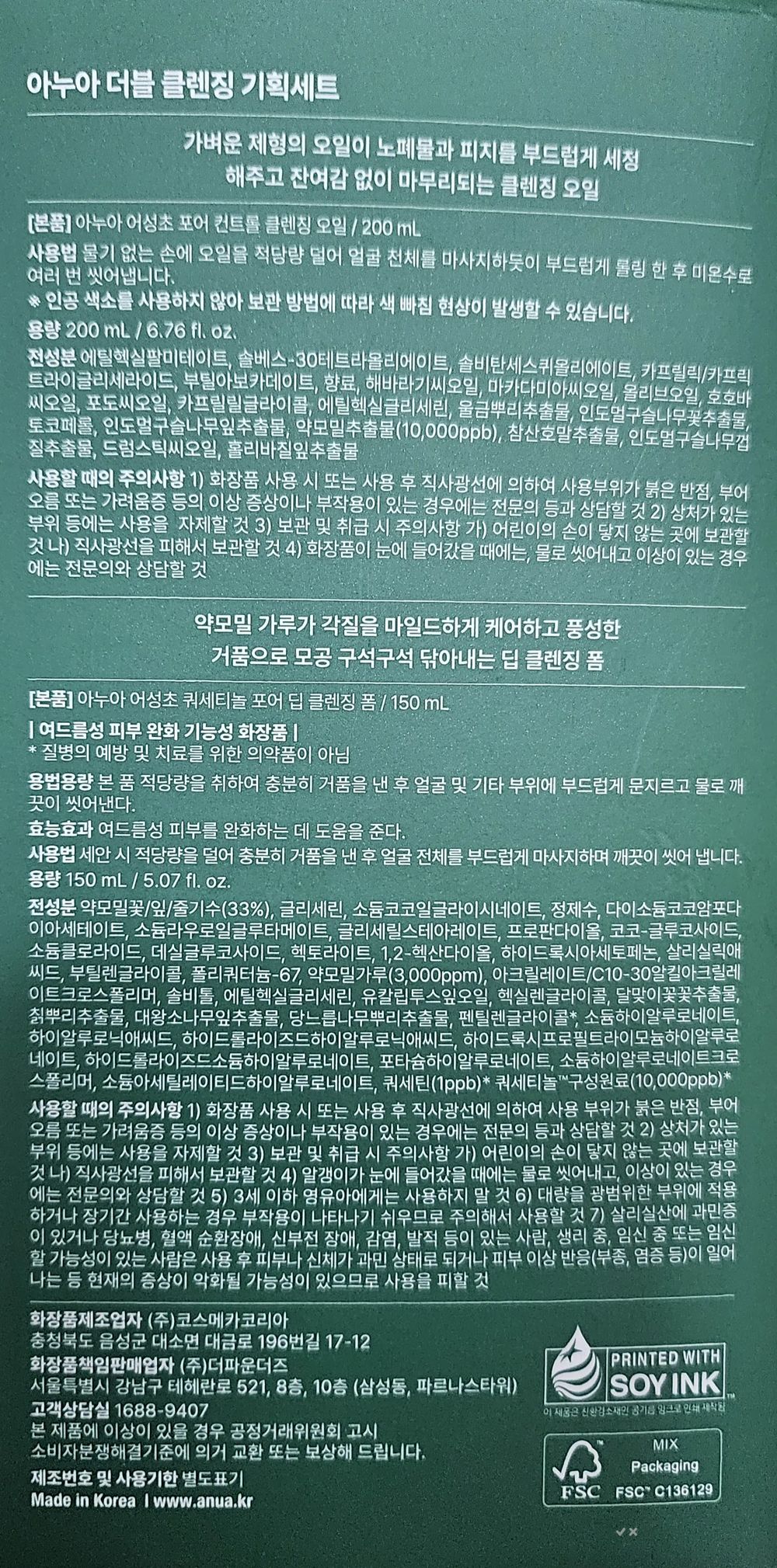
Anua's Heartleaf Quercetinol Pore Deep Cleansing Foam lists heartleaf water at 33%, ahead of purified water, as the first ingredient on the list. It also lists heartleaf powder at 3,000 ppm — those are the scrub particles you can feel.
| Same brand, same hero ingredient | What the Korean label prints |
|---|---|
| Heartleaf Pore Control Cleansing Oil | Heartleaf extract 10 ppm |
| Heartleaf Quercetinol Cleansing Foam | Heartleaf water 33% (330,000 ppm) |
That is roughly thirty-three thousand times more heartleaf, in a product sold under the same name by the same brand, frequently in the same gift box.
A water infusion and a concentrated extract are different raw materials, and both legitimately belong on an ingredient list. But if you are choosing between the two products because of the heartleaf, the Korean label has already answered the question for you.
What it's actually like to use
Here's where I have to contradict my own ingredient analysis, and I think that contradiction is the honest part of this review.
It's the best-feeling cleansing oil I've tried. Out of five Korean cleansing oils tested on the same face over the same period, this is the lightest and the easiest to live with. It doesn't sit heavy, it doesn't drag on the eye area, and it rinses without the slick film that heavier oils leave behind.
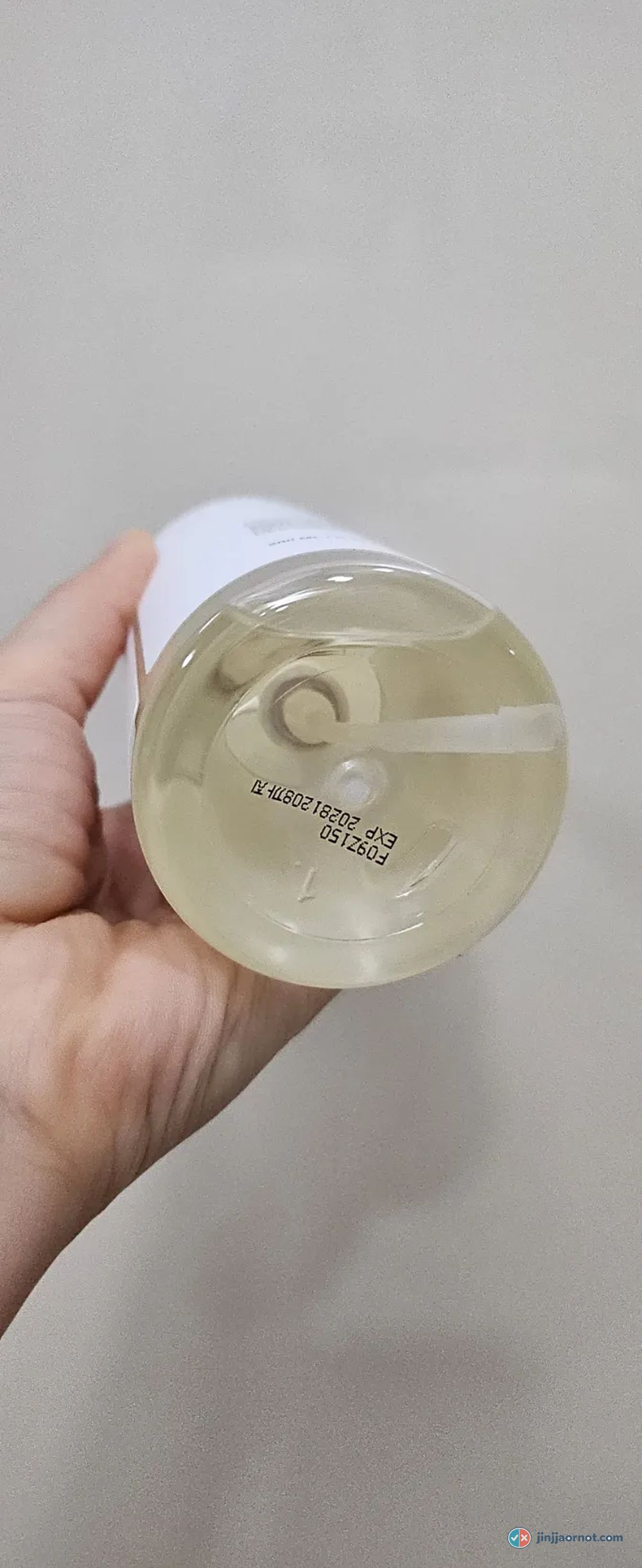
The scent is mild and slightly herbal rather than perfumed. If you've bounced off Korean cleansing oils before because they felt like cooking oil on your face, this is the one to try.
On makeup
I tested it the way I test all of them: lip tint and liquid eyeliner on the back of the hand, on dry skin, no water, then rinse.
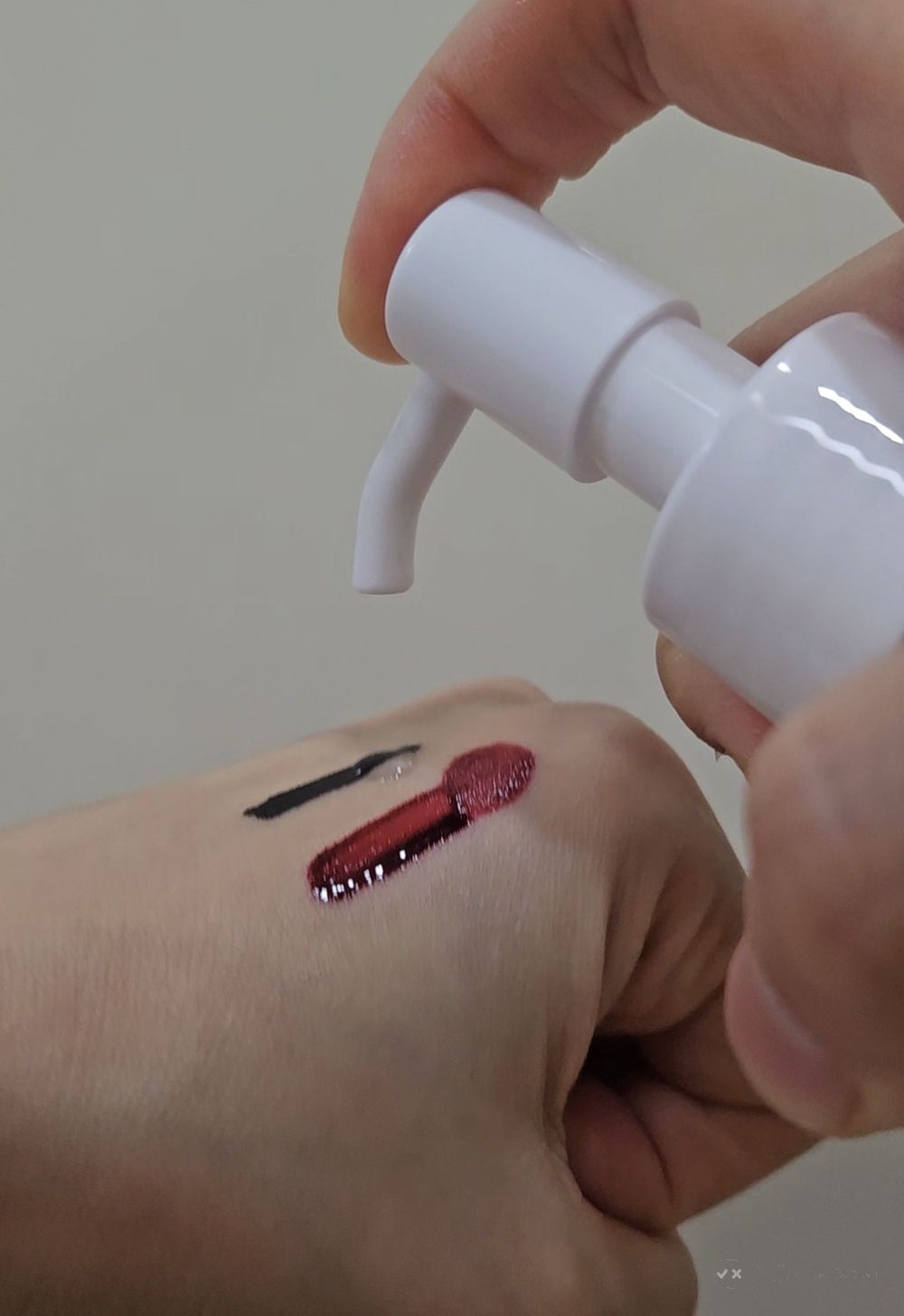

It handled both without needing to be worked in hard. That matters more than it sounds — the amount of rubbing a cleanser demands around the eyes is a real difference between products, and this one asks for very little.
You still need a second cleanse. This is a first-step product. The Korean directions say so, and I follow them. Here's what I use for step two — and the Anua foam is one of the four in that comparison.
My verdict
Anua Heartleaf Pore Control Cleansing Oil — Will buy again
The lightest cleansing oil of the five I tested and the one I reach for on tired evenings. Buy it for the texture and the scent. Don't buy it for the heartleaf — that's 10 ppm, and the Korean label says so out loud. If heartleaf is the reason you're here, the foam from the same brand carries it at 33%.
So should you buy it
You want a cleansing oil that doesn't feel like an oil → yes, this one.
You have sensitive eyes or hate rubbing your face → yes. It needs less work than the heavier oils.
You're buying it for the heartleaf → buy the foam instead, or buy both and use the foam as step two.
You want the highest concentration of a named botanical in an oil → celimax's jojoba is 1,500 ppm, a hundred and fifty times more. All five compared here.
Where to buy
Prices move, so I'm not quoting one. What I'd check before you order: buy from a seller that ships domestically rather than direct from Korea, or you'll wait two to three weeks and may be asked for duty at the door.
Both Anua cleansers, on Amazon
Links are filtered to Prime-eligible sellers on purpose. Since the US ended duty-free treatment for low-value parcels, listings shipping direct from Korea can take weeks and can land you a customs bill at your door.
Heartleaf Cleansing Oil → Quercetinol Cleansing Foam (33% heartleaf water) →Anua Heartleaf Cleansing Oil FAQ
Is Anua Heartleaf cleansing oil worth it?
Yes, but not for the heartleaf. It's the lightest of the five Korean cleansing oils I tested and the easiest to use around the eyes, and the scent is mild. The heartleaf is printed on the Korean label at 10,000 ppb, which is 10 ppm — buy it for how it feels, not for the botanical on the front.
How much heartleaf is actually in Anua's cleansing oil?
10,000 ppb, which is 10 ppm, or 0.001%. The figure is printed in the Korean ingredient list because Korean law requires the concentration of any ingredient named in the product name. The first ingredient is ethylhexyl palmitate.
What's the difference between the Anua oil and the Anua foam?
Concentration, mostly. The oil lists heartleaf extract at 10 ppm. The foam lists heartleaf water at 33% as its first ingredient, ahead of purified water, plus heartleaf powder at 3,000 ppm as scrub particles. An oil base can't carry a water-soluble infusion, so if heartleaf is what you want, the foam is the one that has it.
Do I need to double cleanse after the Anua cleansing oil?
Yes. It's a first-step product and the Korean directions say to follow it with a foam cleanser. I do, every time.
Does Anua Heartleaf cleansing oil clog pores?
It didn't on my skin over the testing period, and it's the lightest of the five oils I compared, which is usually what people are worried about when they ask this. Skin varies, so this is my experience rather than a claim about yours — patch test if you're prone to congestion.
What does ppb mean on a Korean cosmetic label?
Parts per billion. A part per million (ppm) is a thousand times bigger, and a percent is ten thousand ppm. So 10,000 ppb equals 10 ppm equals 0.001%. Korean labels print these figures for the ingredient named in the product name, which is how you can compare brands that all put a botanical on the front of the bottle.