Serum · Beauty of Joseon
Beauty of Joseon Glow Serum: the Korean bottle prints 59.94%, the English one doesn't
Heads up: some links below are affiliate links, which means I may earn a small commission if you buy through them — at no extra cost to you. I bought this bottle with my own money, and my honest opinion is never for sale.
The short answer
If you have been burned by Korean products named after an ingredient that turns out to be a rounding error, Beauty of Joseon Glow Serum is the one that holds up. Propolis extract is the first thing on the list and the Korean bottle says how much: 59.94%. I have read a lot of Korean labels and this is the first time the name and the first line have matched like that.
It sinks in completely and leaves nothing on the skin, which is lovely in hot, humid weather and a problem if your skin is dry. Buy it for an oily or combination face. Will buy again
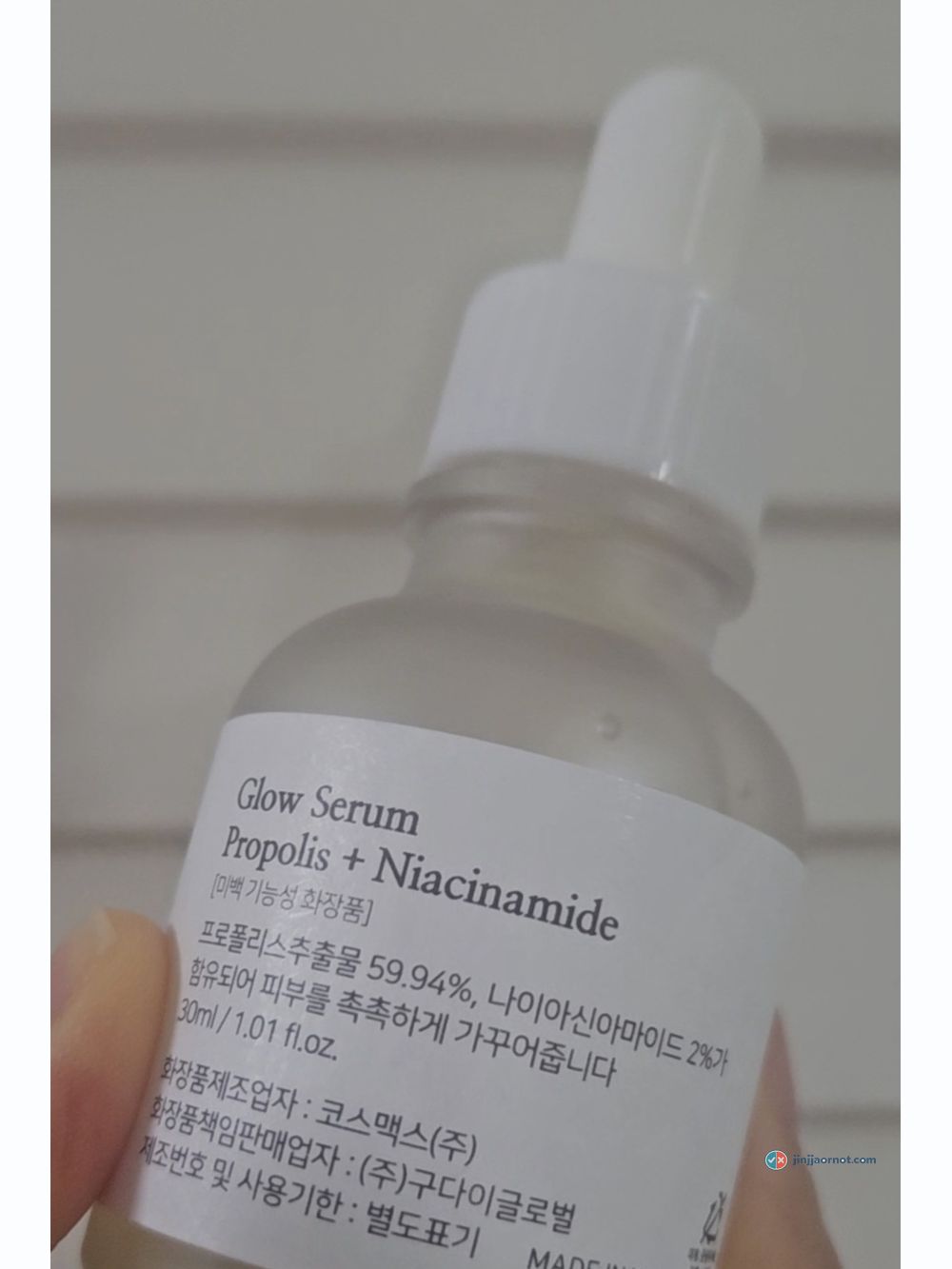
The name is the first ingredient, and that is rarer than it should be
Most of what I do on this site is tell people that a Korean product named after a plant contains a whisper of that plant. Heartleaf at 10ppm. Ginseng oil whose first ingredient is soybean. It becomes a habit, reading the front of a box and bracing.
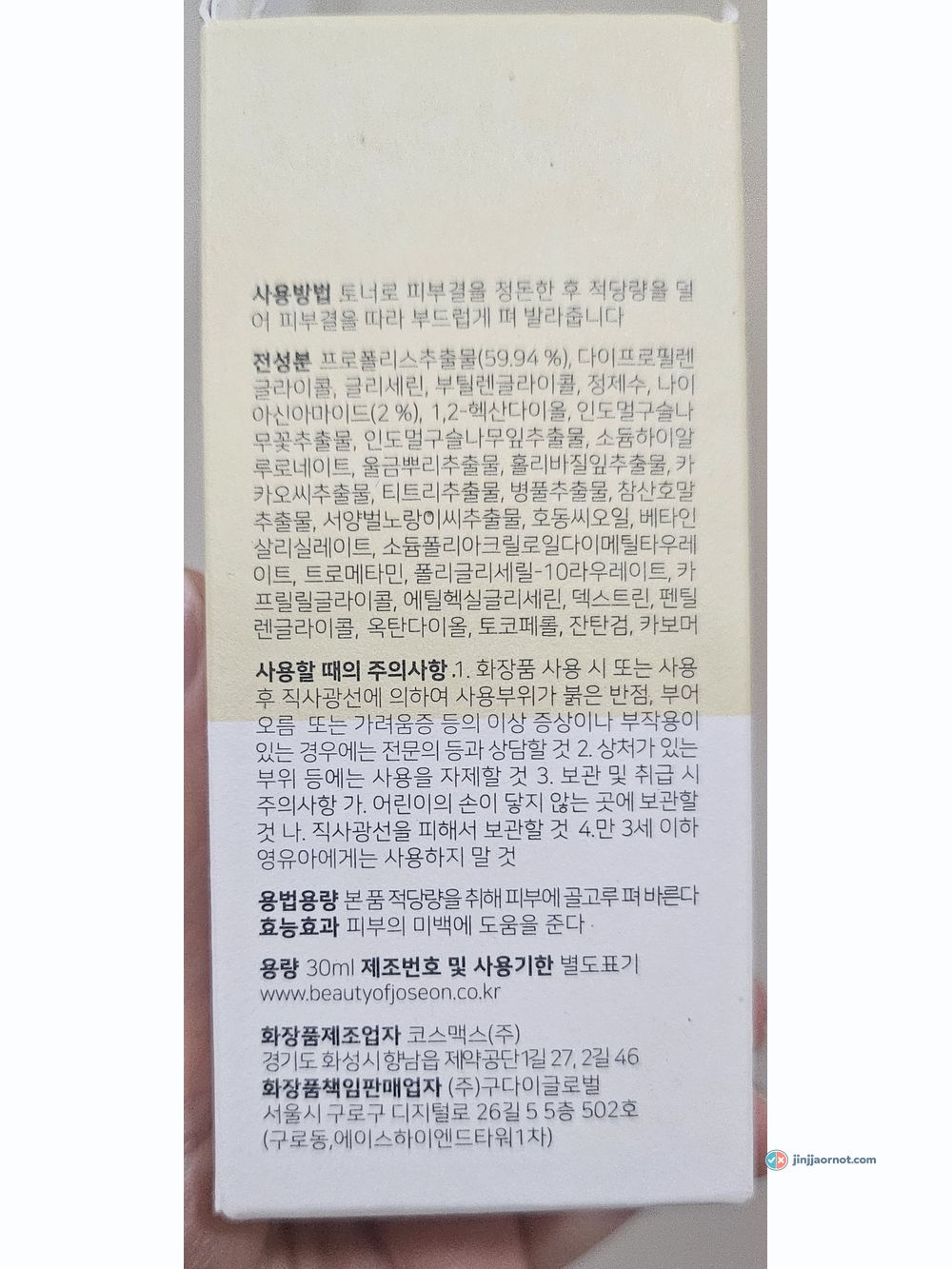
Here the brace was unnecessary. Propolis extract is ingredient number one and the figure beside it is 59.94%. Not rounded to 60, which I find quietly reassuring — that is a number from a formula sheet rather than a marketing deck.
One honest qualification, because I would rather you hear it from me. An extract is the active carried in a solvent, so 59.94% is 59.94% of extract, not of raw propolis from a hive. Nobody puts 60% raw propolis in a serum; it would be a candle. What the figure tells you is that the propolis preparation is the base of this product rather than a garnish floating near the preservatives. On the labels I usually read, the named ingredient is sitting down at the bottom with the xanthan gum.
If you want the method behind all of this, I wrote it up in how to read the percentages on a Korean label.
Niacinamide is 2%, and 2% is the floor
The second printed figure is niacinamide at 2%, and this one needs a little context that the bottle assumes you already have.
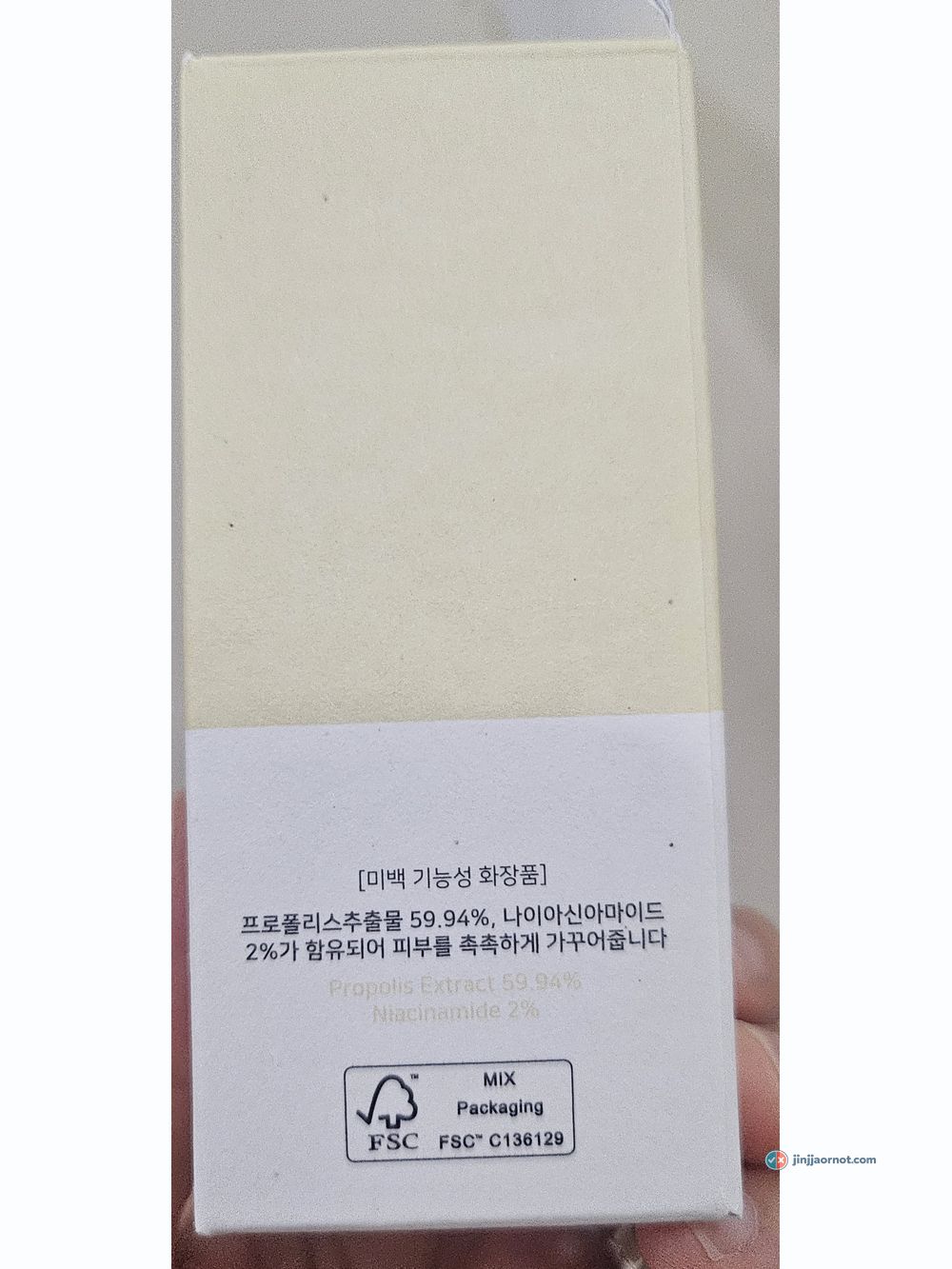
Korea keeps a list of approved functional ingredients with a permitted concentration band for each one. Niacinamide is on it for brightening at 2 to 5%. Put it in at 2% and you may register the product as a whitening functional cosmetic, which is what the Korean box declares. Put in less and you may not.
So this serum sits at the bottom of the approved band. I am not going to soften that, because the whole point of the number is that you can see where a product sits. Serums built around brightening tend to run at 4 or 5%, further up the same band.
What I will say is that the band exists at all, and that you can read it. On an American box, a brightening serum says “with niacinamide” and there is nothing whatsoever to compare — you cannot tell 2% from 0.2%. Korea makes the brand print the number, so the floor and the ceiling are both visible. That is the thing worth having, not the 2%.
Water is the fifth ingredient, and that explains everything you will feel
Here is the part I would have missed if I had only used the product and not read the list. The top of a serum is almost always water. This one goes:
| # | Korean label | What it does |
|---|---|---|
| 1 | Propolis extract — 59.94% | The base |
| 2 | Dipropylene glycol | Humectant, thin |
| 3 | Glycerin | Humectant |
| 4 | Butylene glycol | Humectant, thin |
| 5 | Purified water | Usually number one |
| 6 | Niacinamide — 2% | The registered claim |
Three glycols sitting above the water. That single fact predicted everything I noticed on my hands before I ever looked at the box.
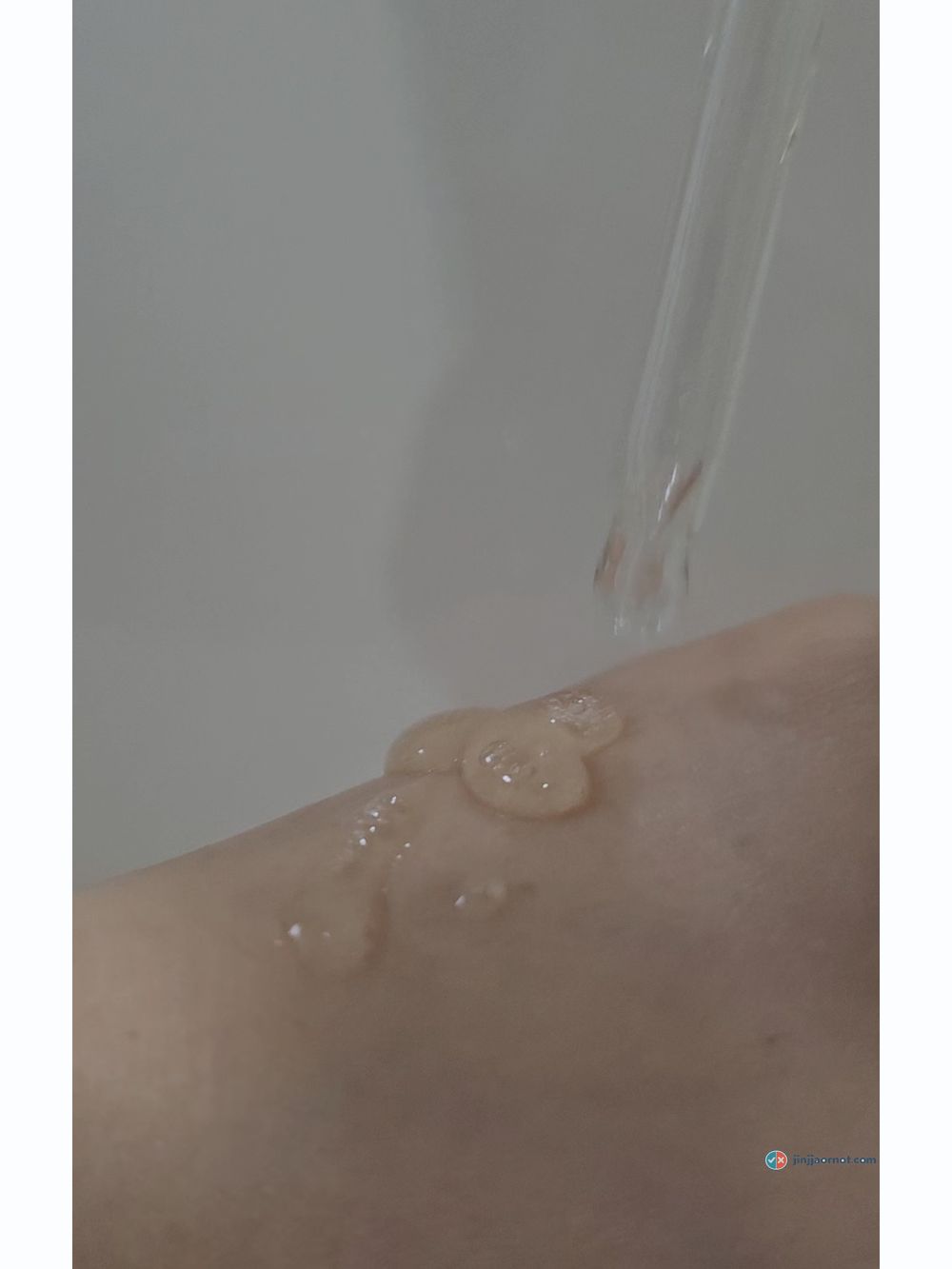
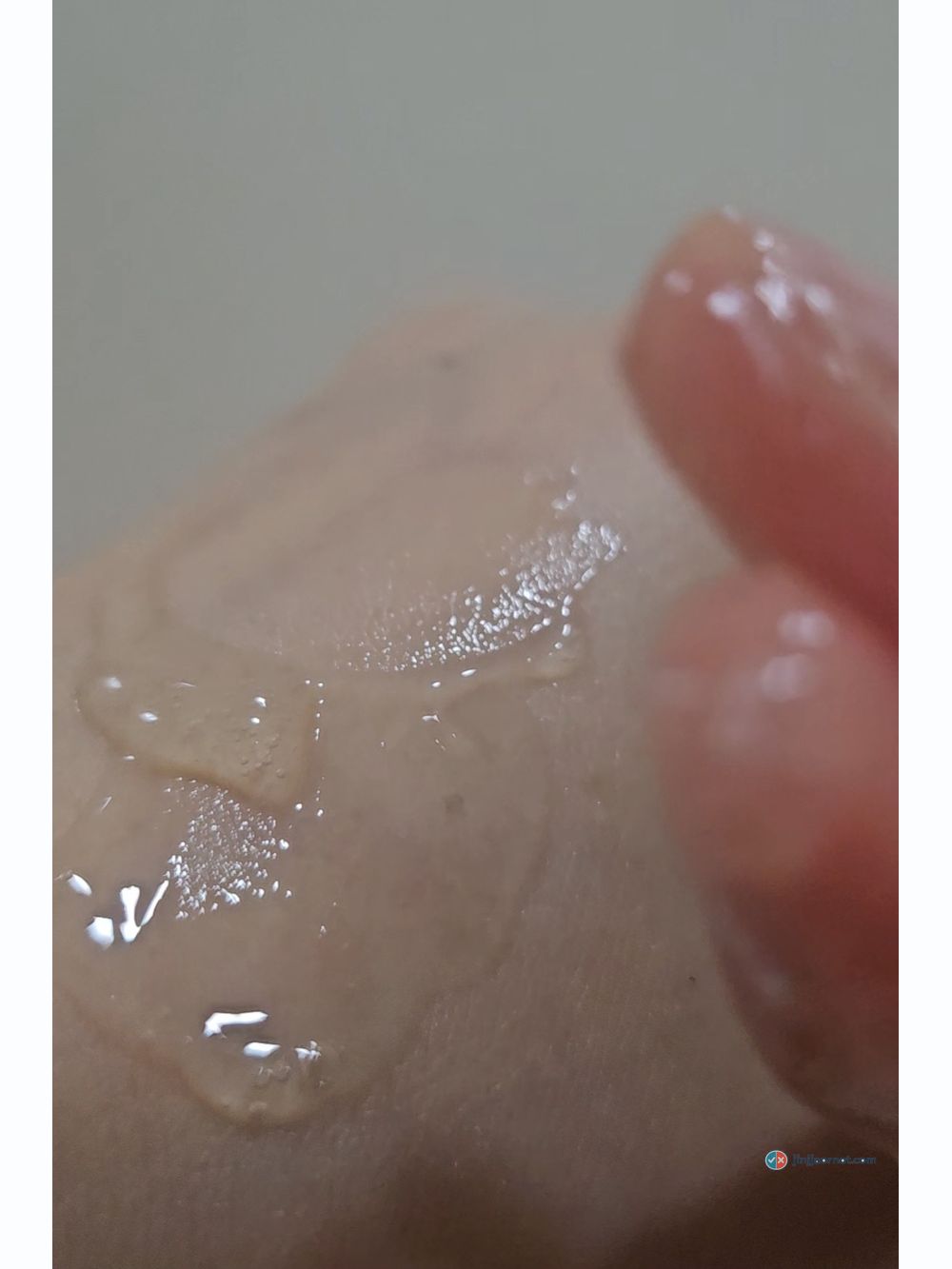
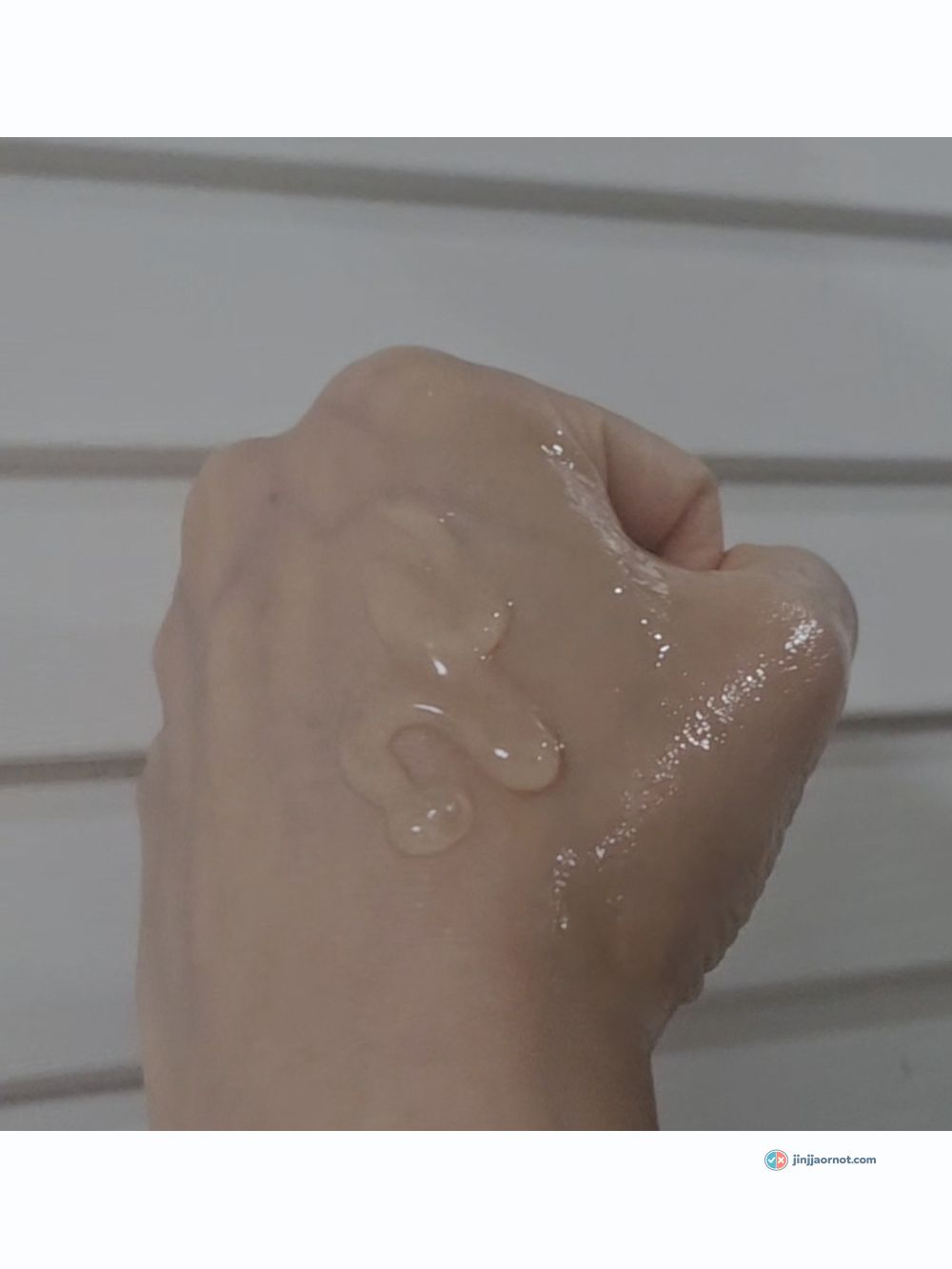
It comes out of the dropper somewhere between water and jelly. On skin it travels a little, so you want to be quick about patting it in rather than letting it sit. And then it is completely gone. Not absorbed-with-a-slight-film gone — gone. No tack, no residue, nothing you can feel with a fingertip.
That is glycols behaving exactly as glycols do. They pull water in and vanish without leaving anything on top. Which is a wonderful feeling on a hot day and a small problem the rest of the year, because nothing is left to seal it in.
So it finishes dry, and you need something over it
Scan the rest of the Korean list for anything that would sit on skin and hold moisture in. There is one humectant of any real weight, sodium hyaluronate, and it is tenth. There is no facial oil worth the name, no ceramide, no butter, no squalane. The only oil in the whole formula is tamanu seed oil, well down the list.
So call this what it is: a treatment step, not a moisturising one. It is genuinely mild — three weeks in, a third of the bottle gone, and it has not broken me out once, including on days when my skin was being difficult. But mild is not the same as comforting.
My cheeks are dry and my T-zone is oily, so one application tells me two things. On the dry side, no irritation and no improvement either; it simply disappeared and left my cheeks exactly as dry as it found them. On the oily side, it was the best thing I could have put on. Put a moisturiser over it and the dry-skin problem goes away entirely — but you do have to actually do that.
There is a BHA in here, and it is why oily skin does better
Further down the Korean list, past the extracts, sits betaine salicylate. That is a gentle salicylic acid derivative — a BHA, the family that works inside pores rather than on the surface.
It is not at a level that makes this an exfoliating product, and the box makes no such claim. But it is there, and it lines up with everything else: a glycol base, no occlusive oils, a dry finish, and a mild BHA. Four different signals all pointing at the same person, which is oily and combination skin.
I like it when my own experience and the label say the same thing, because it means neither of us is guessing. I worked out that this suited my T-zone better than my cheeks by using it. The label tells you why, before you spend anything.
Nothing in here smells
No fragrance. No parfum. And nothing aromatic hiding at the end of the list, which is the part most reviews never check.
Tea tree is on the list as an extract, not as tea tree oil. The single plant oil is tamanu seed oil, which is not a fragrance material. Compare that with the celimax cleansing oil, which declares bergamot along with linalool and limonene, or with the make p:rem cleansing milk in the milk comparison, whose Korean list is sold as low-irritation and still closes with bergamot and clary oil. Both are honestly declared. This one simply has none of it.
If fragrance is the thing you screen for, this serum passes on a strict reading, not a generous one.
The English label is the same list with the numbers taken out
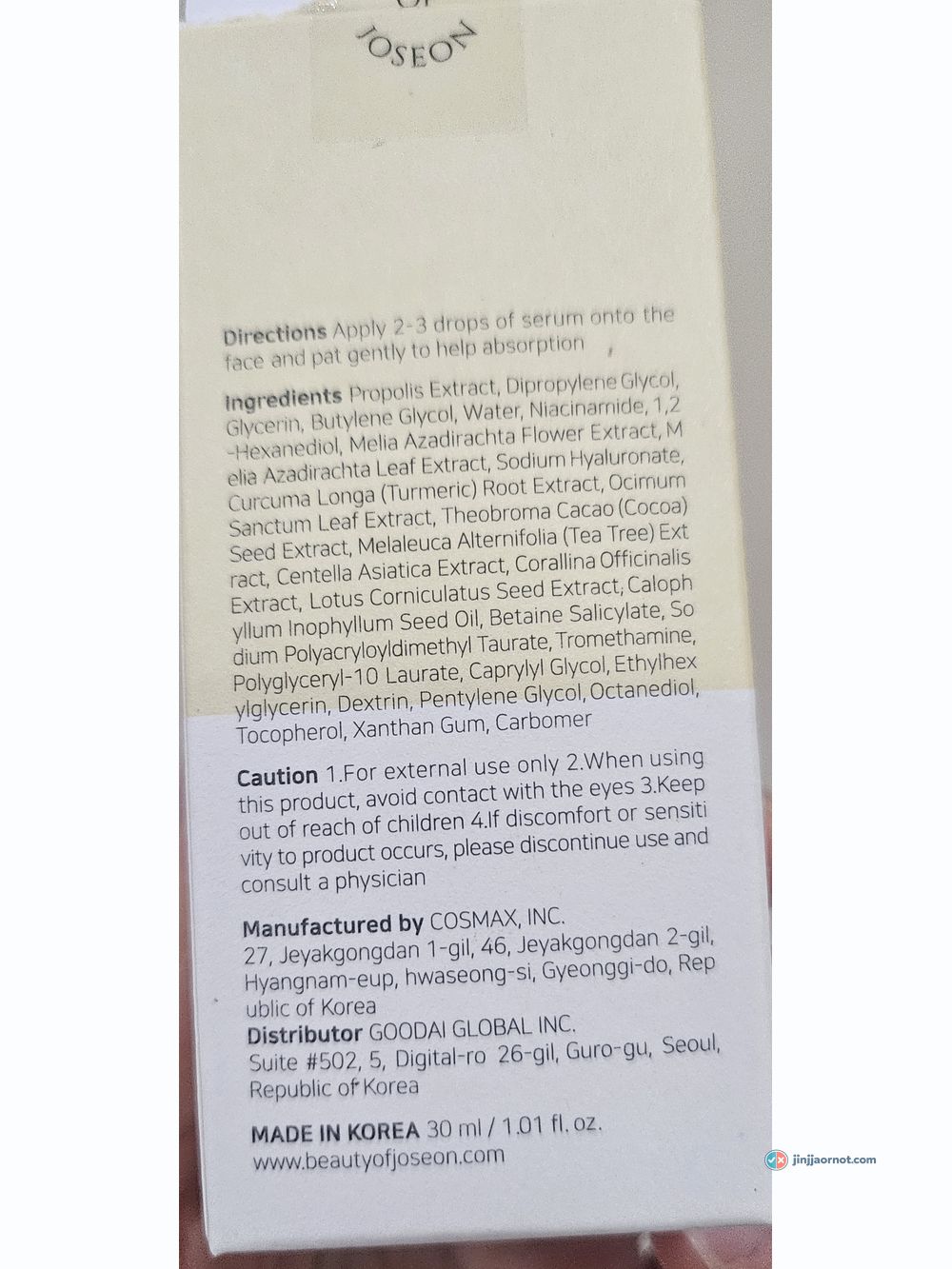
I always check both sides of the box, and this is the cleanest example I have found of why.
The English ingredient list is identical to the Korean one, word for word, in exactly the same order: Propolis Extract, Dipropylene Glycol, Glycerin, Butylene Glycol, Water, Niacinamide, and on down. Same formula, same factory, same bottle.
What the English side does not have is a single number. No 59.94% beside the propolis. No 2% beside the niacinamide. No whitening functional cosmetic registration anywhere. The Korean box also warns against use on children under three; the English caution does not mention it.
Nothing improper is happening here — different markets have different labelling rules, and Beauty of Joseon is following each one. But the practical result is that the best argument for buying this product is printed only in a language most of its buyers cannot read. The propolis figure is the strongest thing on the bottle and it is invisible outside Korea.
So, should you buy it
Yes, if your skin is oily or combination
Glycol base, no occlusives, a dry finish and a mild BHA. Everything about this formula is built for a face that makes its own oil.
Yes, on hot and humid days
It disappears completely. Nothing sits on your face, nothing slides, nothing to feel at the end of the day. This is why I will rebuy.
Yes, if you screen for fragrance
No parfum, no essential oil, nothing aromatic anywhere on a list of thirty. That is harder to find in Korean skincare than it sounds.
Not on its own, if your skin is dry
One humectant, tenth on the list, and nothing to seal it. It will not irritate you — it just will not do much for you either. Moisturiser goes on top, always.
Not if you are buying it mainly to brighten
2% niacinamide is the bottom of Korea's approved 2 to 5% band. It is a real registration, but products aimed squarely at brightening sit higher in that band.
My stamp is Will buy again, and I want to be exact about when. Not as my one serum for the year — through a cold dry winter I would want something with more to hold onto. But on a hot, humid day, a serum that vanishes and leaves nothing behind is not a compromise, it is the point. That is the bottle I will replace.
The rare Korean product where the name is the first ingredient
30ml, propolis extract at 59.94% and niacinamide at 2% printed on the Korean label, no fragrance material anywhere.
Check price on Amazon →Questions people ask
How much propolis is in Beauty of Joseon Glow Serum?
The Korean label prints propolis extract at 59.94%, and it is the first ingredient on the list. One honest note on what that figure means: propolis extract is propolis carried in a solvent, so 59.94% is the extract rather than raw propolis. Even so, this is the first product I have read where the ingredient in the product name is genuinely at the top of the list with a number attached.
How much niacinamide is in Beauty of Joseon Glow Serum?
2%, printed on the Korean label. Korea's functional cosmetics rules list niacinamide as an approved whitening ingredient at 2 to 5%, so this product sits at the bottom of that range. That is enough to register the claim legally. If you are buying specifically for brightening, products at 4 to 5% are working further up the same range.
Is Beauty of Joseon Glow Serum good for dry skin?
It is better for oily and combination skin. There is only one humectant of any weight on the list, sodium hyaluronate, and it sits tenth. There is no facial oil and no ceramide. My cheeks are dry and it never irritated them, but it never made them more comfortable either. On dry skin, treat this as a treatment step and put a proper moisturiser over it.
Why does Beauty of Joseon Glow Serum feel dry after it sinks in?
Look at where the water is. Purified water is the fifth ingredient on the Korean list, behind dipropylene glycol, glycerin and butylene glycol. The base of this serum is extract plus glycols rather than water. Glycols draw in moisture and absorb without leaving a film, so the product disappears completely and leaves nothing behind — including nothing to seal it in.
Is Beauty of Joseon Glow Serum fragrance-free?
There is no fragrance and no parfum on the Korean list, and nothing aromatic either. Tea tree appears as an extract rather than an oil, and the one plant oil on the list is tamanu seed oil, which is not a fragrance material. That matters because plenty of Korean products carry no parfum entry and still finish with bergamot or clary oil.
Does the English Beauty of Joseon label show the same information?
The ingredient order is identical, word for word. What is missing is every number. The English list shows Propolis Extract and Niacinamide with no percentage beside either, and there is no whitening functional cosmetic registration on the English side. The Korean box also carries a warning against use on children under three that the English caution does not include.