🧼 K-Beauty · Comparison
Two Korean cleansing milks: one prints the number, the other prints the trial
Heads up: some links below are affiliate links, so I may earn a small commission if you buy through them — at no extra cost to you. I bought both of these with my own money, in Korea, and read the ingredient lists off the Korean boxes myself.
The short answer
ma:nyo prints how much soybean is in the bottle. make p:rem prints who tested it, on how many people, and when. Neither prints both. If you want a number you can check, take the ma:nyo. If you want to know what was actually measured, take the make p:rem. Read off the Korean boxes, in Korea
Why this comparison exists at all
Cleansing milk is the format English-language K-beauty barely covers. Balms and oils get all the attention, and then someone with tight, unhappy skin buys a balm because that's what the internet talks about.
These two are the milks people ask me about. They look almost identical on a shelf — white bottle, pump, soybean on the front, gentle in the copy. The Korean boxes are where they stop looking alike.
ma:nyo Pure Soybean: the number is printed
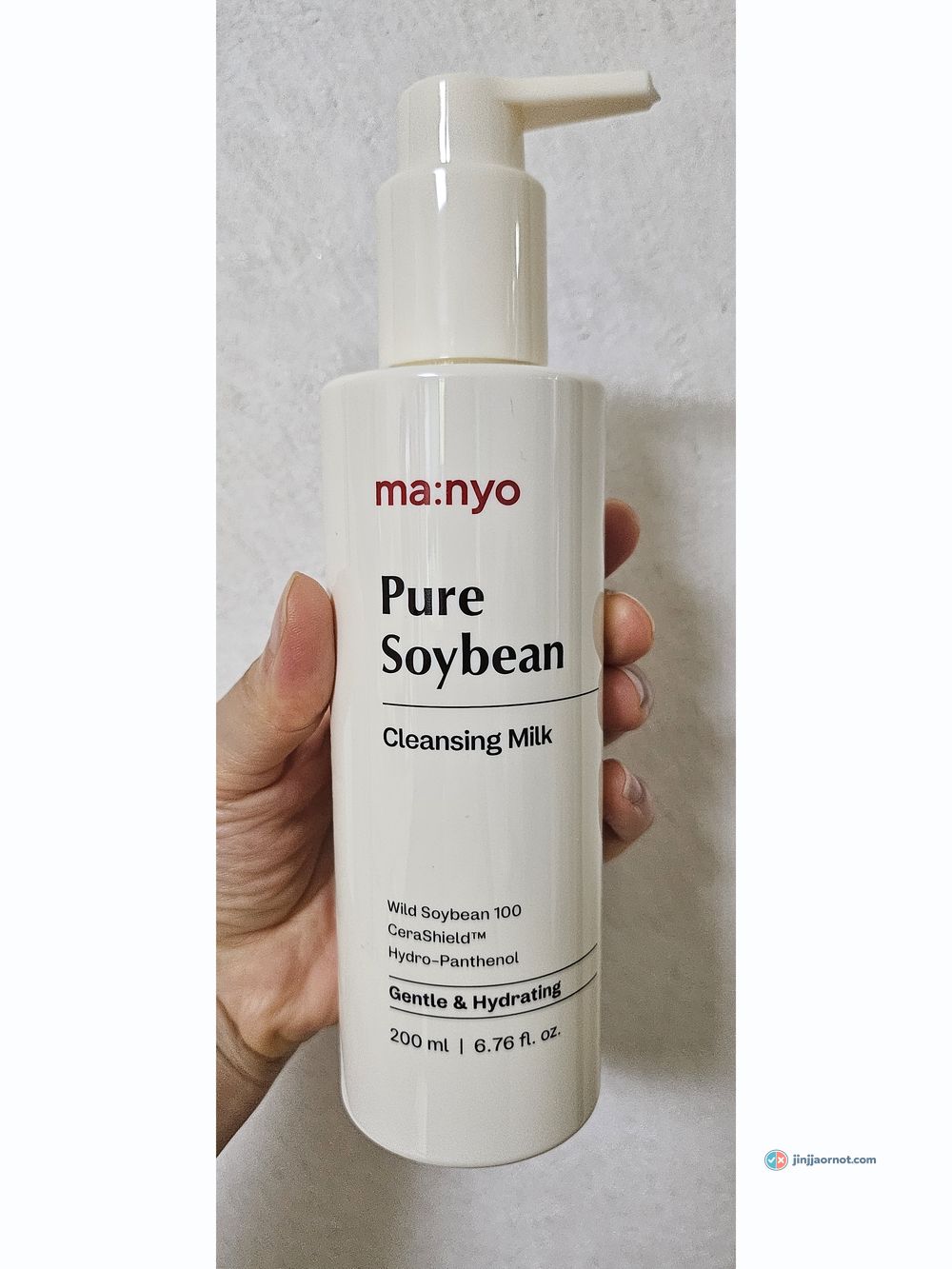
Here's what the Korean ingredient list gives you, in order:
Water · Glycerin · Cetyl ethylhexanoate · Sunflower seed oil · Butylene glycol · Sorbitan olivate · Glyceryl stearate SE · Ceramide NP · Ceramide AP · Cholesterol · Stearic acid · Panthenol · Sodium hyaluronate · Soybean seed extract (100ppm) · Lactobacillus/soymilk ferment filtrate (100ppm)
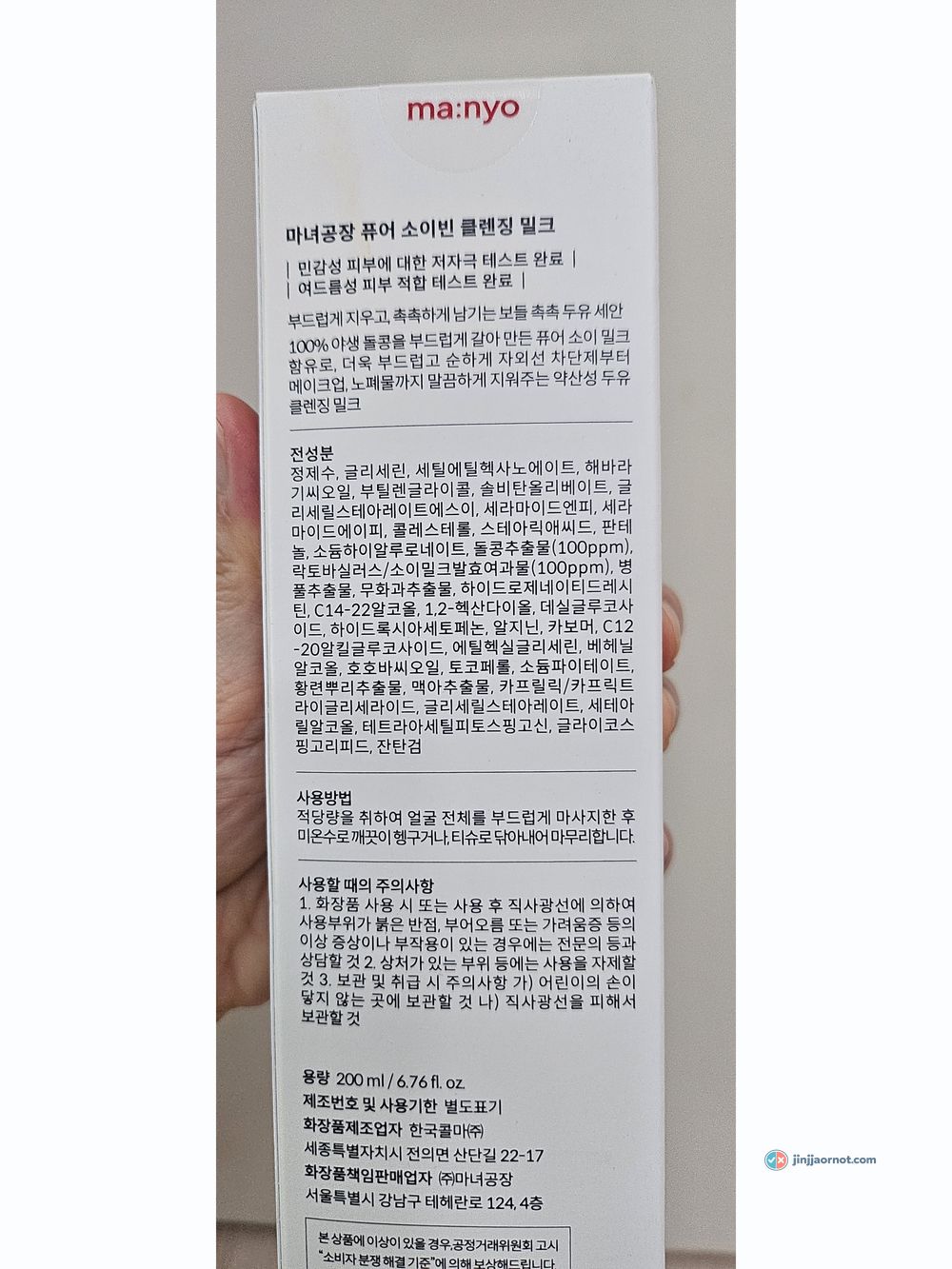
100ppm is 0.01%. I'm giving you that as a small number because it is one, and I'd rather you hear it from me than find it later.
But look at what's sitting above it. Ceramide NP, ceramide AP and cholesterol land around positions eight to ten — that's the CeraShield on the front of the bottle, and the label backs the claim up. This is a barrier product wearing a soybean name.
And the number exists for a reason. Korean cosmetics law makes a brand print the concentration of an ingredient it puts in the product name. ma:nyo called it Pure Soybean, so ma:nyo had to print 100ppm. That rule is the whole reason this page can exist.
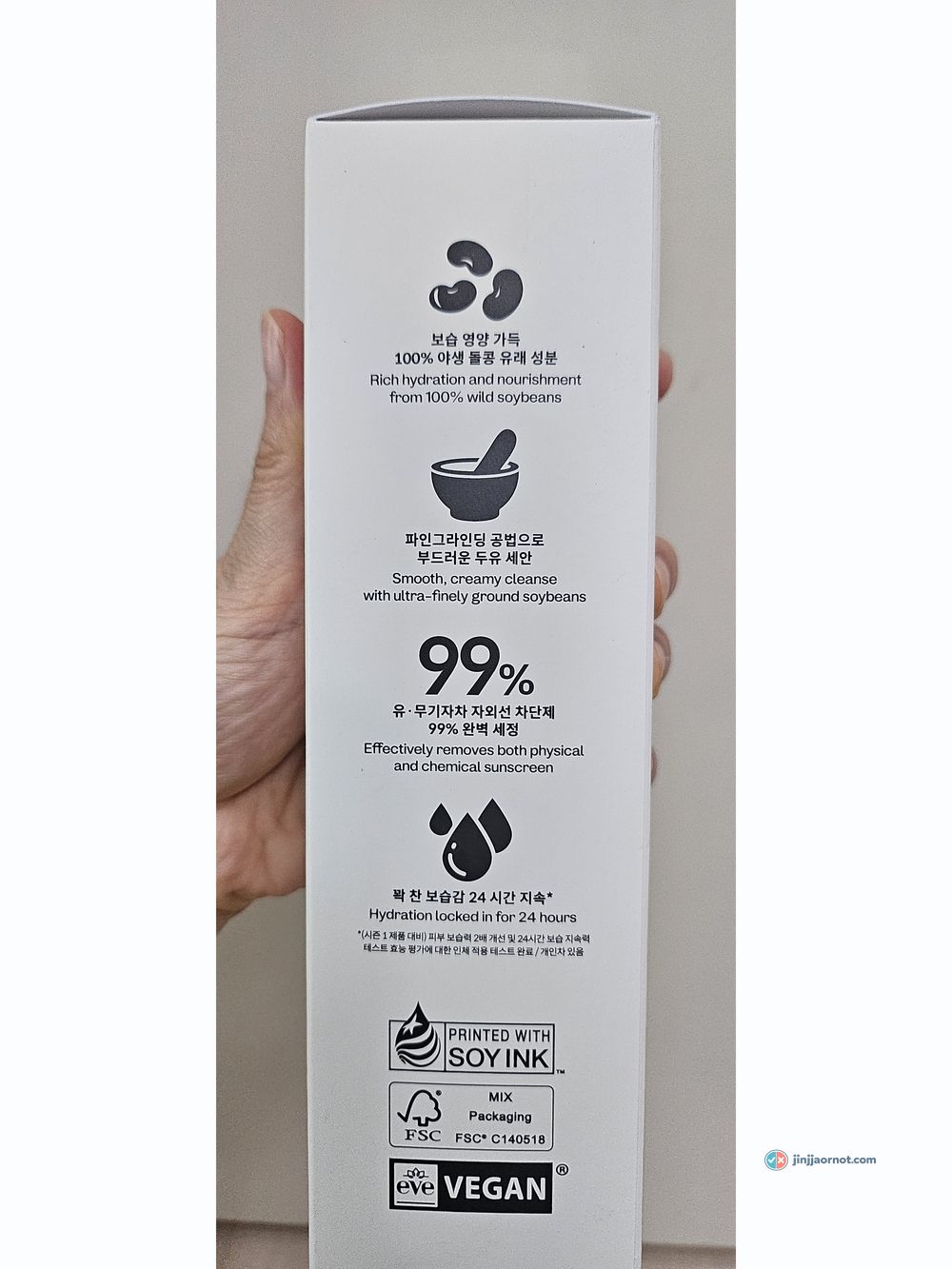
The box also carries low-irritation and acne-prone suitability tests, and claims 99% sunscreen removal. What it doesn't tell you is who ran any of that, or on how many people.
ma:nyo Pure Soybean Cleansing Milk — Still testing
Check price on Amazon →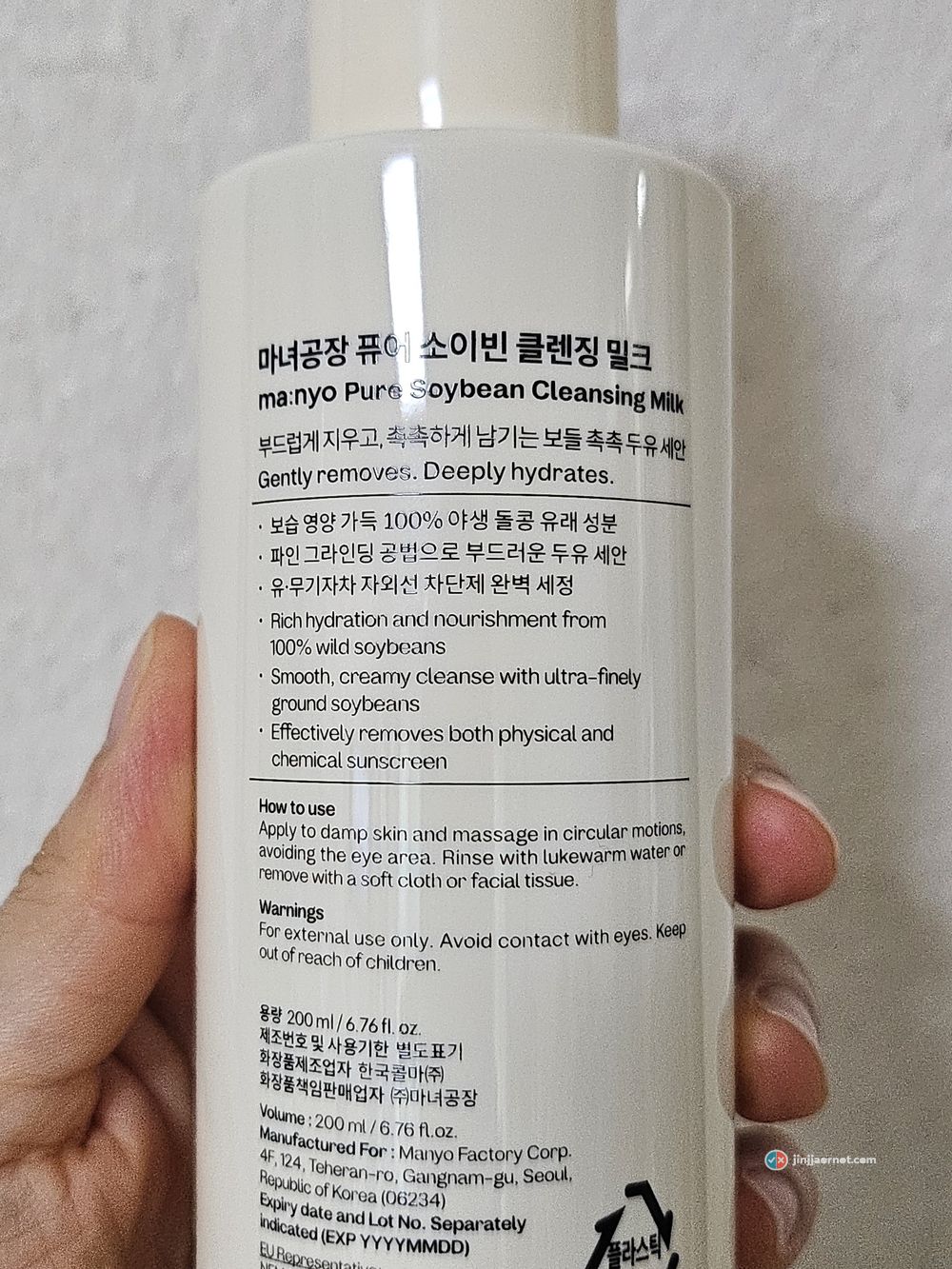
That second sentence is the point of the whole format. ma:nyo isn't promising you the strongest cleanse on the shelf; it's promising you skin that doesn't feel stripped afterwards, and it printed that promise in two languages. An oil takes more off. A milk leaves more behind, on purpose.
One more thing worth noticing on this label. The Korean bullet says the milk removes mineral and chemical sunscreen 완벽하게 — perfectly. The English line directly under it says effectively. Same bottle, same claim, softened for export. That happens more often than you'd think, and it's usually the English side that gets careful.
make p:rem Safe Me: the trial is printed
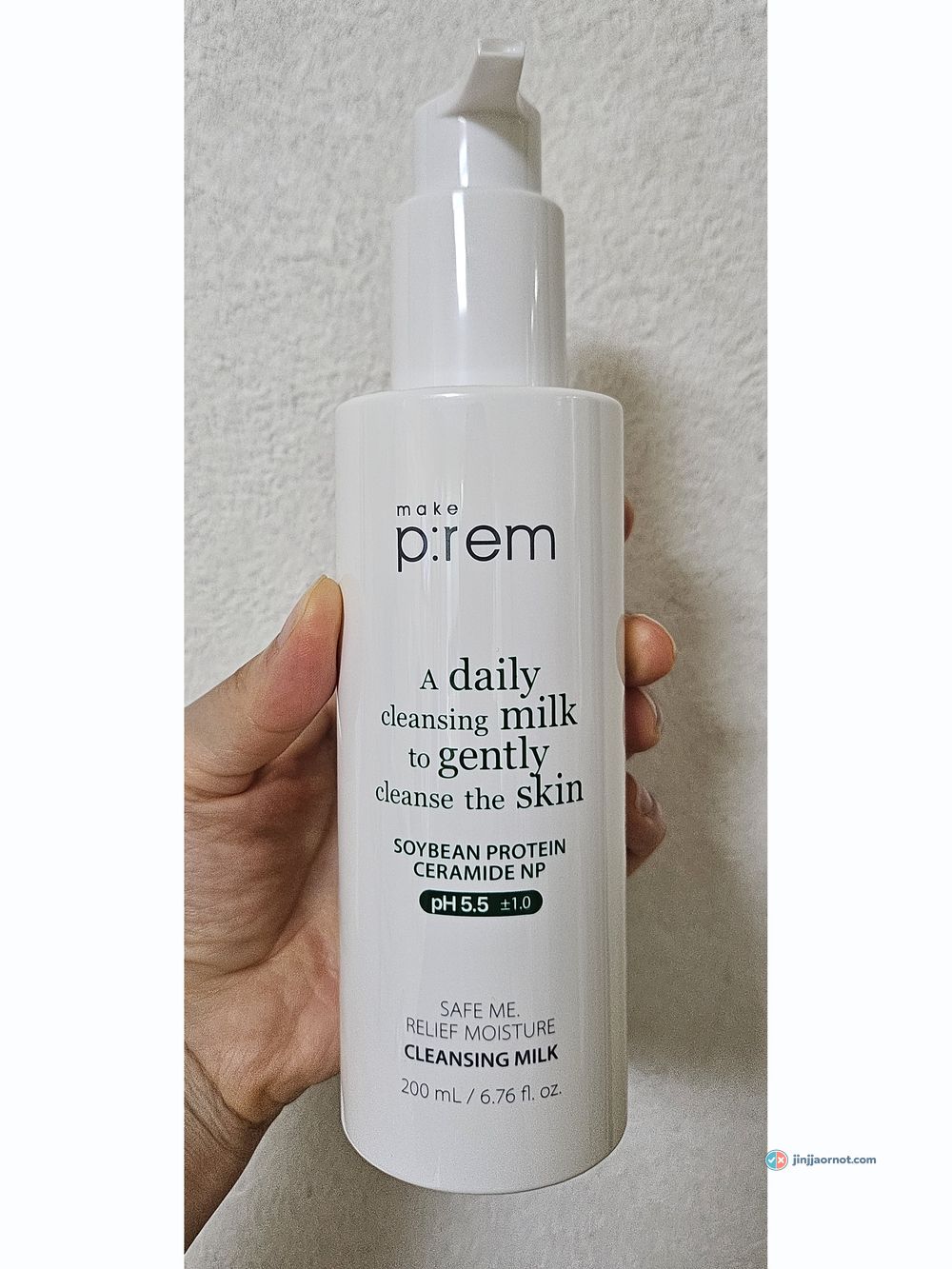
This bottle says SOYBEAN PROTEIN on the front in capitals, and soybean protein is genuinely in the list. There's no concentration next to it.
That isn't a brand hiding something. The product is called Safe Me Relief Moisture Cleansing Milk. Soybean isn't in the name, so the law doesn't ask for a number. Same shelf, same ingredient family, and one bottle carries a figure while the other doesn't — because of what each company decided to call its product.
What make p:rem prints instead is the part almost nobody gets to see:
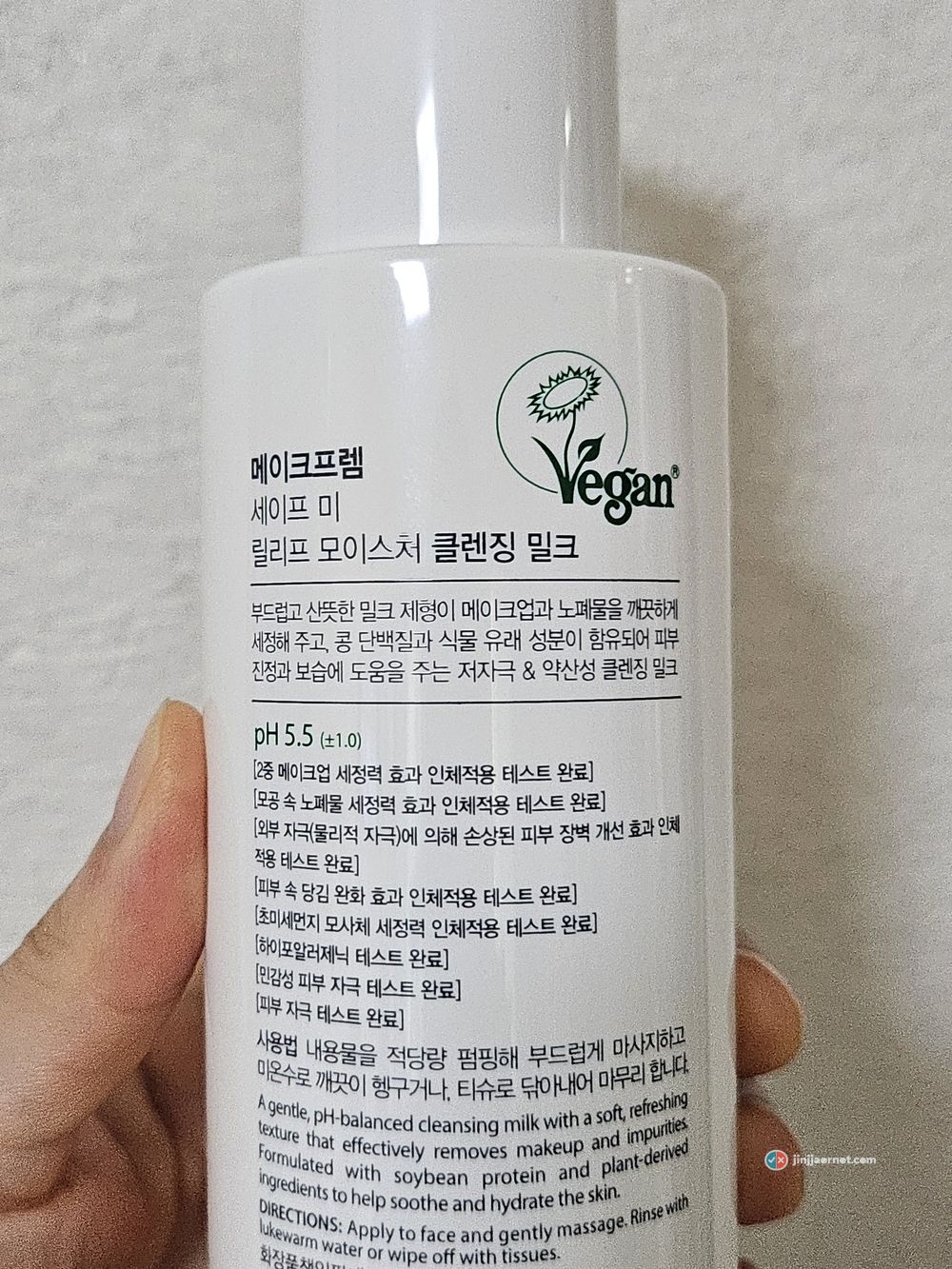
22 adults. 15–16 January 2026. Prederma Clinical Research. A second line dates the fine-dust test separately: 21 adults, 5 August 2019, a different lab. The English listing for this product will say dermatologist tested and stop.
The box goes further and gives the measurements:
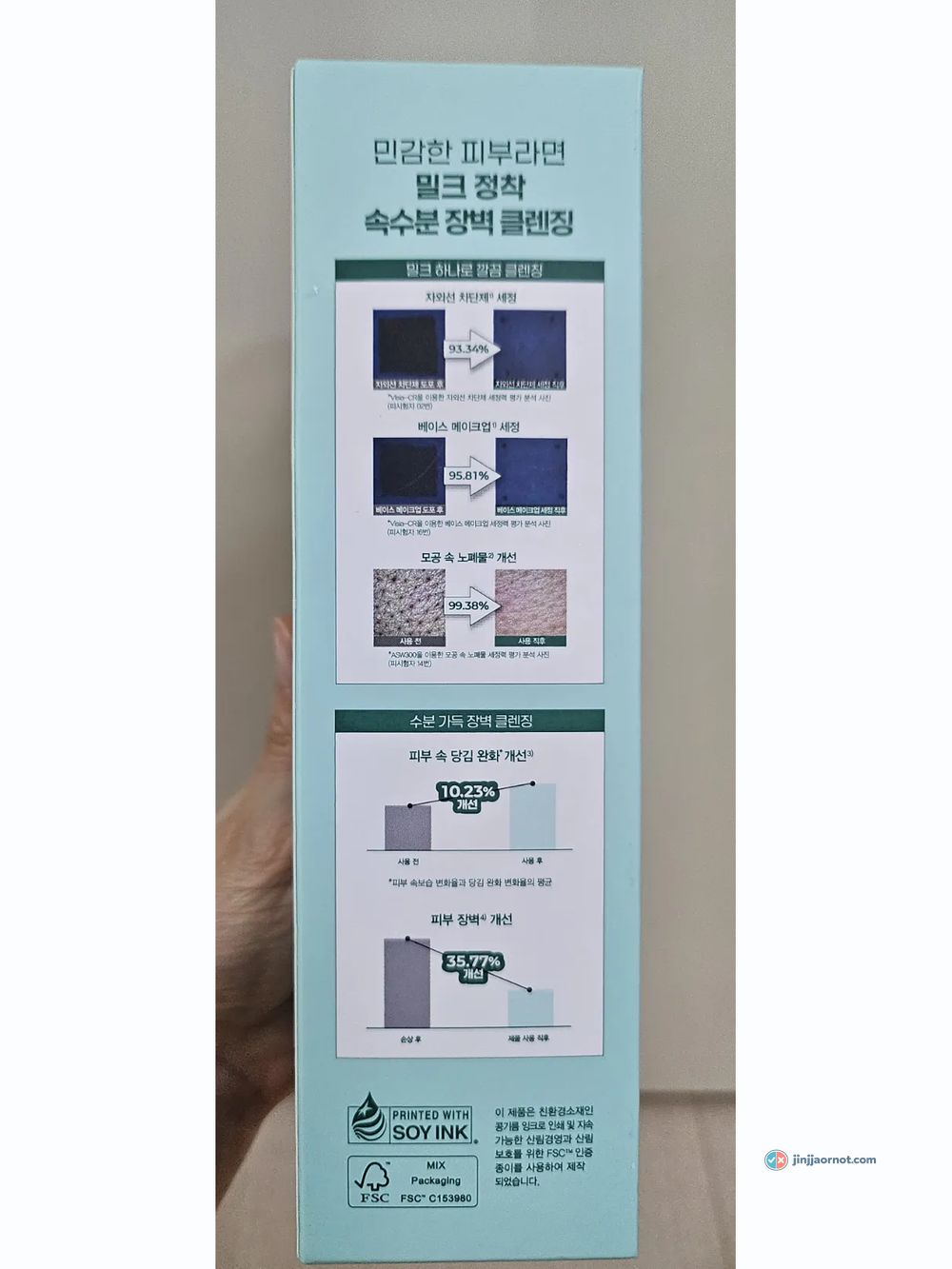
That 99.38% needs a sentence of context. It's one wash, photographed immediately afterwards, measuring waste on the surface of the pore. It is not a blackhead coming out. The Korean label is careful about this and says washing waste out of pores, not clearing blackheads — two phrases that collapse into the same English word and mean different things.
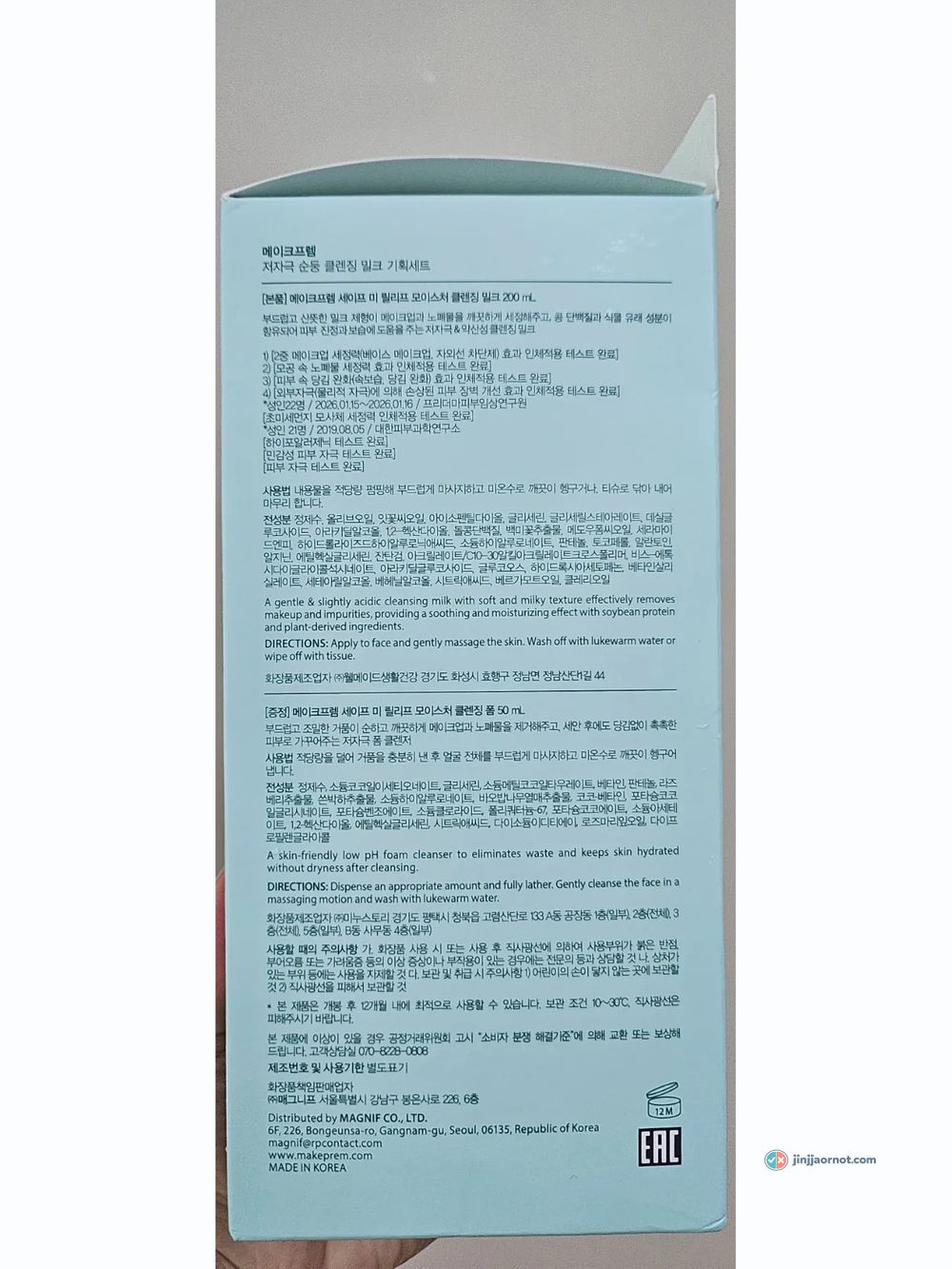
Five of the eight tests on this bottle are about irritation, barrier or tightness. That's a brand telling you what it built.
make p:rem Safe Me Relief Moisture Cleansing Milk — Finished the bottle — Sunny
Check price on Amazon →I've used a whole bottle of this one. It never broke me out, which for my T-zone is the thing I watch for. That's as far as my own record goes — I wasn't tracking anything else at the time, and I'm not going to reconstruct a verdict after the fact.
One is heavy, one is light, and the ingredient lists say why
Side by side these feel like different products. The ma:nyo sits on skin like a cream and needs a moment before it moves. The make p:rem thins out almost immediately and spreads like a lotion. That gap is not marketing. It's sitting in the first fifteen ingredients of each bottle.
ma:nyo builds its oil phase out of things that are solid at room temperature. Glyceryl stearate SE, then ceramide NP, ceramide AP and cholesterol at positions eight to ten, then stearic acid right behind them. Those are the lipids your own barrier is made of, and in a jar they behave like soft wax. That's the weight you feel.
make p:rem does the opposite. Olive oil is second on its list and safflower oil is third — both liquid, both in before anything that thickens. Ceramide NP is in there too, but on its own and further down at thirteenth, with soybean protein at tenth. The solid fatty alcohols that would firm it up, arachidyl and behenyl, are near the end. Liquid oils first, structure last: that's a milk that runs.
The heavier one did clean very slightly better. I want to be exact about how slightly: looking at the two hands afterwards, the ma:nyo side was a shade cleaner, and that is the entire size of it. It's a difference I could see in the result and not one I could feel while washing, which means I'm not willing to call it a reason to buy one over the other. If it were the kind of gap that decides a purchase, it would have been obvious.
So weight is mostly how a product feels going on, not how much it takes off. Pick the feel you'll actually enjoy at the end of a long day.
Scent isn't a tiebreaker either. Both are close to unscented — nothing to hold your breath through, nothing that lingers on skin after rinsing. If you've been avoiding this format because a cleansing balm once left you smelling of roses all evening, neither of these does that.
So I drew on my hand
Lip tint and a liquid liner, the same two on both hands, one pump of milk, thirty seconds of rubbing. Tell the two hands apart by the tint: on the ma:nyo hand the tint is drawn as a wave, on the make p:rem hand it is a straight bar.
One thing you need to know before you look at any of this. The tint I used is a stubborn one. It's a long-wear, transfer-proof formula — the kind that survives a bowl of noodles and comes off my lips grudgingly with an oil cleanse. I chose it on purpose because a test that everything passes tells you nothing. But it also means the stain you're about to see is not a fair picture of what a milk does to ordinary lipstick or a tinted balm. Hold that in mind at the end.
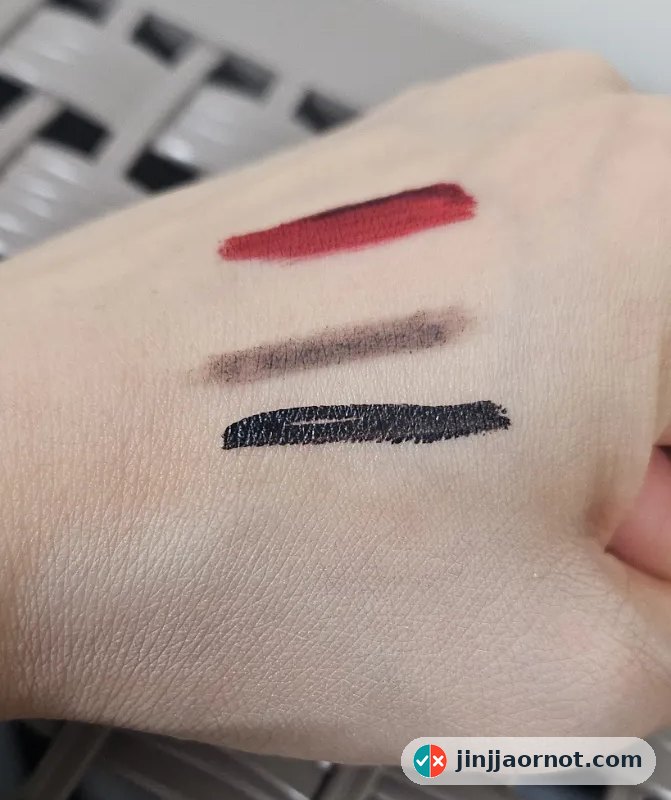
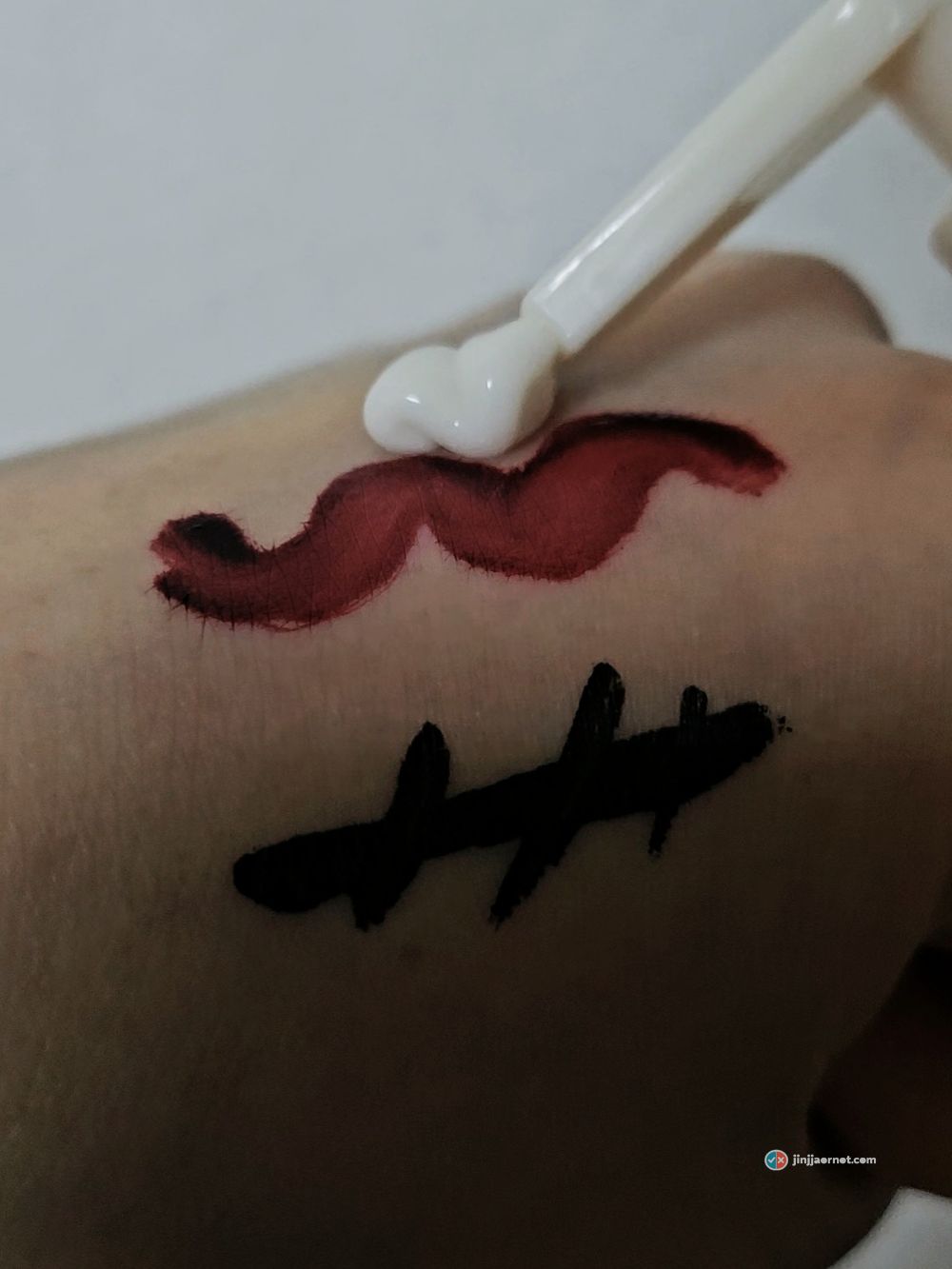
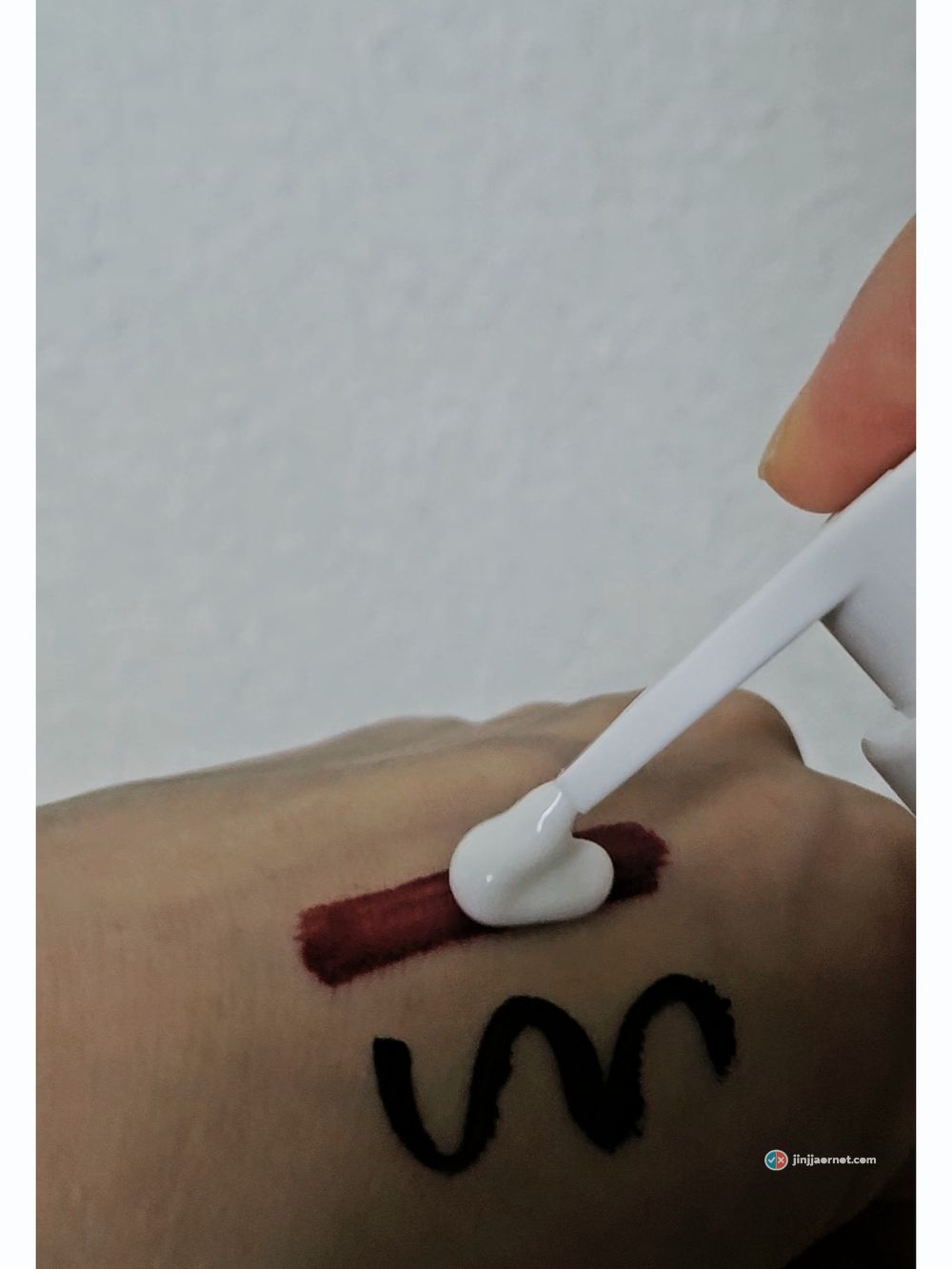
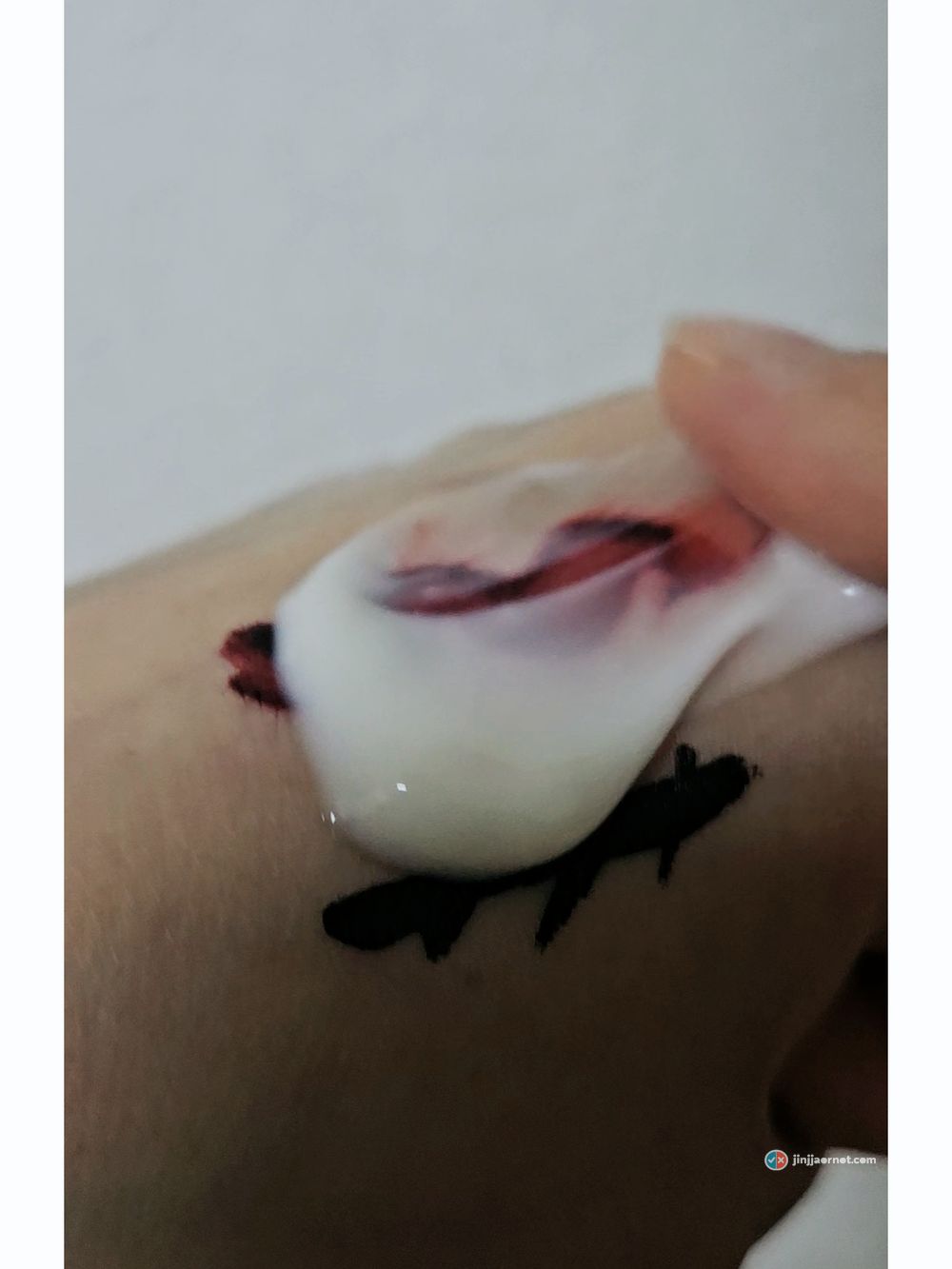
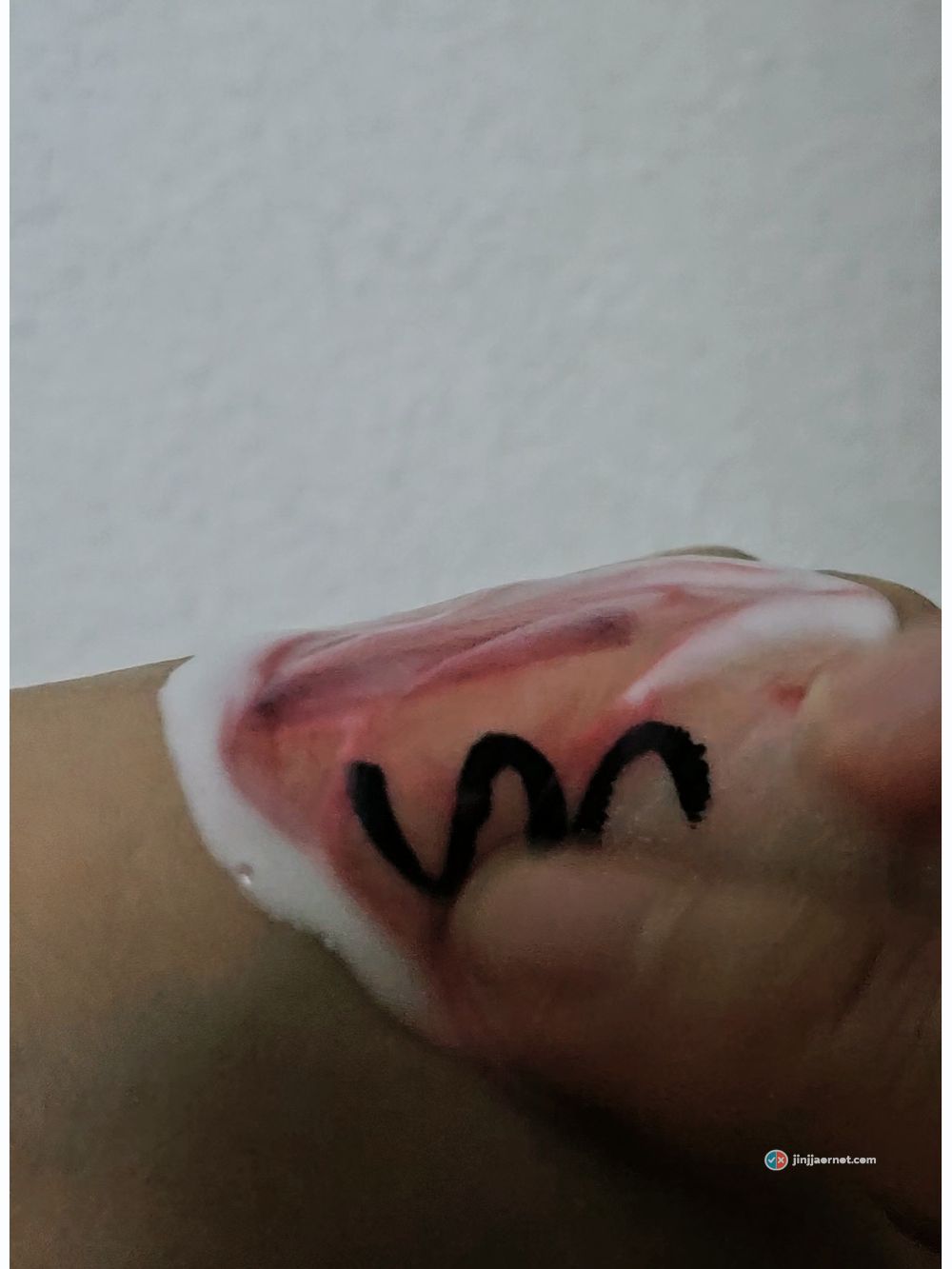
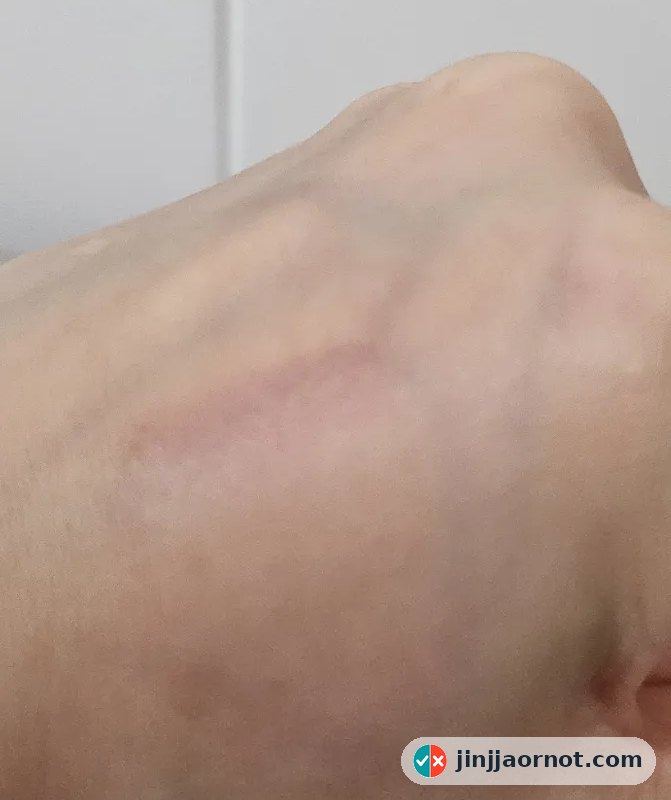
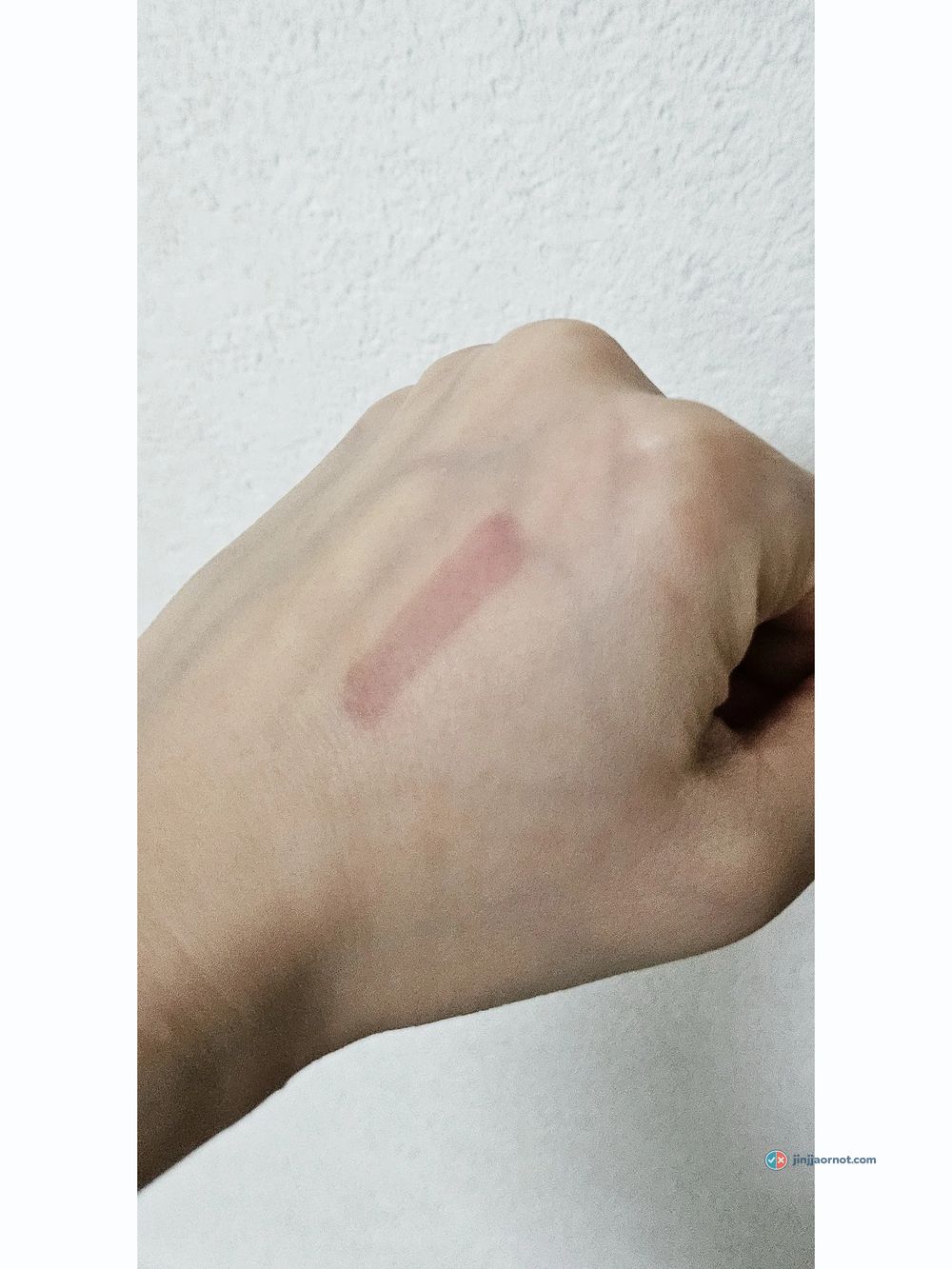
Both milks did essentially the same thing. The liner came off — it broke into flakes and lifted rather than melting — and the tint left a shadow on both hands. The ma:nyo side finished a shade cleaner, which I'd put down to the heavier texture giving the pigment more to hold on to. It's a margin I can see in the photos and wouldn't have noticed on my face. Look at the two tints: ma:nyo's has gone soft at the edges, make p:rem's still holds its shape. Fair warning that these are two separate shots rather than one frame — I couldn't rinse both hands and photograph them together — so read the edges of the stain rather than the exact shade.
Now put the tint back in the picture. A long-wear transfer-proof formula is close to a worst case for any first cleanse — an oil takes it in one pass, but very little else does, and I wouldn't hold a faint shadow of it against a product built for sunscreen and a light base. What the test does show cleanly is the liner: both milks lifted it completely, and that is the part most people actually worry about.
Still, the stain is the honest headline. As a first cleanse on its own, a milk is visibly weaker than an oil. An oil takes the tint with it in one pass. That isn't a flaw — it's the strength these were built for, and it's why a milk feels kind on skin that a stronger cleanser leaves tight. If clogged pores are your reason for shopping, I'd point you at an oil instead.
Which one
You want a number you can check → ma:nyo. 100ppm is printed and you can hold the brand to it. Ceramides sit high in the list and the front of the bottle doesn't lie about that.
You want to know what was actually measured → make p:rem. 22 people, dated, named lab. Most brands never let you see this.
Your skin feels tight and you react to things → make p:rem, on the record. I finished a bottle and it never broke me out.
You want the lighter feel → make p:rem. Liquid oils first, structure last. It spreads like a lotion.
You want the cushioned one → ma:nyo. Ceramides and cholesterol high on the list make it sit like a cream, and it finishes damper.
An oil cleanse leaves you tight, or you only wear sunscreen and a light base → either one. This is the format built for you. Between these two it's a question of texture — the ma:nyo took a shade more off in my hand test, but not enough to override which one you'd rather use. Both are close to unscented, so that won't decide it either.
You wear a full face → neither. Take a balm or an oil first, then a foam.
My verdict on the ma:nyo is still open — I've read it and swatched it but I haven't lived with it. That line will get filled in, not quietly deleted.
Questions I get asked
What is a cleansing milk actually for?
Sunscreen and light base makeup, and skin that feels tight after washing. Both brands put the milk there on their own line pages. It's the least work of the three first-cleanse formats — pump, roll, rinse.
How much soybean is in the ma:nyo?
100ppm of soybean seed extract and 100ppm of soymilk ferment filtrate. That's 0.01% each, printed on the Korean box because soybean is in the product name.
Why doesn't make p:rem print its numbers?
Because soybean isn't in the product name, so the law doesn't require it. What it prints instead is the trial — 22 adults, January 2026, Prederma Clinical Research.
Is a milk strong enough on its own?
Weaker than an oil, visibly. Both left a faint tint stain in my hand test — though I used a long-wear transfer-proof tint on purpose, which is close to a worst case. A second cleanse takes care of it. If you wear a full face, a milk isn't your first step.
Which of the two is lighter?
make p:rem, by a lot. Liquid olive and safflower oil sit second and third on its list. ma:nyo puts solid lipids — ceramides, cholesterol, stearic acid — near the top, so it behaves like a cream. The heavier one finished a shade cleaner in my hand test, but only a shade — not enough to choose on. Both are close to unscented.
Is a milk more moisturising than an oil?
It finishes damper. An oil rinses away and leaves skin closer to bare; a milk leaves a soft film behind. ma:nyo prints that as its promise on the bottle in both languages — gently removes, deeply hydrates. If an oil cleanse leaves you tight, that finish is the reason to try a milk.
Wondering whether a milk is the right format at all? Balm, oil and milk side by side.
Milk is the gentlest of the three formats. If it turns out too gentle for the day you've had, here are five Korean cleansing oils compared and three balms.