🇰🇷 Korean food · Sales data
What Koreans actually buy
Heads up: some links below are affiliate links, so I may earn a small commission if you buy through them — at no extra cost to you. The rankings are government-collected sales data and nothing on this page can influence them.
The short answer
Every English list of "best Korean snacks" is somebody's favourites. This one is till receipts. Korea's Food Industry Statistics Information publishes retail point-of-sale data collected by NielsenIQ Korea, and these are the full-year 2025 numbers. Shin Ramyun is number one and outsells Buldak more than two to one at home. Ranked by money spent, not by what went viral. Below the rankings, what's new on the shelf this year.
The figures are in millions of Korean won. I've marked the ones I own and have photographed myself — and the ones I haven't, because a ranking is only worth reading if you can tell which is which.
Ramyun
| # | Brand | 2025 sales | Tested |
|---|---|---|---|
| 1 | Shin Ramyun (Nongshim) | 400,167 | ✓ |
| 2 | Chapagetti (Nongshim) | 218,796 | ✓ |
| 3 | Jin Ramen (Ottogi) | 189,902 | — |
| 4 | Buldak (Samyang) | 181,935 | ✓ |
| 5 | Yukgaejang (Nongshim) | 122,210 | — |
| 6 | Neoguri (Nongshim) | 108,632 | — |
| 7 | Ansungtangmyun (Nongshim) | 106,969 | — |
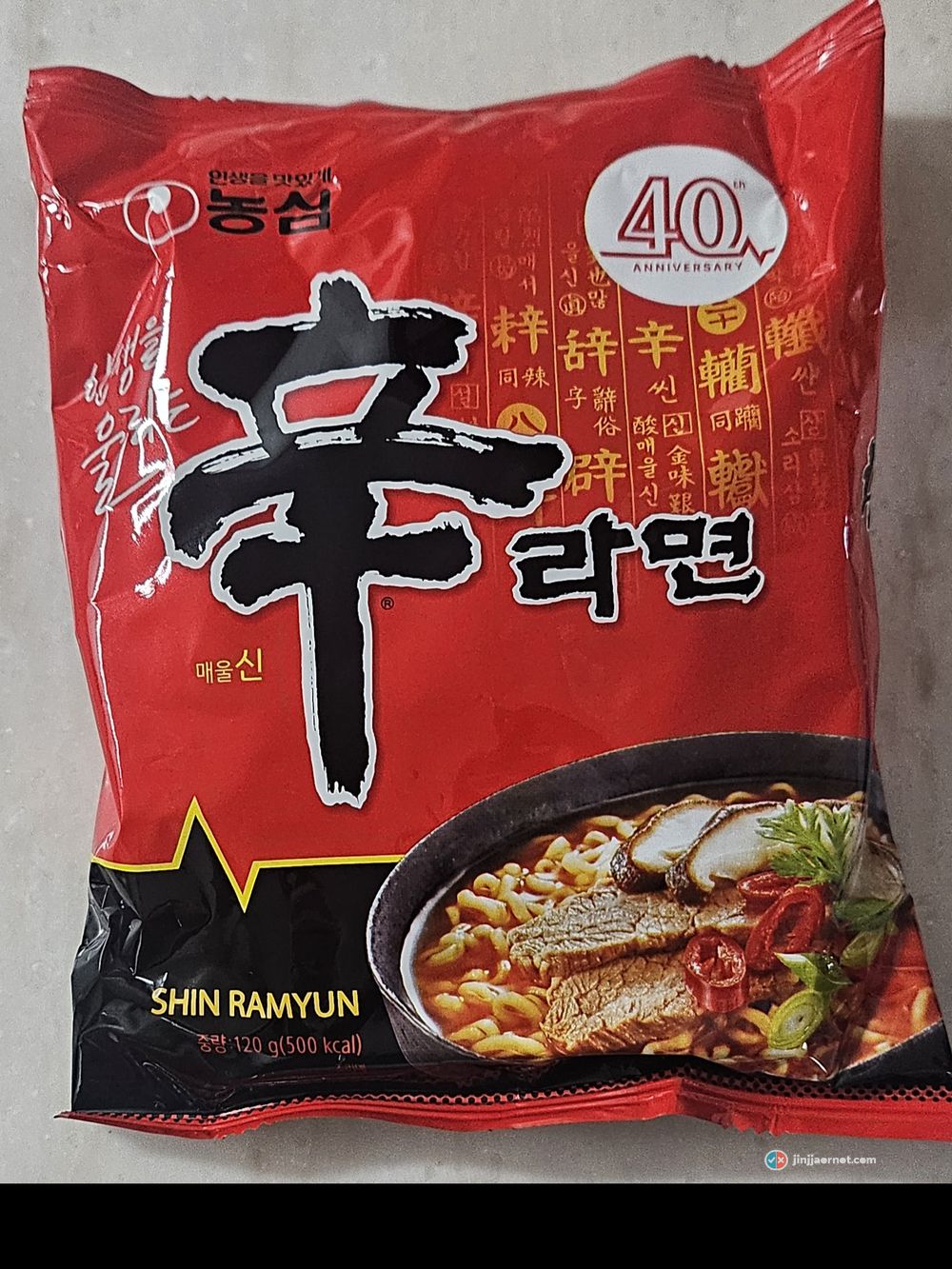
This is the table that surprises people. Ask the internet what Koreans eat and you get Buldak. Ask a Korean till and you get Shin Ramyun, selling more than twice as much. Buldak is real and it is genuinely popular — fourth out of everything on the shelf is not nothing — but it is not the default. It's the one that travelled.
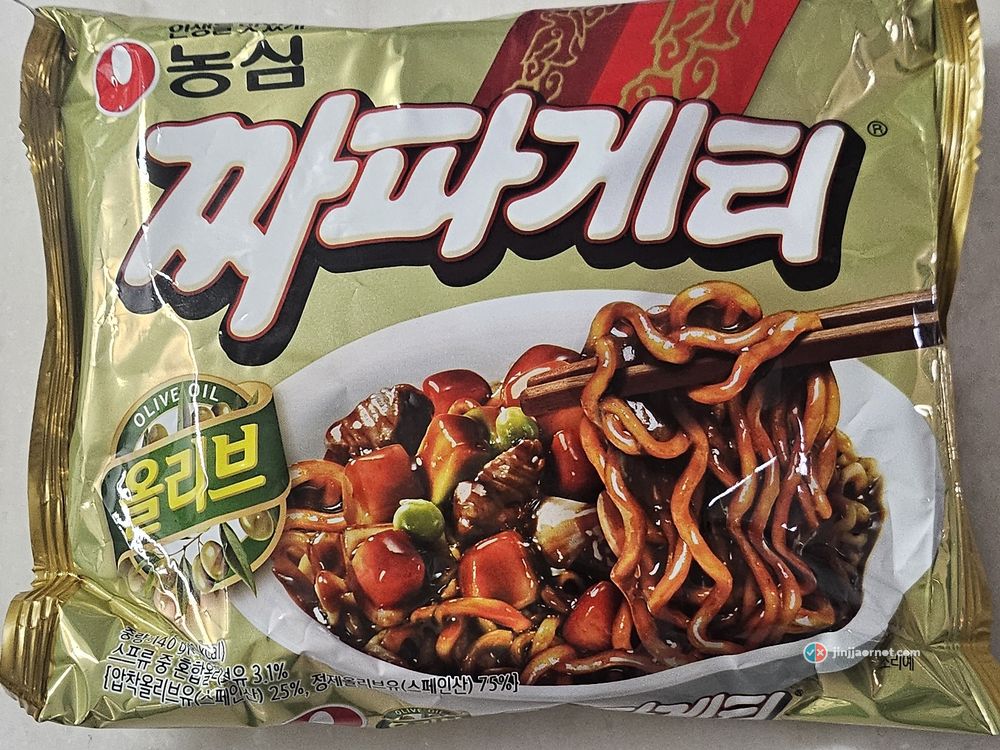
Chapagetti at number two says something about the category that the spicy-noodle reputation hides. The second most popular ramyun in Korea has no soup and no chilli in it. It's a black bean sauce noodle, and it effectively owns that whole sub-category — the jjajang segment is 221,460 and Chapagetti alone is 218,796.
The two packets also make a good salt comparison. Shin Ramyun carries 1,790mg of sodium, 90% of a day's guideline. Chapagetti carries 1,100mg. The difference is the soup — one you drink, one you drain.
I haven't eaten Jin Ramen at number three, so I'm not going to tell you what it tastes like. Buldak I have ranked properly.
Snack foods
| # | Brand | 2025 sales | Tested |
|---|---|---|---|
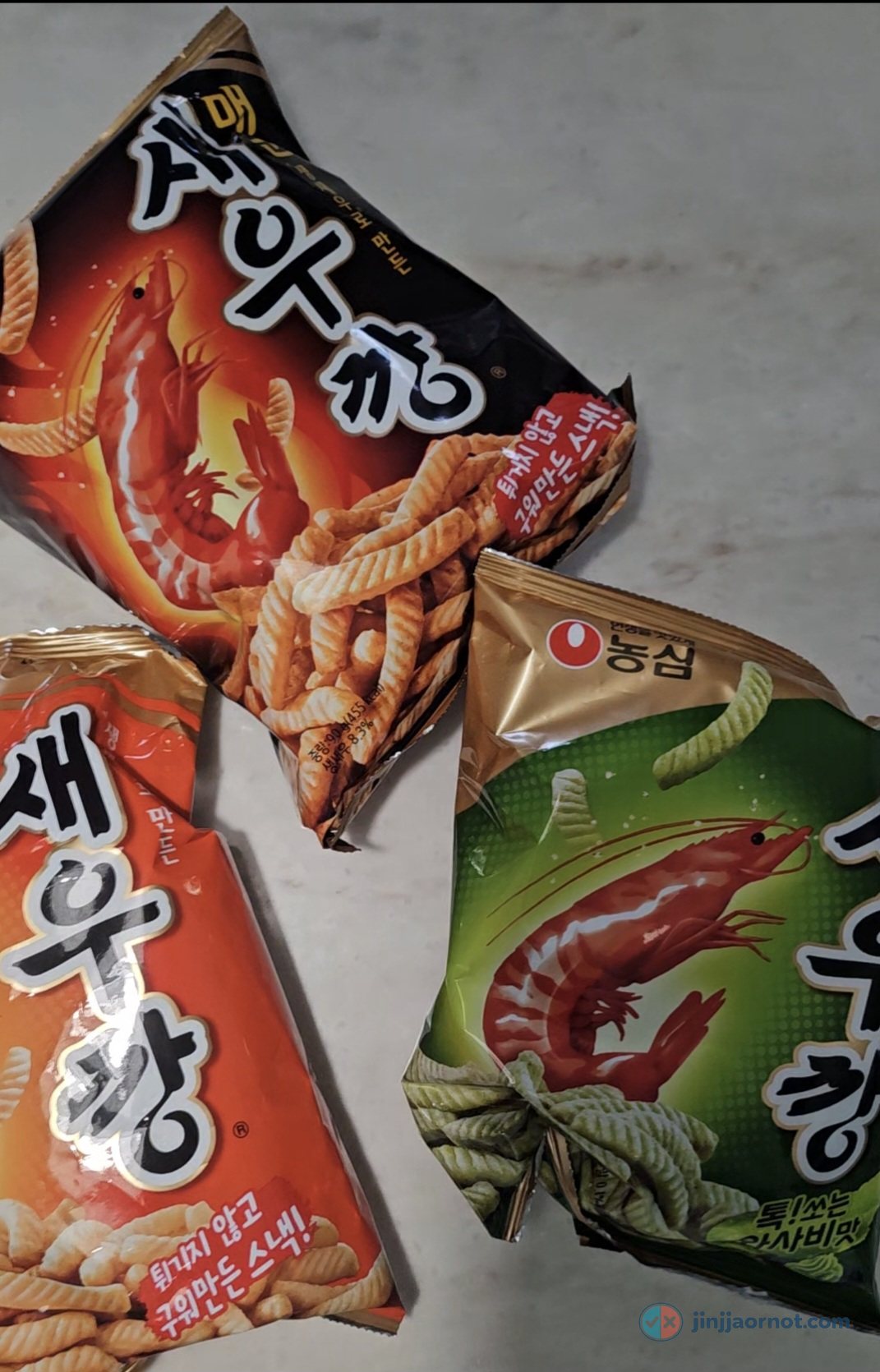
| 1 | Saewookkang (Nongshim) | 126,896 | ✓ |
| 2 | Pocachip (Orion) | 116,783 | — |
| 3 | Pringles | 108,797 | ✓ |
| 4 | Kkokkalcorn (Lotte) | 80,279 | — |
| 5 | Squid Peanut (Orion) | 67,956 | — |
| 6 | Matdongsan (Haitai) | 65,004 | — |
| 7 | Sun Chips (Orion) | 46,071 | — |
| 8 | Honey Butter Chip (Haitai) | 42,281 | ✓ |
Pringles at number three is the one worth sitting with. An American tube, on a Korean shelf, outselling most of the Korean brands around it. If you're reading this from the US, you already own the thing that's third best-selling in Korea — you just own a different set of flavours. That gap is its own article.
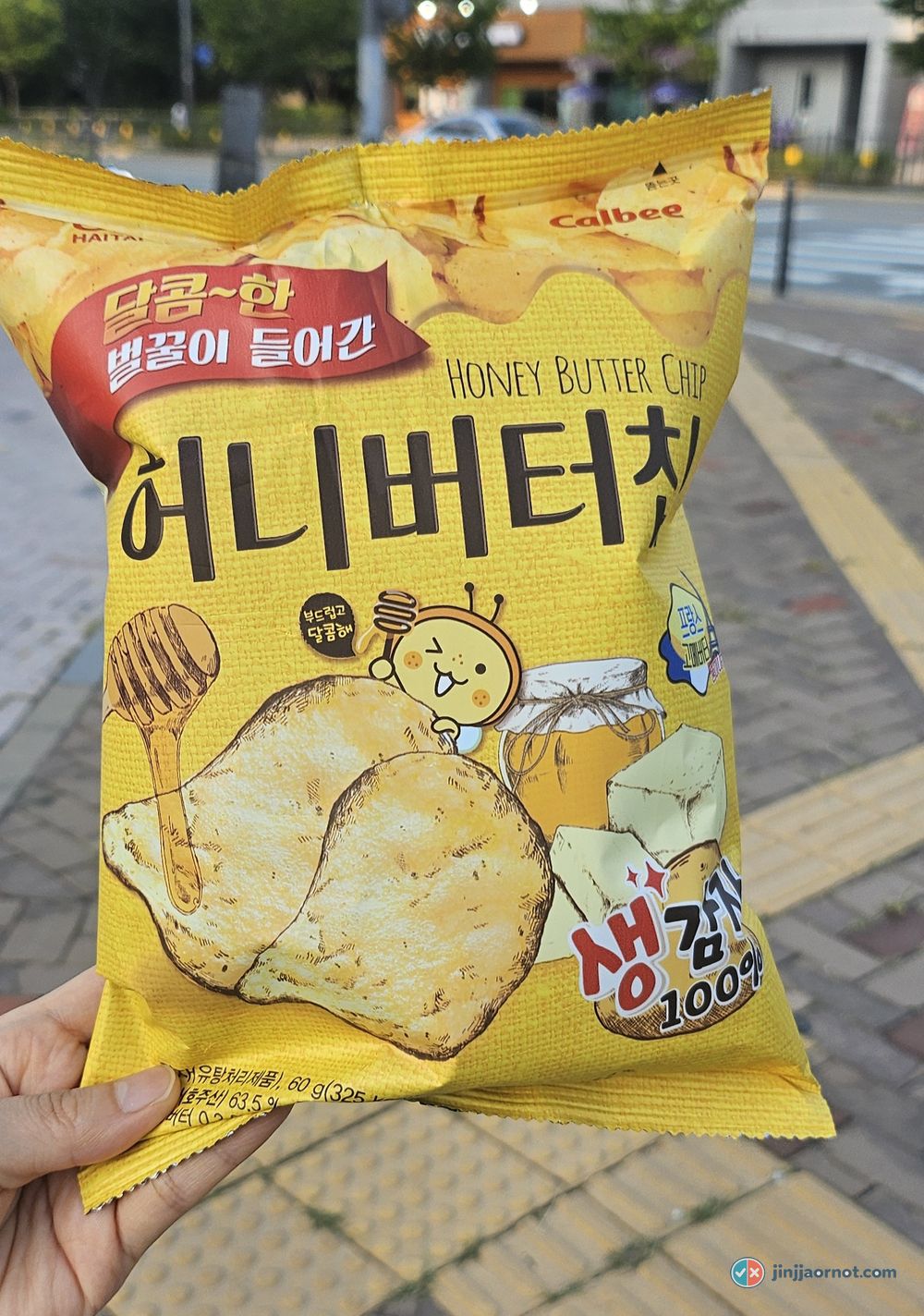
Honey Butter Chip at eight is the whole "Korea has moved on" argument in one row. In 2014 this bag caused a genuine national shortage and a resale market. It is still a good chip and it is still on every shelf. It just isn't the event any more, and now there's a government number that says so rather than me guessing. The full story of that bag.
Two more things this table settles. Kkobuk Chip and Goraebap are not in the top ten — both are staples of English-language "best Korean snacks" lists. And I've never eaten Pocachip at number two, so it doesn't get a verdict from me.
Biscuits
| # | Brand | 2025 sales | Tested |
|---|---|---|---|
| 1 | Pepero (Lotte) | 145,629 | ✓ |
| 2 | Homerun Ball (Haitai) | 84,077 | ✓ |
| 3 | Ace (Haitai) | 63,201 | — |
| 4 | Yegam (Orion) | 46,084 | — |
| 5 | Oreo | 43,037 | — |
| 6 | Digestive (Orion) | 42,290 | — |
| 7 | Margaret (Lotte) | 40,720 | — |
| 8 | Binch (Lotte) | 34,088 | — |
| 9 | Chocosongi (Orion) | 26,175 | — |
| 10 | Kancho (Lotte) | 19,327 | ✓ |
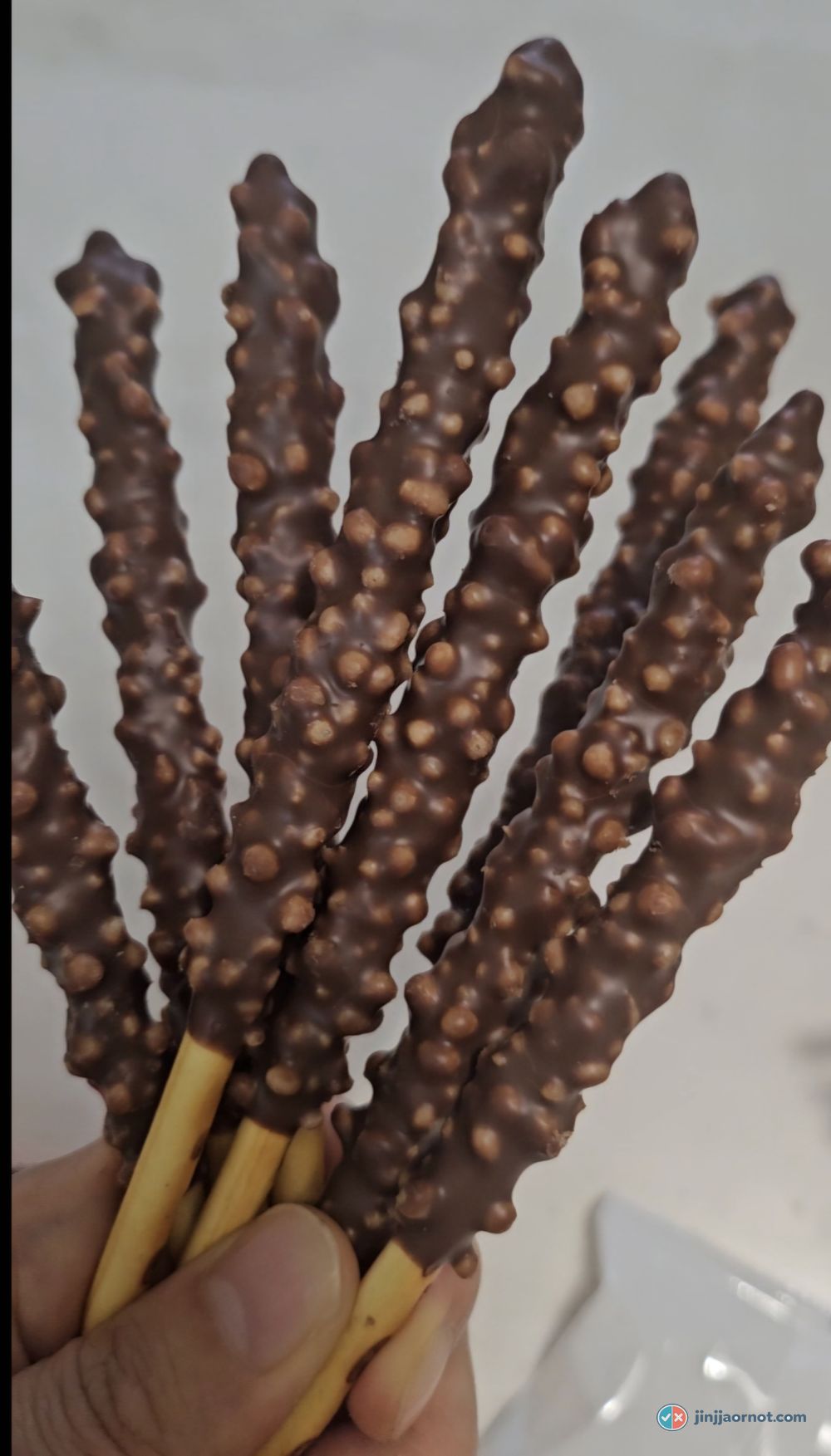
Homerun Ball at two and Kancho at ten is a 4× gap, and that is worth knowing because English lists usually treat them as the same kind of thing — a small filled biscuit for children. Koreans don't buy them at anything like the same rate. I ate both and the difference is not subtle.
Oreo at five is the other quiet surprise: a foreign biscuit sitting mid-table in Korea, the same way Pringles sits third in snacks.
Just landed: the Kick series
The rankings above are the settled part of the shelf. This is the moving part — and right now the most interesting thing on it is a 47-year-old snack that suddenly grew siblings.
Banana Kick launched in 1978. For most of half a century it was the only one. Then Nongshim added Melon Kick in April 2025 and Mango Kick on 18 May 2026. Melon Kick sold 1.44 million bags in its first week and 7.2 million in three months, and the Kick brand as a whole grew about 70% year on year off the back of it. Blueberry, lemon and grape are already trademarked, though Nongshim says registering a name isn't the same as planning a product.
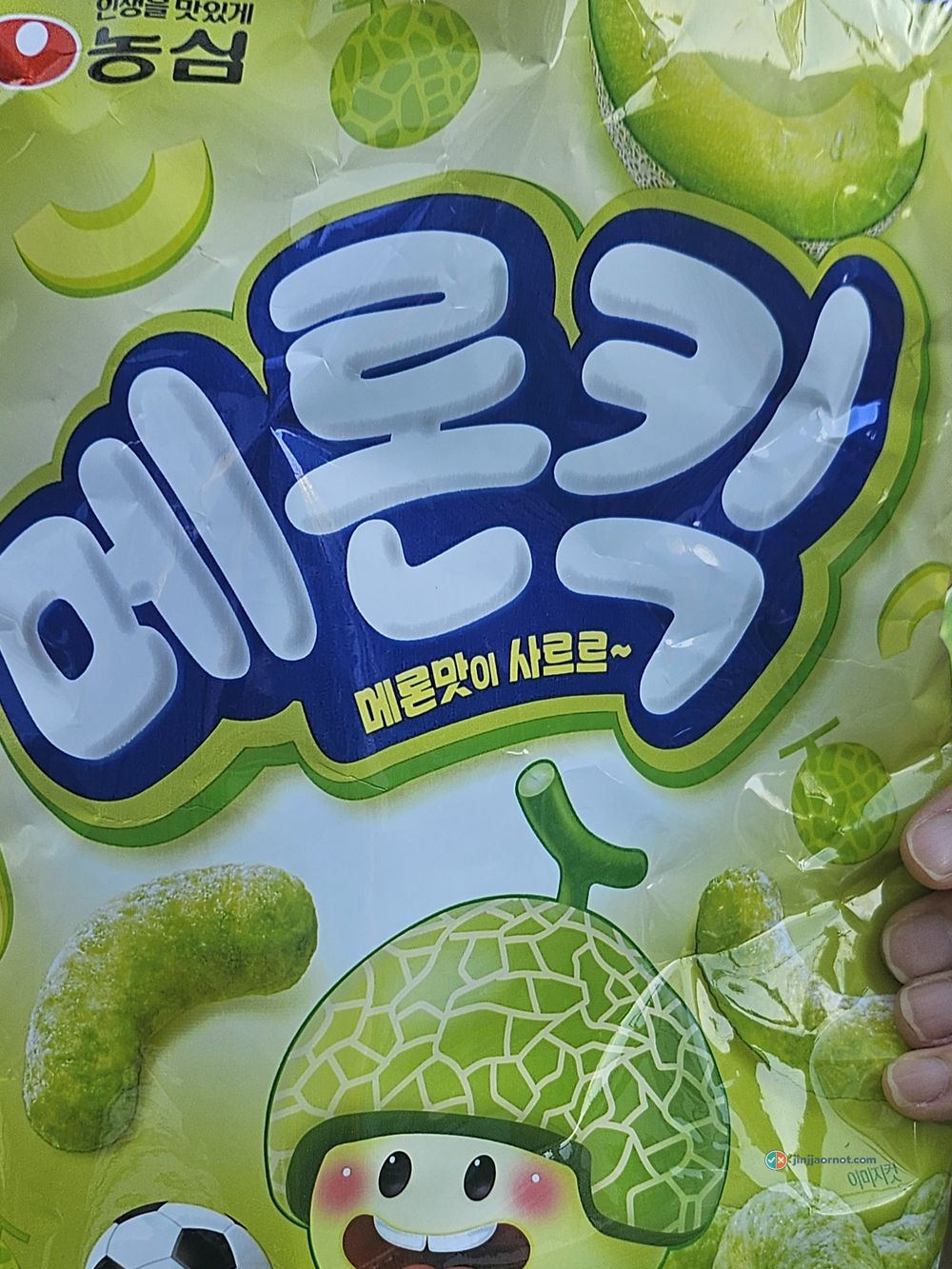
Melon Kick tastes like Melona. That's the useful sentence if you're reading this from abroad, because Melona is sold in Korean groceries everywhere and a lot of people have had one without knowing what it was. The bag prints melon juice powder at 0.25%, and the melon is Korean-grown. Nobody would call this a fruit snack. It still lands.
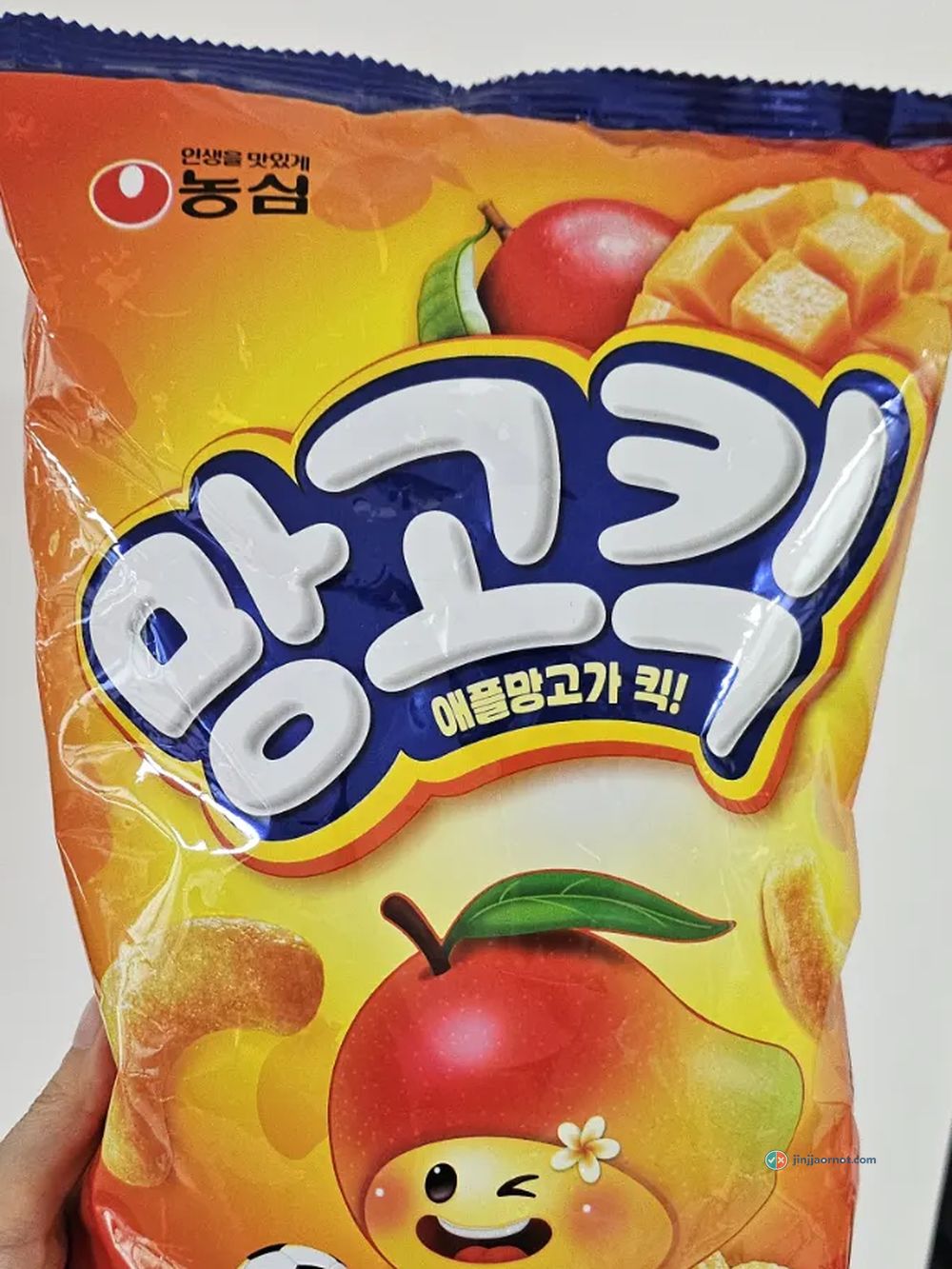
Mango Kick is the one I expected to dislike. Korea's summer dessert is apple mango bingsu, and building a corn puff around it sounds like a stretch. It isn't bad at all. Sweeter than the melon — 44g of sugar per bag against 22g — and closer to a dessert than a snack, which is clearly the point. The back of the bag prints a recipe for making bingsu out of it.
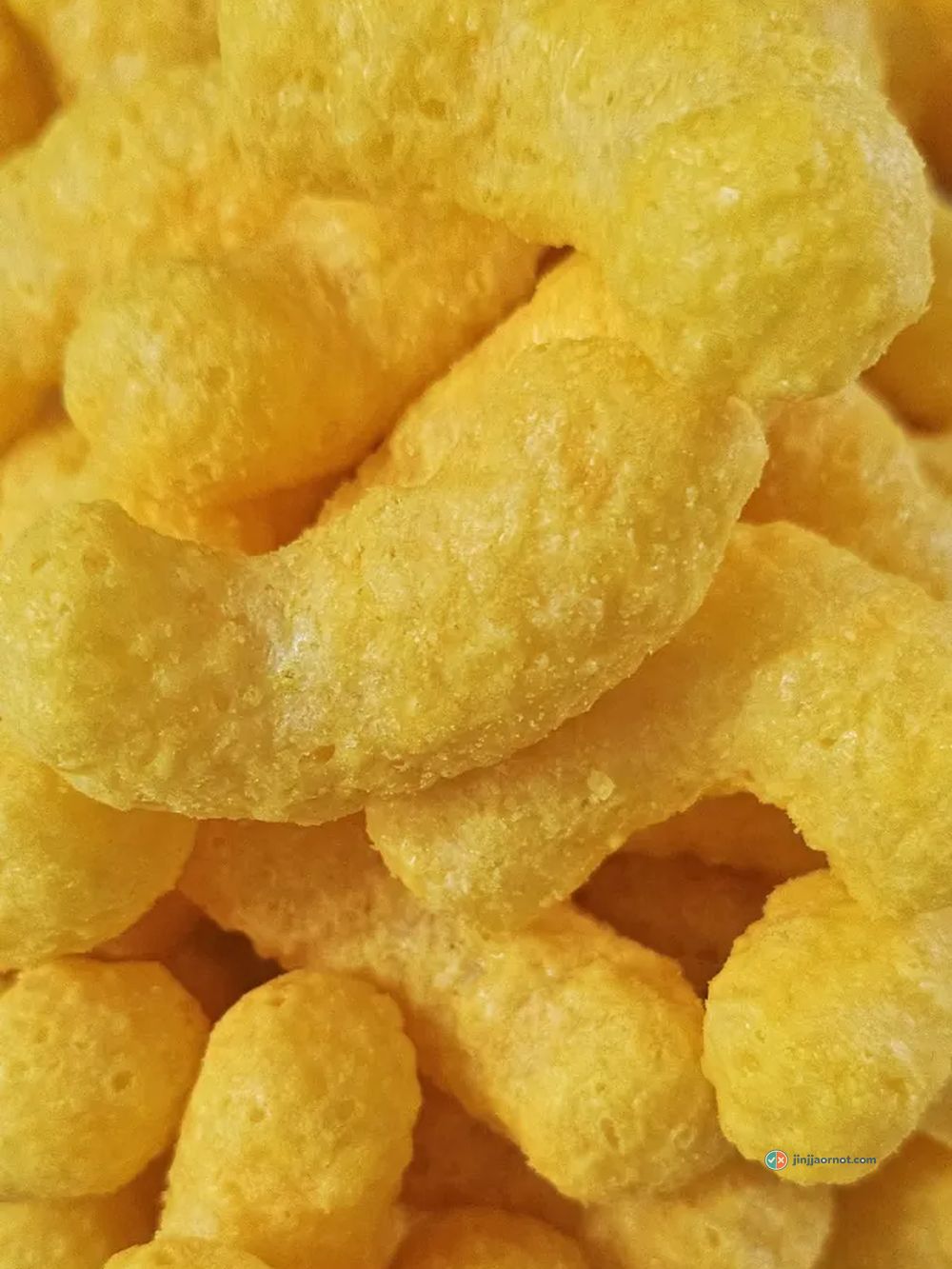
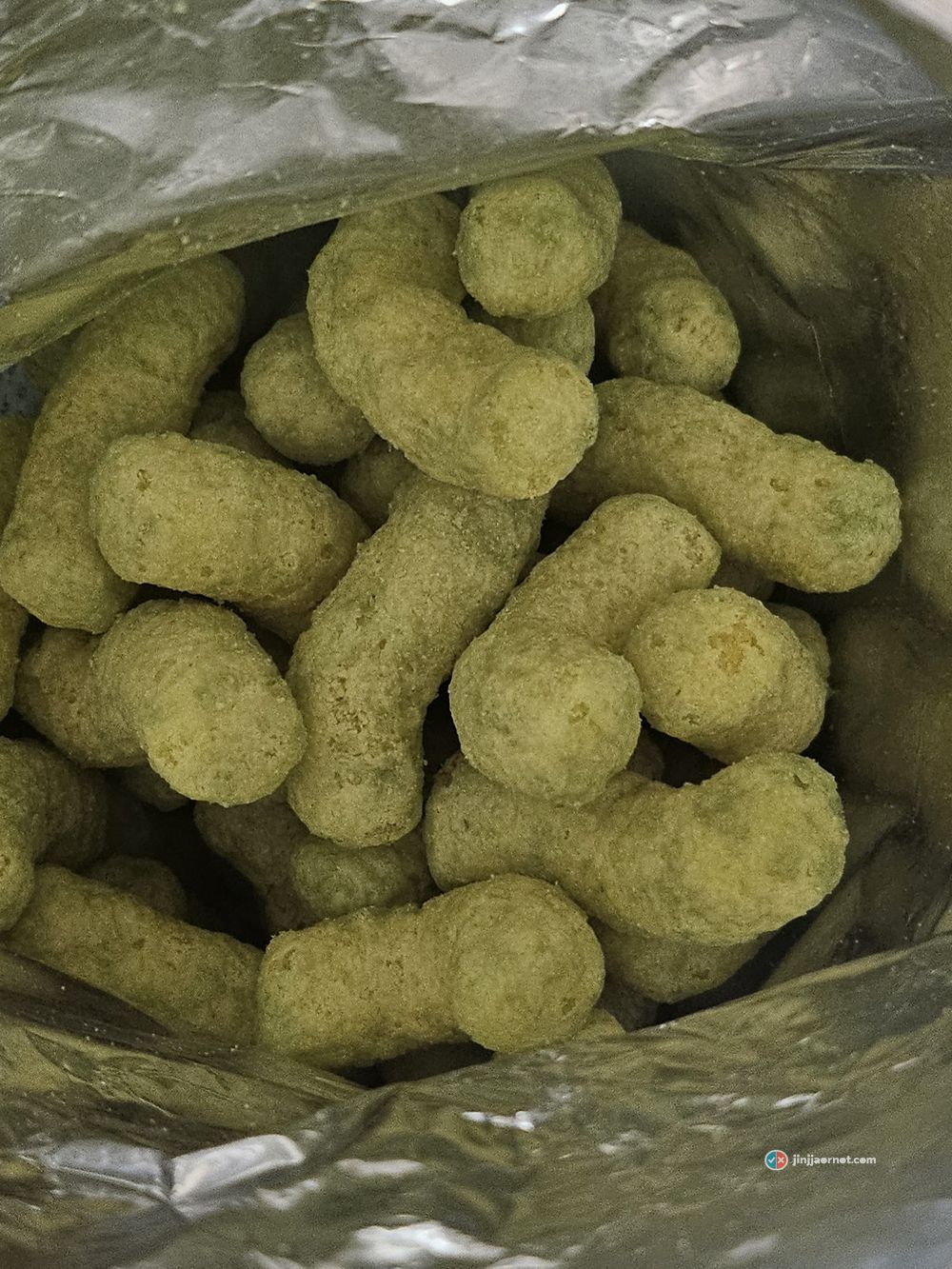
Both bags print the fruit percentage on the front, in tiny type in the bottom corner, for the same reason Korean skincare prints it: the fruit is in the product name. 0.46% and 0.25%. I'd buy both again anyway — a corn puff is not a fruit and I wasn't shopping for one. What the number tells you is that you're buying a flavour, not an ingredient, and at that job they're good. The same rule, applied to skincare, runs from 67% down to 0.29 ppm.
How to read these numbers
Two warnings, because I'd rather you trust the rest of the page.
These are ranks and amounts, not market shares. The brand table's denominator is only the indexed portion of each category, so dividing one brand's sales by the category total gives a share figure that isn't true. You'll see percentages like that on other sites. They're wrong, and I'd rather give you less than give you that.
The tables stop at ten. When I say a product isn't in the top ten, that's all I know — not that it's failing, just that it isn't up here.
Source: Food Industry Statistics Information (aTFIS), retail POS via MarketLink, full year 2025, millions of KRW. This page uses government POS data only. Rankings whose method isn't published — including brand reputation indexes, which measure online mentions rather than sales — are not included here.
Questions I get asked
Is Buldak the most popular ramyun in Korea?
No. Fourth. Shin Ramyun sells more than twice as much at home. Buldak is what travelled, not what Korea eats.
Why is Pringles in a Korean ranking?
Because Koreans buy it. Third best-selling snack brand in the country. Foreign brands compete on the same shelf and this table doesn't separate them out.
Are these the products I should buy first?
Not necessarily. This is what Korea buys, which is a different question from what travels well or what you'd like. The snack finder answers that one.
What's new in Korean snacks right now?
The Kick series. Banana Kick stood alone from 1978 until Melon Kick arrived in April 2025 and Mango Kick on 18 May 2026. Melon Kick sold 1.44 million bags in week one. Both are good; neither is fruit.
How often does this update?
The source refreshes monthly and half-yearly. I'll update this page when the annual figures move, and the date at the top will change when I do.
Every ingredient percentage I've read off a Korean box is collected on its own page. For snacks specifically, the ten snacks Koreans buy most goes deeper on the food itself.