Korean snacks · Tested
Korean Pringles Flavors, Ranked by Someone Who Reads the Label
I bought every can here with my own money. Some links below are affiliate links — if you buy through them I may earn a small commission, at no extra cost to you.
The short answer
Buy Spicy Texas Style BBQ — salty, hot and smoky, and the US sells a different can under that name. Skip the Korean fried chicken flavor: the Korean label prints 0.025% chicken powder, and it tastes like it. One catch worth knowing before you look: none of these cans are on Amazon US. This is a Korean-grocery errand.
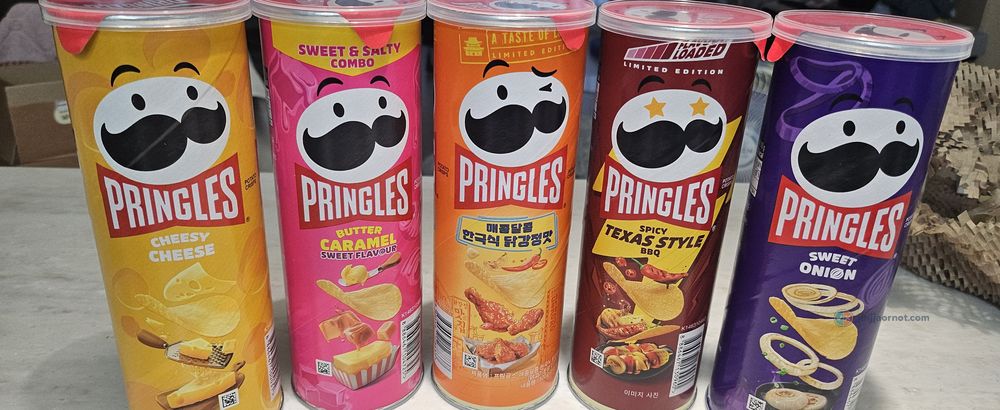
Pringles is not a Korean brand and nobody in Korea pretends it is. It still placed fifth in Korea's snack sales rankings at 41.8 billion won — one of only two foreign brands in the domestic top ten. So the flavors Korea gets are not an afterthought. They are built for a market that buys a lot of them.
What follows is five cans, eaten by me, with the Korean-language label read out loud. That label is the whole point of this article, and I'll explain why in a minute.
The Texas one is the surprise
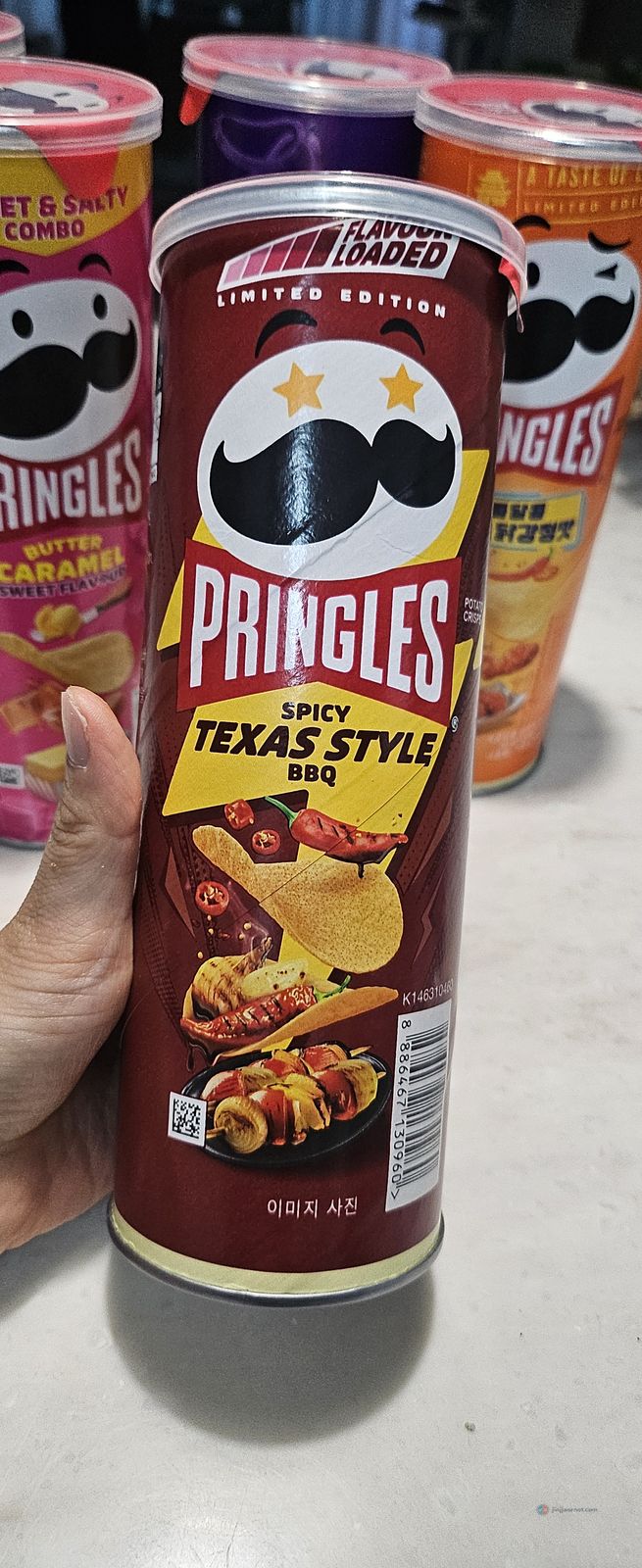
Jinjja ✓ My pick
This is my favourite of the whole Korean Pringles shelf. Salt and heat arrive together and there's a real smoky char sitting behind them. If you like a crisp that fights back a little, this is the one.
Here's the part Americans find strange. The United States has its own Texas-named Pringles. It is a different product with a different name on the can. This one — Spicy Texas Style BBQ — is made for Asian shelves, and American buyers usually meet it through import snack sellers at import-snack prices. A flavor named after a US state that you have to import into the US.
I have no way of knowing whether it's a permanent fixture here. The can says limited edition, and I've only been watching this shelf for so long. What I can tell you is that it's on it now, and it's the one I'd hand you first.
Butter Caramel: I don't like Honey Butter Chip, and I like this
Jinjja ✓
Korea has a well-documented sweet-and-salty snack habit, and Honey Butter Chip is the famous version of it. I'm not a fan of that one. I am a fan of this one, which I did not expect when I put it in the basket.
The difference is restraint. The label breaks the seasoning down for you: 7.0% butter caramel seasoning, and inside that, 1% butter powder and 0.2% caramel. The caramel is a background note rather than the main event, so it reads as a salty crisp with a sweet edge rather than a dessert pretending to be a chip. Per 100g it carries 5.7g of sugar — the highest of the five, but not by a wild margin.
If sweet-and-salty snacks usually feel like too much to you, this is the gentler doorway into the idea.
The chicken one, and what the label gives away
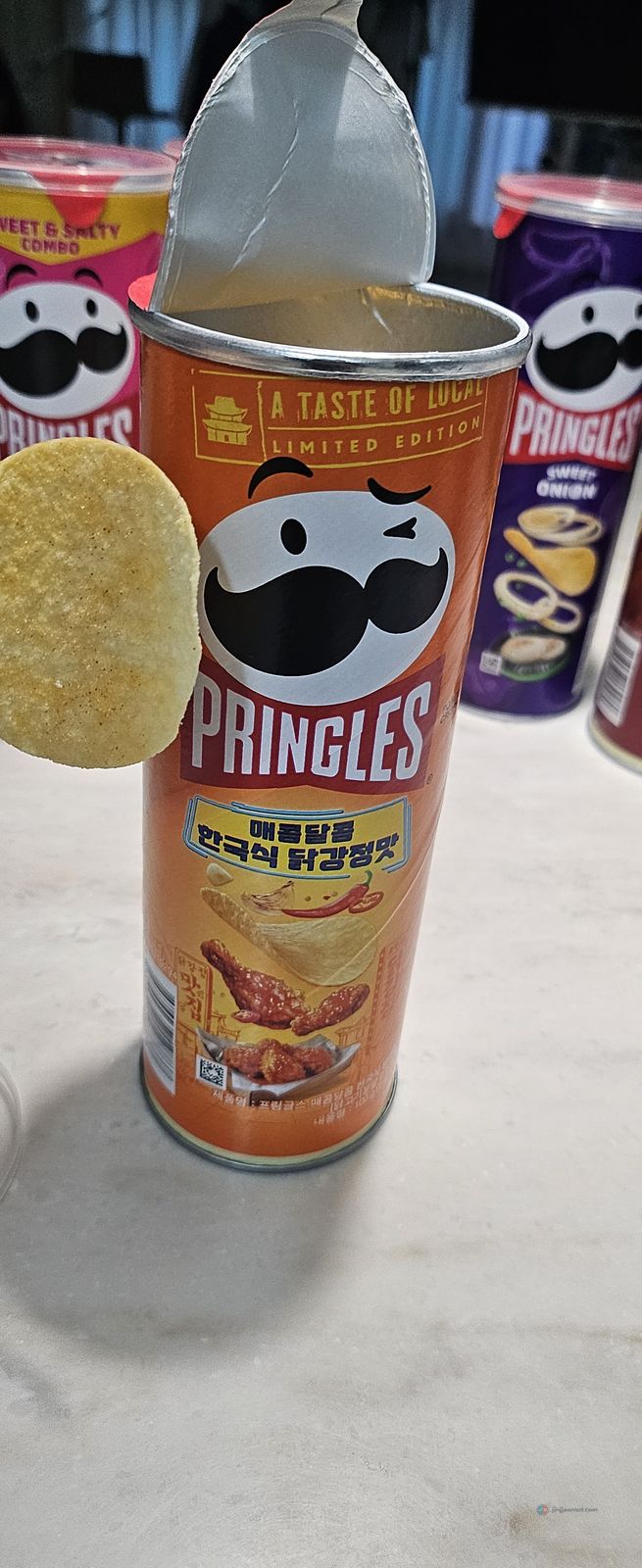
Not what it says
The can promises 매콤달콤 한국식 닭강정맛 — sweet-and-spicy Korean-style fried chicken. Dakgangjeong is a real and specific thing here: crisp fried chicken tossed in a sticky, garlicky, sweet-hot glaze.
This is not close. It's pleasant enough as a crisp — sweet, a bit savoury, barely any heat — but nobody in Korea would eat it and think of dakgangjeong.
The label tells you why before you open it. Printed right on the front, under the product name: [닭고기분말 0.025%]. Chicken powder, 0.025 percent. That's 250 parts per million.
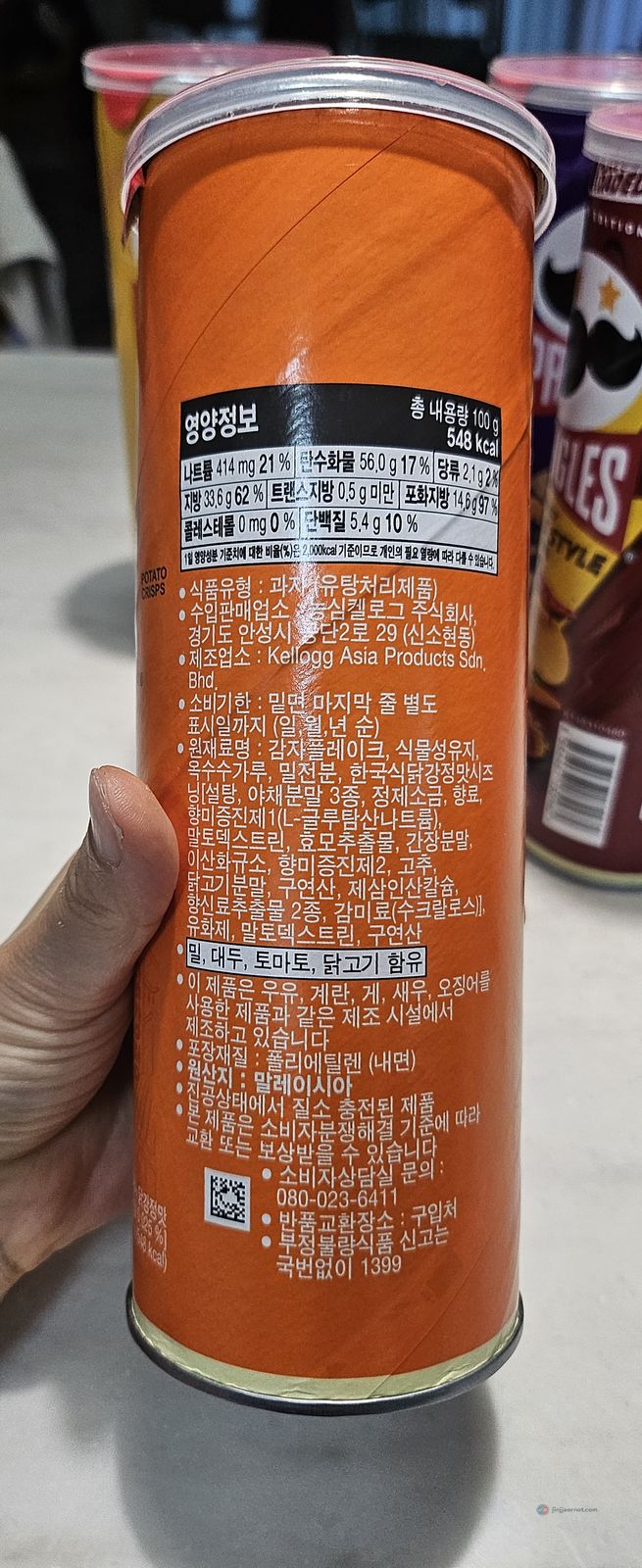
That number is not there by accident or generosity. Korean labeling rules require a concentration figure to be printed when an ingredient is named in the product name. Call your snack "Korean fried chicken flavour" and you must disclose how much chicken is in it. This is the single most useful thing about shopping in Korea, and it's invisible to anyone who can't read the script — which is most of the people buying these cans abroad.
The same label answers a question people ask a lot: Korean Pringles are not made in Korea. The manufacturer is Kellogg Asia Products Sdn. Bhd. and the country of origin is Malaysia. Nongshim Kellogg in Anseong is the importer and distributor. So "Korea-exclusive" means designed for this market, not produced in it.
If you want Korean chicken in a chip, buy this instead
Jinjja ✓
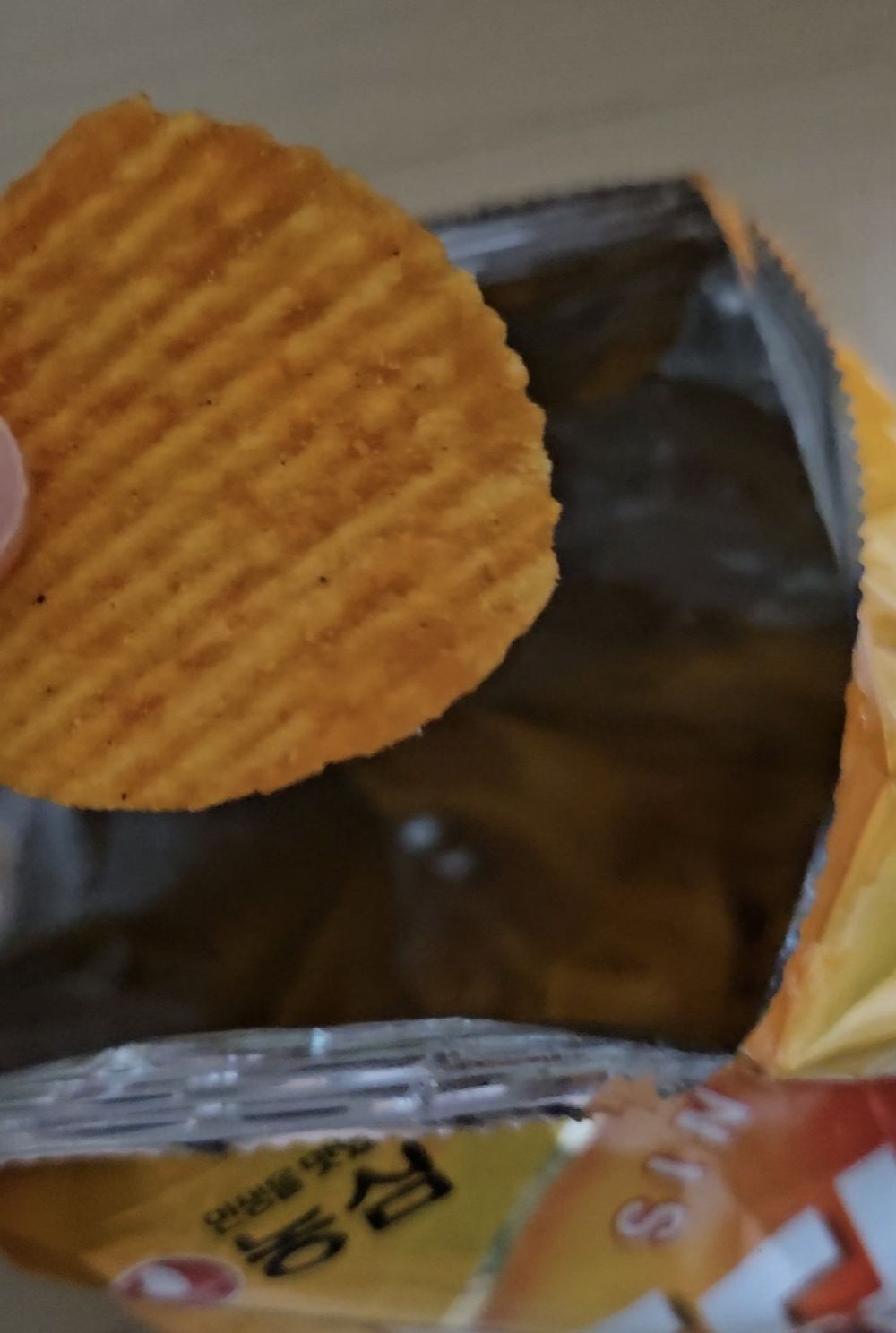
Don't leave with nothing. Nongshim makes a ridged potato chip in K-Yangnyeom Chicken flavour, and it does the job the Pringles can was advertising: sweet, garlicky, properly savoury, tasting like the glaze rather than a vague idea of it.
Two honest notes. It is barely spicy — a young child could eat a handful without complaint, so don't buy it expecting fire. And unlike Pringles' reconstituted potato flakes, this is cut from whole potato slices, which is why the texture is closer to a kettle chip than a stack.
Not sure which Korean snack is for you?
Three taps and I'll match you to something from the shelf I actually buy from — and tell you what I left out, and why.
Try the Korean Snack FinderSweet Onion: the quiet one that sells
Jinjja ✓
Sweet and salty at once, mild all the way through, and easily the most child-friendly can of the five. Nothing about it is dramatic, which is exactly why it works as the tin you leave open on a table.
One shelf detail worth more than any review line: it also comes in a small can, not just the tall one. Brands don't add a second size to a flavour that isn't moving. The label reads 5.5% onion cracker seasoning, with onion powder at 12% of that seasoning.
Cheesy Cheese: bought, not yet eaten
Still testing
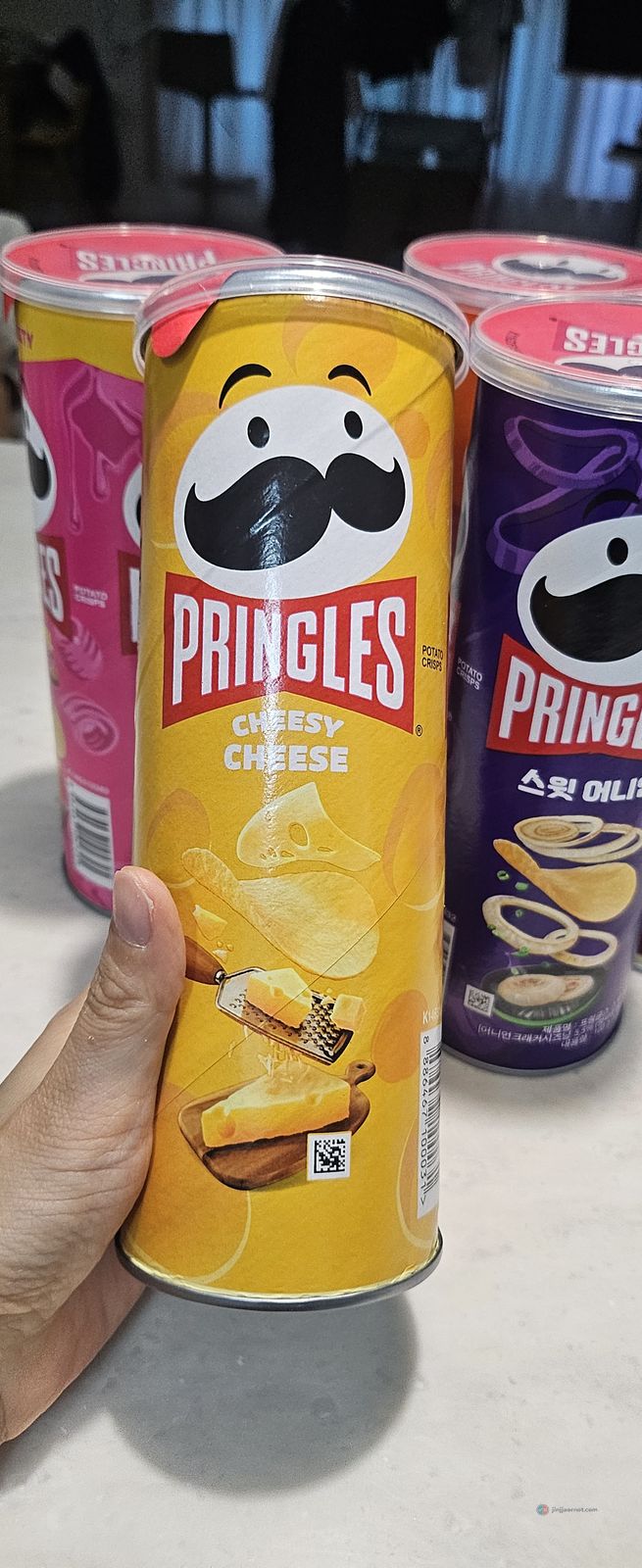
It's on the Korean shelf and it's in my kitchen, but I haven't opened it yet, so I'm not going to tell you how it tastes. What I can report is the one number that stood out while I was reading labels: at 638mg of sodium per 100g it's the saltiest of the five cans I picked up. I'll come back and update this when I've actually eaten it.
The five, side by side
| Flavour | Heat | What the Korean label prints | Verdict |
|---|---|---|---|
| Spicy Texas Style BBQ | ●●○○○ | Limited edition. Not the same product as the US Texas Pringles. | Jinjja ✓ My pick |
| Butter Caramel | ○○○○○ | Seasoning 7.0% — butter powder 1%, caramel 0.2%. Sugar 5.7g/100g. | Jinjja ✓ |
| Sweet Onion | ○○○○○ | Onion cracker seasoning 5.5%. Also sold in a smaller can. | Jinjja ✓ |
| Korean Dakgangjeong | ●○○○○ | Chicken powder 0.025%. Sodium 414mg/100g. | Not what it says |
| Cheesy Cheese | ○○○○○ | Sodium 638mg/100g — saltiest of the five. | Still testing |
All five list the same origin: manufactured by Kellogg Asia Products Sdn. Bhd., made in Malaysia, imported by Nongshim Kellogg.
Where to actually buy these
I'm not going to hand you an Amazon button for these cans, because I checked and they aren't there. A US search for Korean Pringles returns American Pringles — Sour Cream & Onion, the Texas can that isn't this Texas can. Sending you there would waste your click and my credibility.
What actually works: a Korean grocery or H Mart if you have one within reach, or an import snack seller online if you don't. Expect around $9 a can from importers, which is the real price of a flavour that was never meant to cross the Pacific. And since the US ended de minimis relief, check whether the seller ships from inside the US before you order — a can of crisps is not worth a customs bill.
Nongshim K-Yangnyeom Chicken is the same story: Amazon's Nongshim potato chips are usually Red Chili, and the "yangnyeom chicken" chips that surface there are often a Japanese product, not a Korean one. Korean grocery again.
So which can do you actually buy?
Buy the Texas BBQ
Best of the five, and the one an American genuinely can't get at a normal grocery store.
Buy Butter Caramel if you're curious about sweet-and-salty
Gentler than Honey Butter Chip, and it converted someone who doesn't like that category.
Buy Sweet Onion for a mixed room
Mild enough for kids, dull enough that nobody argues about it. That's a compliment.
Skip the chicken one — get the Nongshim chip
0.025% chicken powder is what the can tells you it is. Nongshim's K-Yangnyeom potato chip does the flavour properly.
Want the Korean snacks you can actually get shipped?
These four cans are a Korean-grocery errand. Plenty of the shelf isn't — three taps and I'll match you to something I've eaten, with the verdict and where it's really sold.
Try the Korean Snack FinderKorean Pringles FAQ
What Pringles flavors are only sold in Korea?
The Korean shelf carries Butter Caramel, Sweet Onion, a Korean-style sweet-and-spicy chicken limited edition, and Spicy Texas Style BBQ. The Texas one is the surprise — the US has its own Texas-named Pringles, but it's a different product. This can is made for Asian markets and usually reaches American buyers only through import snack sellers.
Are Korean Pringles made in Korea?
No. The label lists the manufacturer as Kellogg Asia Products Sdn. Bhd. and the country of origin as Malaysia. Nongshim Kellogg in Anseong is the importer, not the maker. "Korea-exclusive" means developed for this market, not produced in it.
Does the Korean fried chicken Pringles taste like real dakgangjeong?
Not really. It's sweet and mildly spicy but not close to actual Korean fried chicken. The label prints why: chicken powder 0.025%. Korean rules require a concentration figure when an ingredient is named in the product name — which is how that number ends up on the can. For a chip that genuinely tastes like yangnyeom chicken, buy Nongshim's Potato Chip K-Yangnyeom Chicken instead.
Is Pringles popular in Korea?
Yes — fifth in Korea's snack sales rankings at 41.8 billion won. Two of Korea's ten best-selling snacks are foreign brands rather than domestic ones, which surprises people who assume the Korean aisle is all Korean-made.
Which Korean Pringles flavor should I buy first?
Spicy Texas Style BBQ if you want salt, heat and smoke — it's the one I reach for. Sweet Onion if you want something mild that children can eat. Butter Caramel if you're curious about Korea's sweet-and-salty habit and want it on a Pringle rather than a wavy crisp.
Why do Korean snack labels print percentages?
Because Korean rules require it when an ingredient is named in the product name. Call something "chicken flavour" and the chicken content has to appear on the pack. It's the reason I can tell you a chicken-named crisp is 0.025% chicken — and the reason I read these labels for a living.