🍫 Korean Snacks · Verdict
Home Run Ball vs Kancho: I Ranked Korea's Chocolate Snack Balls So You Don't Have To
Heads up: some links below are affiliate links, which means I may earn a small commission if you buy through them — at no extra cost to you. I only recommend Korean products I genuinely rate, and my honest opinion is never for sale.
The short answer
Buy Home Run Ball first. It's the airy one — a crisp puff shell with soft chocolate cream, like a bite-sized cream puff. Kancho is the crunchy one: a firm cookie ball with a chocolate centre and a name printed on every biscuit. Both are Korean classics; you can't really lose.
Every Korean kid grew up on these two, and every Korean adult still throws a bag in the cart "for later" (later = the car ride home). They're both chocolate-filled snack balls, they're both on Amazon, and they're both jinjja good. But they are not the same snack — the texture is basically opposite. Here's how I'd tell my own friend to buy them.
1. Home Run Ball — the airy cream-puff one
Jinjja ✓
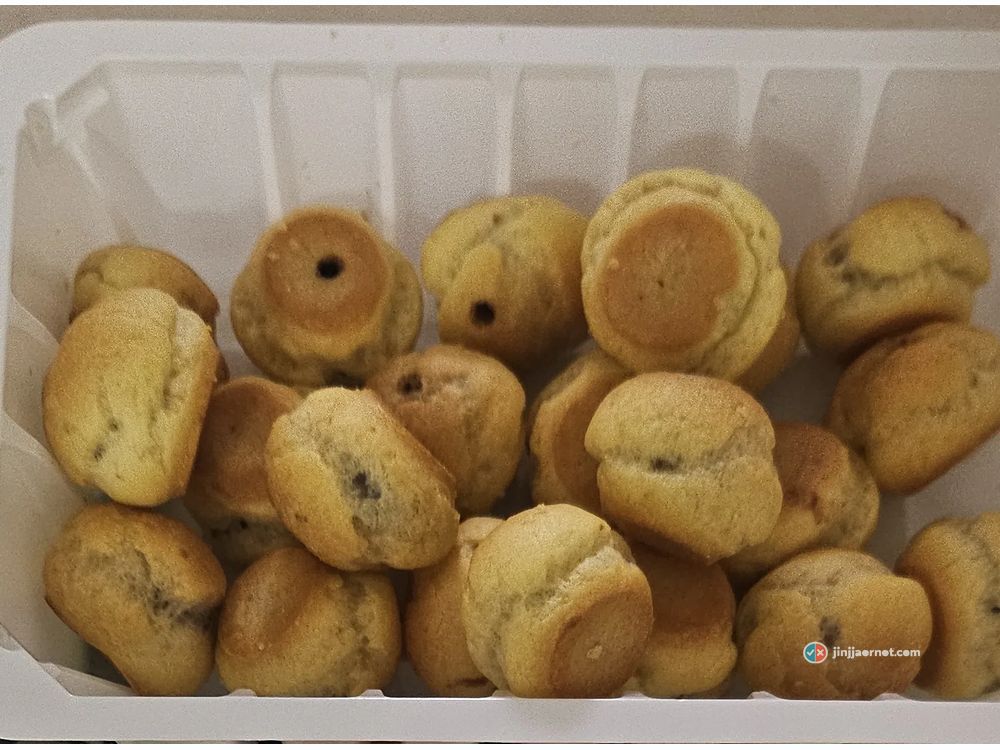
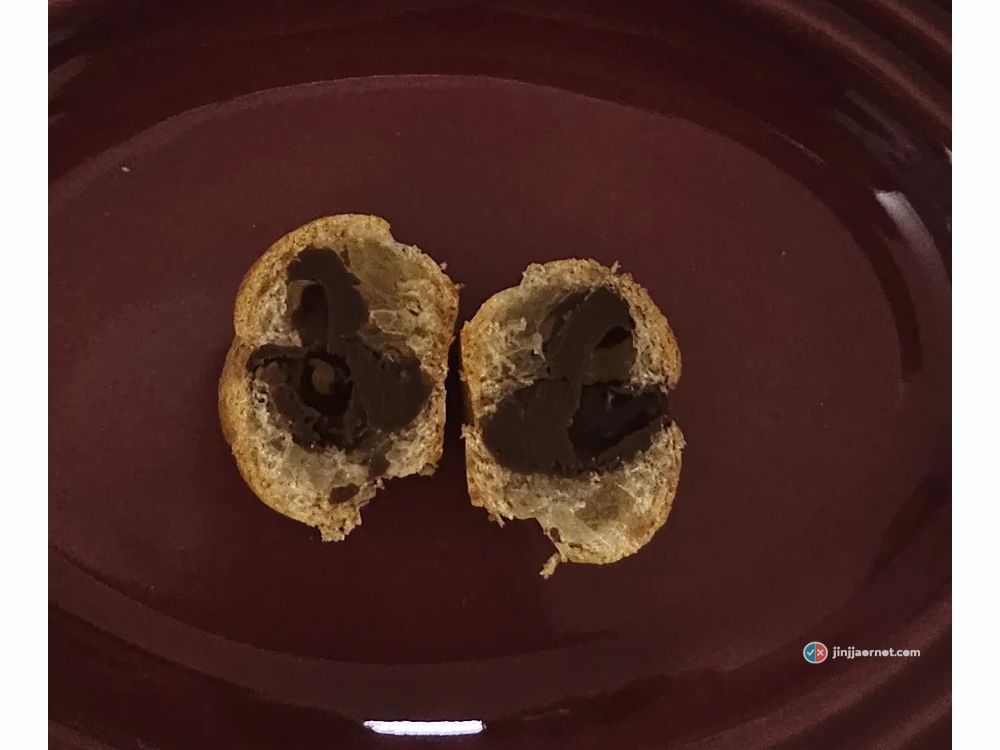
Released by Haitai in 1981 and never dethroned. Home Run Ball — you'll also see it written "homerun ball" — is a soft, golden puff shell that's basically a mini cream puff or profiterole, filled with a smooth chocolate cream. The shell gives the tiniest crunch, then the whole thing melts. As one U.S. shopper put it, "it's a big one, but once you open it, it's gone in a flash." That's the whole review: it's so light you look down and the bag is somehow empty.
Here's a detail I love: the filling tastes a little nutty and roasty, almost like there's hazelnut in there. There isn't — it's actually peanut butter in the recipe, which is why it reads as that cozy, toasty chocolate. (Real talk: that also means it contains peanuts. If you've got a peanut allergy, sit this one out.)
In Korea we get Home Run Ball in a bunch of flavors — banana, strawberry, melon, and more come and go. Abroad you'll pretty much only find the original chocolate, which is a little sad, but honestly the chocolate is the one worth traveling for anyway. Pro move Koreans swear by: pop them in the air fryer for a couple minutes, or freeze them slightly. Different snack, same love.
The flavours that stay in Korea
The flavour shelf here moves fast. As I write this my supermarket has a Dubai-style pistachio & caramel and a salted milk sitting next to the chocolate, and more come and go than I can keep up with. So I bought all three and tipped them into their trays.
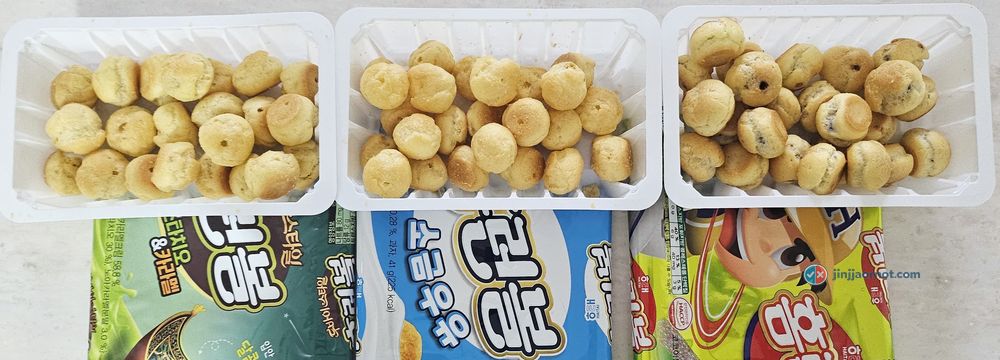
If you add one more to the chocolate, make it the salted milk. The Dubai-style one is the loud one: pistachio and caramel stacked on a cream that was already sweet. Four or five in and it was too much for me — so that is the bag I would open for a table of people rather than for myself on a sofa. The salted milk is the one I kept eating. The salt cuts the cream, so it lands as dan-jjan — sweet-salty, the axis half of Korea's snack aisle is built on — instead of landing as just sweet.
The catch is that the bag you can reliably buy outside Korea is the chocolate. So read this as a shelf report rather than a shopping list: if the salted-milk bag ever turns up in a Korean grocery near you, that is the one to grab.
Why do Koreans buy these by the armful? Two reasons. Back home, Home Run Ball is famous for being small for the price — and because it's so airy, a single bag basically evaporates. So we grab a stack. The funny part: the version sold abroad often comes in a bigger "sharing size" (around 128–146g), so Koreans who grew up rationing the little Korean bag are genuinely surprised by how much is in the U.S. one. If anything, you're getting the generous version.
Who it's for: anyone who likes a light, melt-in-your-mouth chocolate treat — and anyone who wants to understand why we buy these in bulk.
Check price on Amazon →2. Kancho — the crunchy cookie one (with a built-in game)
Jinjja ✓
Same idea — chocolate hidden inside a little ball — but the experience is the opposite of Home Run Ball. Lotte's Kancho is a firm, properly crunchy cookie with a classic chocolate center. It's often compared to Home Run Ball, but the difference is exactly that: Home Run Ball is an airy puff, Kancho is a solid cookie. The chocolate itself isn't wild or fancy; it's the textbook sweet chocolate you expect, and that's the point — it plays perfectly against the crisp cookie snap. If you know Japan's Hello Panda, Kancho is its crunchier Korean cousin.
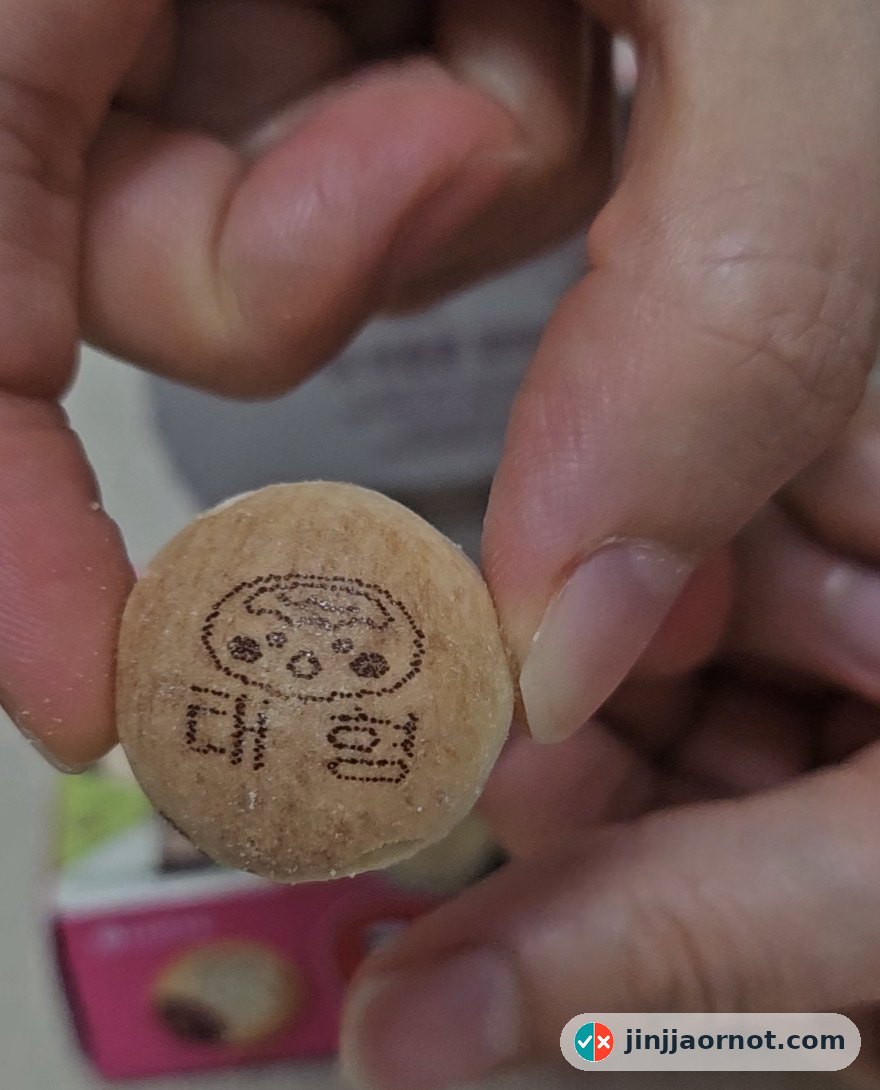
But the real reason Kancho is a forever-snack: every biscuit has a tiny cartoon printed on it. Korean kids (and, fine, adults) turn it into a game — quiz each other on the pictures, hunt for the good ones. Newer versions in Korea even print names on them, so now everyone's digging through the box trying to find their own name or a friend's. It turns a snack into a five-minute activity, and that's genuinely part of the fun.
Who it's for: people who want crunch over cream, snackers who like a little game with their sugar, and kids (it's a great lunchbox win).
One honest caveat: because Kancho is a dry, crunchy cookie, it can leave your mouth a little parched — a few U.S. snackers say Kancho gives them "dry mouth," so keep a drink nearby. Home Run Ball, by contrast, melts and goes down easy. That's basically the whole decision: want something soft and melty, reach for Home Run Ball; want a crunchy cookie and a game, reach for Kancho.
Check price on Amazon →Not sure which Korean snack is for you?
Three taps and I'll match you to something off the shelf I actually buy from — and tell you what I left out, and why.
Try the Korean Snack FinderHomerun Ball vs Kancho, side by side
| Snack | Texture | Filling | The vibe | Verdict |
|---|---|---|---|---|
| Homerun Ball | Airy, melts | Chocolate cream (contains peanut) | Bite-sized cream puff | Buy first |
| Kancho | Firm, crunchy | Classic chocolate center | Cookie + a little game | Buy alongside |
Buy first: Homerun Ball
The airy, melty one you'll accidentally finish in the car. If you only grab one, grab this — there's a reason Koreans buy it by the armful.
Buy alongside: Kancho
For crunch instead of cream — plus the cartoon/name prints make it the fun one for kids. Great to have both on hand for different moods.
Heads up: skip the tiny single bag
On Amazon, a single small bag can be pricey. Both of these are cheaper by the multi-pack — or grab them for a few dollars at H Mart if you have one nearby.
How people actually eat them (the fun part)
Half the reason these two blew up abroad isn't just the taste — it's what people do with them. A few moves worth stealing:
Homerun Ball hacks
The internet has opinions, and honestly they're right:
- Air fryer, ~2 minutes. The viral one — a quick blast melts the center so it's warm and molten inside. Game changer.
- Cereal-style. Yes, people dump them in a bowl of cold milk and eat them with a spoon. Sounds unhinged, tastes great.
- Ice-cream topping. Crush a few over vanilla for instant crunch.
- Slightly frozen. Chill them for a firmer, ice-cream-sandwich vibe.
Kancho's built-in game
Beyond snacking, Kancho has a party trick, and it is worth understanding what it actually is — because most English coverage gets this wrong. The biscuits have always come stamped with tiny cartoons. For its 40th anniversary, Lotte swapped the cartoons for Korean given names and told people to post the one they found to enter a prize draw. So this is not a fan rumour or a lucky coincidence. It is a deliberate participation campaign, and it is the reason a forty-year-old biscuit is suddenly on your feed.
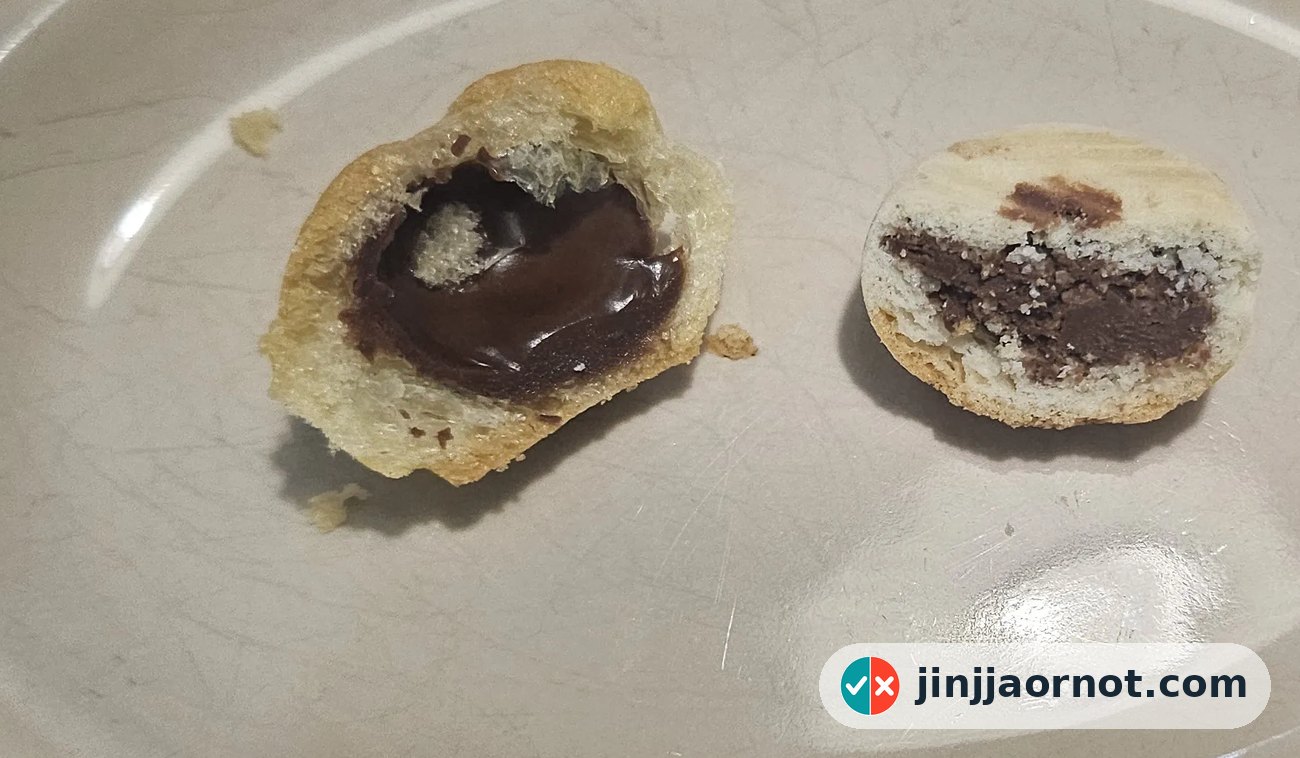
It worked at home first. The name hunt became a genuine trend in Korea, with people buying boxes to find their own name, a friend's, or their favourite singer's — and it escalated when BTS's Jungkook bought a stack of boxes on a livestream in October 2025 to look for the name he games under, never found it, and pulled out bandmate Jimin's name instead. That is a real, publicly broadcast moment, not a marketing claim. But note what it tells you as a shopper: the printed names are ordinary Korean given names, so finding a specific one is pure luck. I opened a box for this review and got the name in the photo above — not the one I was hoping for either. It's a snack and a scavenger hunt in one. The classic grown-up version: straight from the pack with a coffee.
Building your first Korean snack haul?
I put together a starter list of the Korean snacks actually worth buying first — from a Korean.
See the starter list →My honest pick
On any given day I genuinely can't tell you which I'd rather have — it changes with my mood. But if you're making me choose one to put in your cart today, it's Homerun Ball. The way it disappears is the whole review. Buy the multi-pack, keep Kancho on the shelf for when you want crunch and a game, and welcome to the club — both are jinjja good.
Homerun Ball & Kancho FAQ
What's the difference between Homerun Ball and Kancho?
Both are chocolate-filled Korean snack balls, but the texture is opposite. Homerun Ball is a light, airy puff shell — basically a bite-sized cream puff — with soft chocolate cream inside. Kancho is a firm, crunchy cookie ball with a classic chocolate center and cute cartoon prints on each biscuit.
Does Homerun Ball contain nuts?
Yes — the chocolate filling in the standard Homerun Ball is made with peanut butter, which gives it that slightly nutty, roasty taste. It's a real allergen, so anyone with a peanut allergy should skip it. Always check the packaging, since recipes can vary by region.
Which is better for kids?
Both are kid-favorites in Korea. Kancho is especially fun because each biscuit has a printed cartoon (newer versions print names), so it doubles as a little game. Homerun Ball is softer and less messy since the cream stays inside the puff. Just note the peanut in Homerun Ball for allergy-sensitive kids.
Where can I buy them?
Both are widely available on Amazon and at Korean grocery stores like H Mart, usually in multi-packs. The multi-pack is almost always better value than a single small bag online.
Are there other Homerun Ball flavors in the US?
In Korea, Homerun Ball has come in banana, strawberry, melon and more, but abroad you'll mostly only find the original chocolate. Some of the Korea-only versions are great — but the classic chocolate is the one that travels.
Did Jungkook find his name in Kancho?
Partly. Lotte ran a 40th-anniversary edition that prints Korean given names on the biscuits instead of the usual cartoons, and posting the one you find enters you in a prize draw — so that part is an official campaign, not a rumour. It went global when BTS's Jungkook opened a stack of boxes on a livestream in October 2025 hunting for his own name, failed, and pulled out Jimin's instead. But the campaign isn't tied to any one celebrity: these are ordinary Korean given names, so finding a specific one is luck of the draw.
Homerun Ball is second in Korean biscuits and Kancho is tenth — a 4× gap. See the whole table.