🔥 Korean Snacks · Verdict
Buldak Tang (the Soup One), Reviewed by an Actual Korean
Heads up: some links below are affiliate links, which means I may earn a small commission if you buy through them — at no extra cost to you. I only recommend Korean products I genuinely rate, and my honest opinion is never for sale.
The short answer
Buldak Tang is the soupy version of Samyang's fire noodles, sold in the US as "Stew Type." It's garlicky, savory, and hotter-feeling than the dry ones because the heat is in every spoonful. Cook it as a soup — don't drain it. It's for spice lovers. New to Buldak? Start with the stir-fried ones instead.
There are a lot of Buldak flavors, but they split into two very different things: the dry stir-fried ones you drain, and the soupy one you don't. This article is about the soup — Buldak Tang — because it's the one people cook wrong, and the one the English packaging renames in a confusing way. I'm Korean; let me walk you through it.
Looking for the dry, stir-fried Buldak?
Carbonara and Original are a different cooking method entirely — you drain the water. I cover those separately: Buldak Carbonara vs Original →
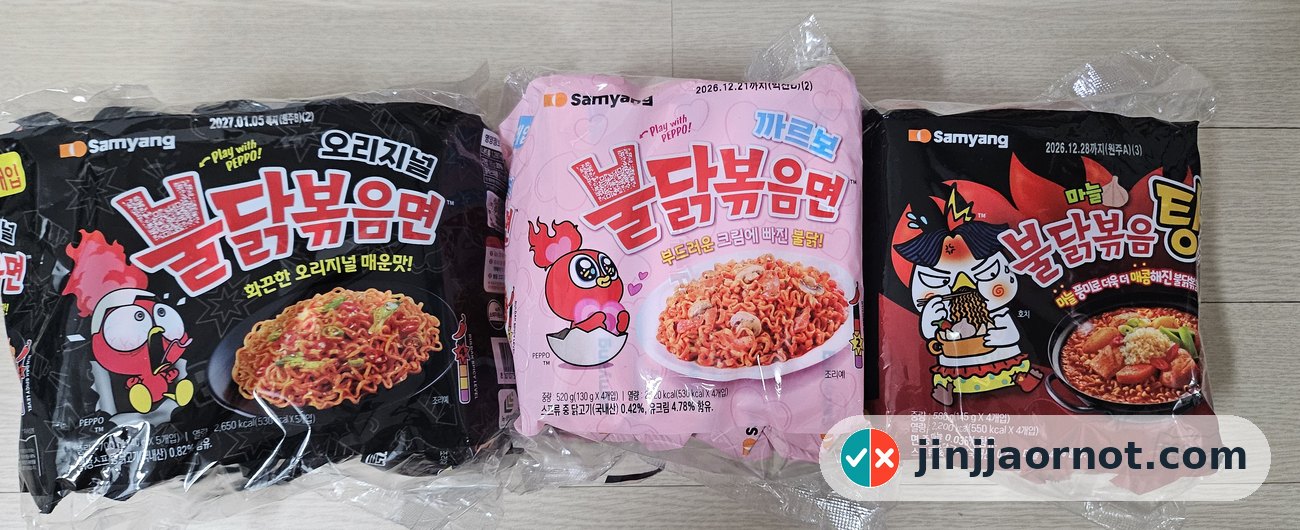
Buldak Tang / "Stew Type" — the soupy one, and my personal favorite
Spice lovers only
Naming note, because this trips everyone up: in Korea we call this one 불닭볶음탕면 (Buldak Tang), but the English packaging sold in the US says "Stew Type." Same noodle. If you're searching Amazon, "Buldak Stew Type" is the term that actually pulls it up, in 5, 10, and 15 packs.
Red pack, soup version. Garlicky, brothy, and somehow the heat feels bigger because it's swimming in it. This is the "I like pain" tier — a bad idea as your first Buldak, but a real reward once you've earned it.
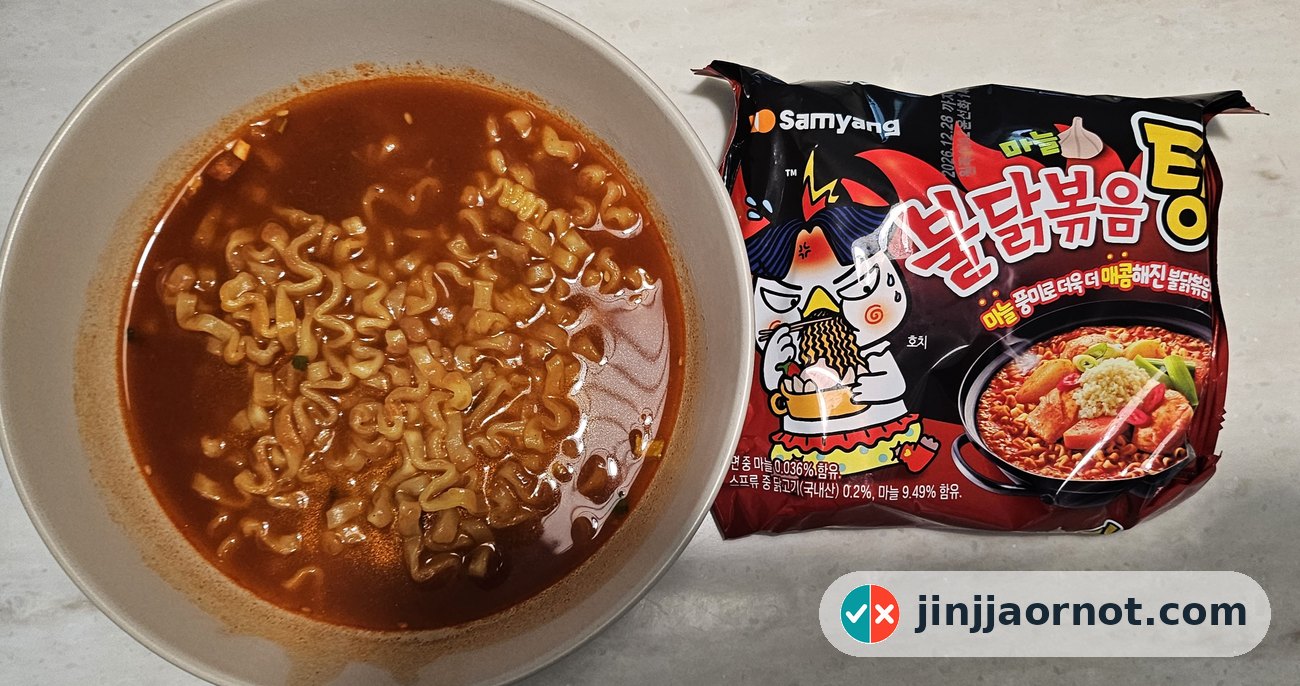
My honest take after actually cooking it: I expected nothing and it won me over. Compared to the dry Original, it's less sweet and much more savory — Koreans would call that 감칠맛 (gamchilmat), basically umami depth. The garlic does a lot of work here. If you find the stir-fried sauce a bit candy-sweet, this is the grown-up version.
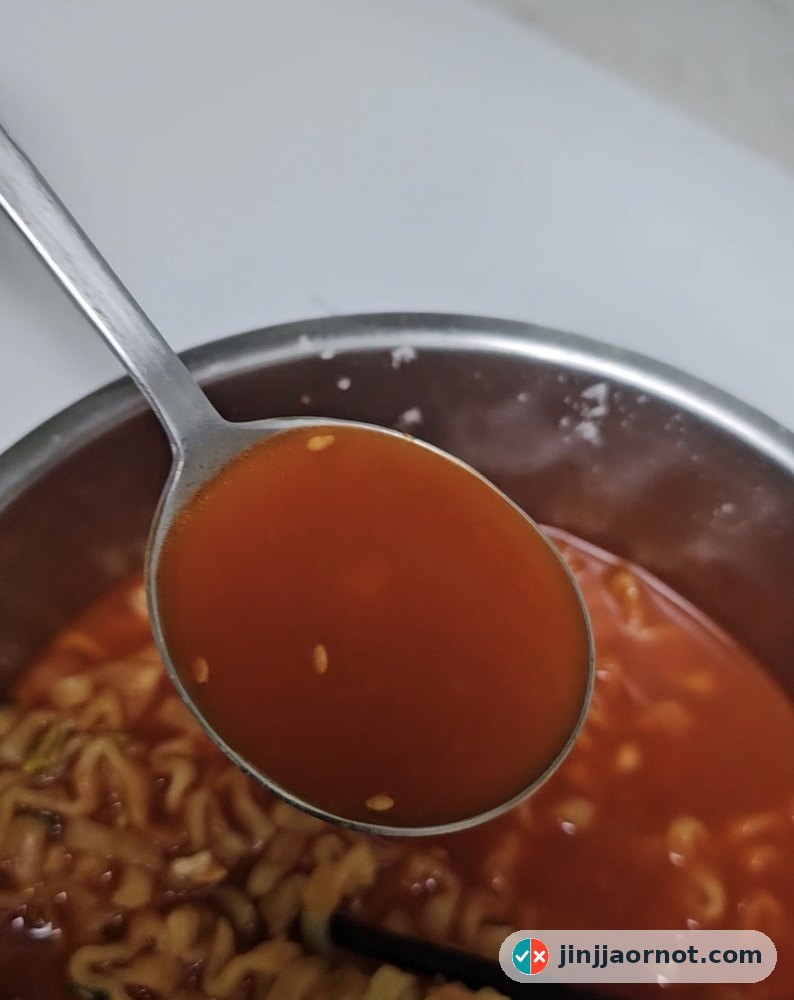
But: it's still too spicy for me to eat straight through, and I'm Korean. I finished mine the most Korean way possible — see below.
Who it's for: confirmed heat lovers who want a savory spicy soup, not a sweet dry noodle.
Check price on Amazon →How Koreans actually cook Buldak Tang (Stew Type)
First and most important: this is a soup, so you don't drain the water. That's the one thing people coming from the stir-fried Buldak get wrong — with those you pour most of the water out, but here the broth is the whole dish. Keep the water. After that, the packet order matters more than people think, and the English instructions don't really explain it. Here's how I do it:
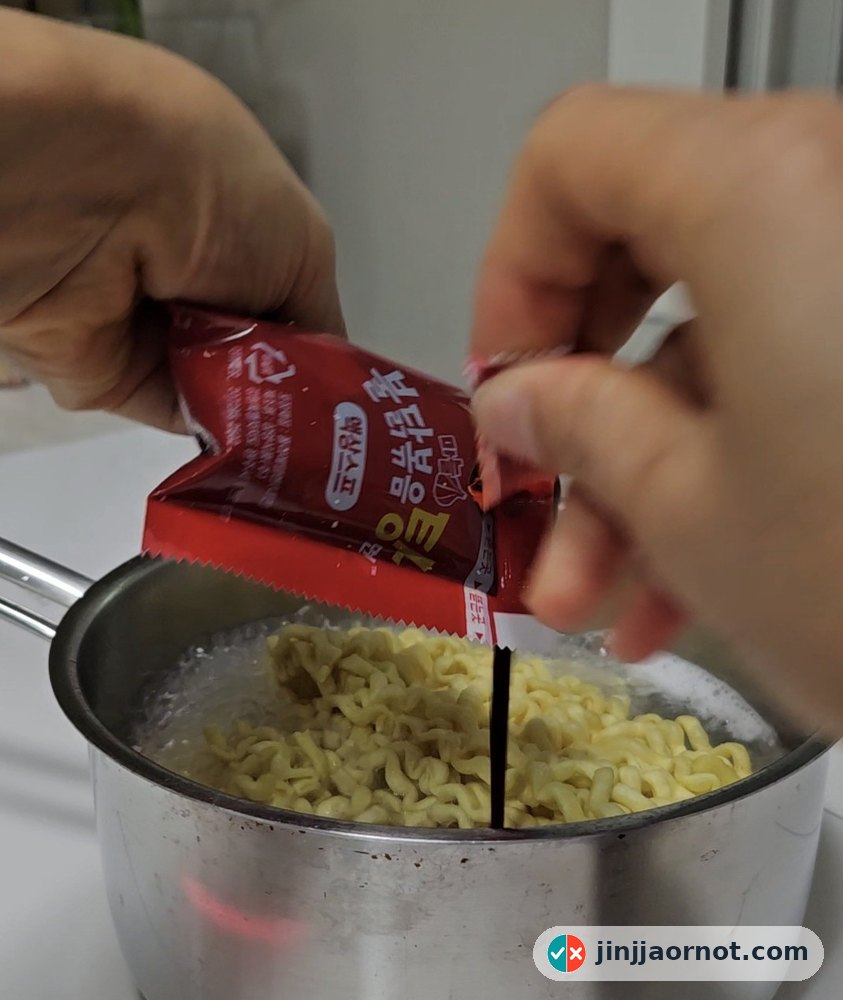
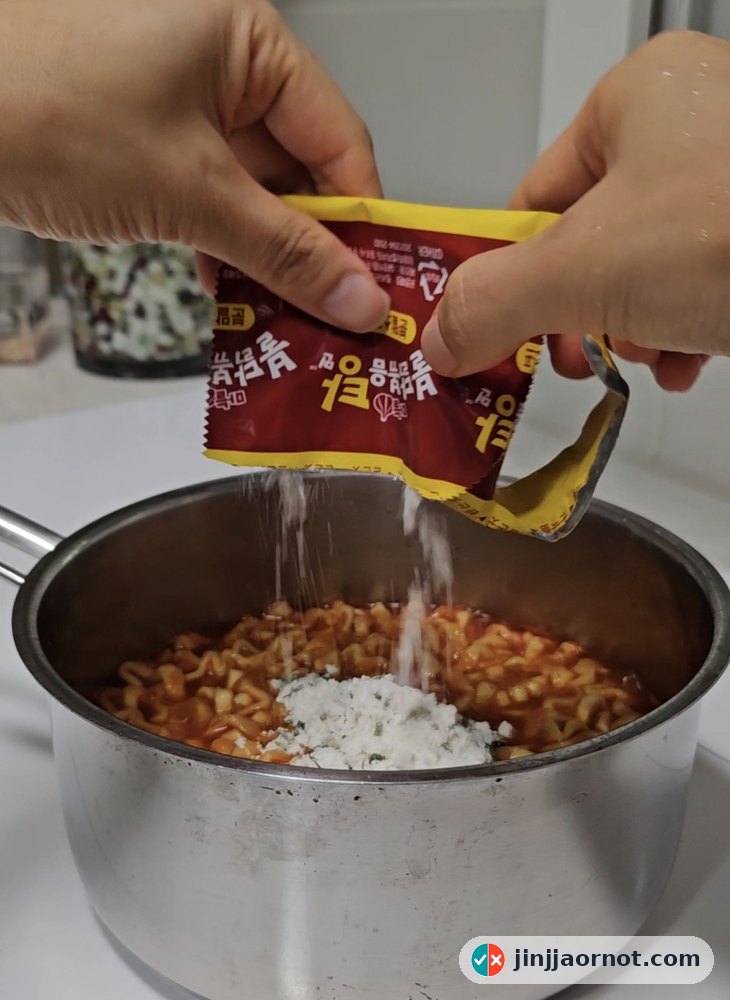
Why: the oil packet needs heat to bloom and spread through the broth, while the powder is mostly finishing seasoning — dump it in early and you lose the aroma. Adding it at the end keeps the flavor sharper.
The move nobody tells you: rice + gim
Here's the part Americans usually miss. When Buldak is too much — and it will be — Koreans don't reach for milk. We reach for rice and gim (roasted seaweed).
You take a sheet of gim, put a spoonful of plain white rice on it, wrap it, and eat that between bites of noodles. The rice absorbs the heat, the seaweed adds salty-nutty flavor, and suddenly you can keep going. It's not a hack — it's just how a lot of Korean homes eat spicy food.
I've never once seen a Korean pour milk on Buldak. Rice and gim is the real answer.
Not sure which Korean snack is for you?
Three taps and I'll match you to something off the shelf I actually buy from — and tell you what I left out, and why.
Try the Korean Snack FinderHow spicy is Buldak, really? (Shin Ramyun as your ruler)
Scoville numbers are useless if you have nothing to compare them to. So let's use the one Korean noodle most Americans have already had: Shin Ramyun.
Shin Ramyun sits around 3,400 SHU, and Nongshim only raised it once — from 2,900 — back in 2017. Samyang prints Original Buldak's heat right on the bag at 4,404 SHU. So Original Buldak is meaningfully hotter than Shin, not a little.
But here's the honest part, and it's the number nobody publishes: Samyang doesn't list an official Scoville figure for Buldak Tang, so I'm not going to make one up. What I can give you is a real person's ruler:
I finish every drop of Shin Ramyun broth. With Buldak Tang, I managed a few spoonfuls of broth and tapped out. Same Korean, same tolerance, wildly different outcome. If Shin Ramyun is your comfortable ceiling, Buldak Tang is above it.
Also worth knowing: soup spreads heat differently than sauce. A stir-fried Buldak coats the noodles and you can pace yourself. A brothy one puts the capsaicin in every single spoonful, so the burn stacks instead of resetting.
What to drink with it (water is the worst option)
Water does almost nothing. Capsaicin is fat-soluble, so plain water just moves it around your mouth. What actually works is dairy — the casein in milk binds capsaicin and rinses it off — plus sugar, which dulls the pain signal.
That combination is exactly why Koreans drink sweet milky lactic-acid drinks with spicy food. In Korea it's usually Coolpis or Juicy Cool — the fizzy-sweet yogurt-ish drinks that show up automatically at fried chicken and spicy-food places. Neither is easy to find in the US, so here's what to grab instead:
- Calpico — the closest match. A Japanese lactic-acid milk drink made since 1919, sold in the US in several fruit flavors. Sweet, tangy, milky. This is your Coolpis substitute.
- Yakult — smaller bottle, same idea, and now stocked in plenty of regular US grocery stores.
- Milkis — Korean carbonated milk soda, sold at Asian markets. Fizzy and sweet if you want that.
- Horchata — the Mexican rice-and-milk drink is genuinely great for this and you can find it almost anywhere in the US.
- Mango lassi — Indian yogurt drink. Dairy plus sugar plus cold. Works perfectly.
- Plain whole milk or a slice of cheese — unglamorous, always available, still effective.
And if you'd rather eat your way out than drink your way out: that's what the rice and gim above are for.
Where Tang sits in the Buldak family
Quick map of the ones you'll actually run into, so you can see where the soup fits:
| Flavor | Heat | Type | Best for | More |
|---|---|---|---|---|
| Carbonara | 🌶️ | Creamy, dry (drained) | Beginners | Details → |
| Original | 🌶️🌶️🌶️ | Saucy, dry (drained) | The classic experience | Details → |
| Tang / "Stew Type" | 🌶️🌶️🌶️🌶️ | Brothy, soupy (not drained) | Spice lovers | This page |
New to Buldak? Don't start here
Tang is the spiciest way in. If it's your first time, begin with the stir-fried Carbonara or Original and work up.
Love spice? This is the reward
Savory, garlicky, and deeper than the sweet dry ones. For heat lovers, Tang is the best Buldak in the lineup.
Cook it as a soup
Don't drain it. The broth is the whole point — draining it turns it into a worse version of the dry ones.
Building your first Korean pantry?
I put together a starter list of the 10 Korean things actually worth buying first — from a Korean.
See the starter kit →My honest take
Buldak Tang surprised me — I went in expecting a gimmick and it became my favorite Buldak. But it's genuinely spicy, so it's a reward, not a starting point. If you already love heat, this is the one to reach for. If you're just getting into Buldak, start with the stir-fried Carbonara or Original and come back to the soup once you've earned it. Either way — jinjja good.
Buldak FAQ
What is Buldak Tang / "Stew Type"?
It's the soup version of Samyang Buldak. In Korea it's called 불닭볶음탕면 (Buldak Tang), but the English packaging sold in the US renames it "Stew Type." Unlike the dry stir-fried Buldak, you cook this one as a brothy soup and don't drain it. It's garlicky and savory, and it feels hotter because the heat is in every spoonful.
What's the difference between Buldak Tang and Carbonara or Original?
Two things: cooking method and texture. Tang is a soup you don't drain. Carbonara and Original are dry, stir-fried noodles where you drain almost all the water and coat the noodles in sauce. Tang is also more savory and garlicky, where the dry ones lean sweeter. I cover the two stir-fried ones in a separate Carbonara vs Original guide.
How do I cook Buldak Tang?
Cook it as a soup — do not drain the water. That's the opposite of the stir-fried Buldak. Add the liquid (oil) packet early while it's boiling so it blooms into the broth, and the powder packet at the end so the aroma stays sharp. Finish with rice and gim if the heat gets to be too much.
Is Buldak spicier than Shin Ramyun?
Yes, clearly. Shin Ramyun sits around 3,400 SHU; Samyang prints Original Buldak at 4,404 SHU right on the bag. There's no official Scoville figure published for the soup version (Tang). Real-world ruler: I'm Korean, I finish every drop of Shin Ramyun broth — with Buldak Tang I managed a few spoonfuls and stopped. If Shin is your comfortable ceiling, Buldak is above it.
What should I drink with Buldak? Does milk actually help?
Water barely helps — capsaicin is fat-soluble. Dairy does: casein binds capsaicin, and sugar dulls the pain signal. Koreans drink sweet lactic-acid drinks like Coolpis or Juicy Cool with spicy food. In the US the closest picks are Calpico, Yakult, Milkis, horchata, or a mango lassi. Plain whole milk or a slice of cheese works too. Honestly though, most Koreans eat their way out instead: plain rice wrapped in gim.
Where can I buy Buldak online?
Samyang Buldak is widely sold on Amazon and Korean grocery sites, usually in 5-packs. One naming tip that saves a lot of confusion: the soup version Koreans call Buldak Tang is sold in English as "Stew Type." Search Amazon for "Buldak Stew Type" and it comes up in 5, 10, and 15 packs. Carbonara and Original are listed under those names directly.
Buldak is fourth in Korea, behind Shin Ramyun by more than two to one. The full 2025 sales ranking.