Sunscreen · Round Lab
Round Lab Birch Juice Sunscreen: the Korean tube is not the US tube
Heads up: some links below are affiliate links, which means I may earn a small commission if you buy through them — at no extra cost to you. I bought this sunscreen with my own money, and my honest opinion is never for sale.
The short answer
If you live somewhere humid and you have never found a sunscreen you can stand wearing every day, Round Lab Birch Juice Moisturizing Sunscreen is the lightest one I have put on my face. A month of daily use through a Korean summer, with zero white cast and zero breakouts.
One thing to check before you order: the tube sold in the US is a different formula from mine. Jinjja ✓
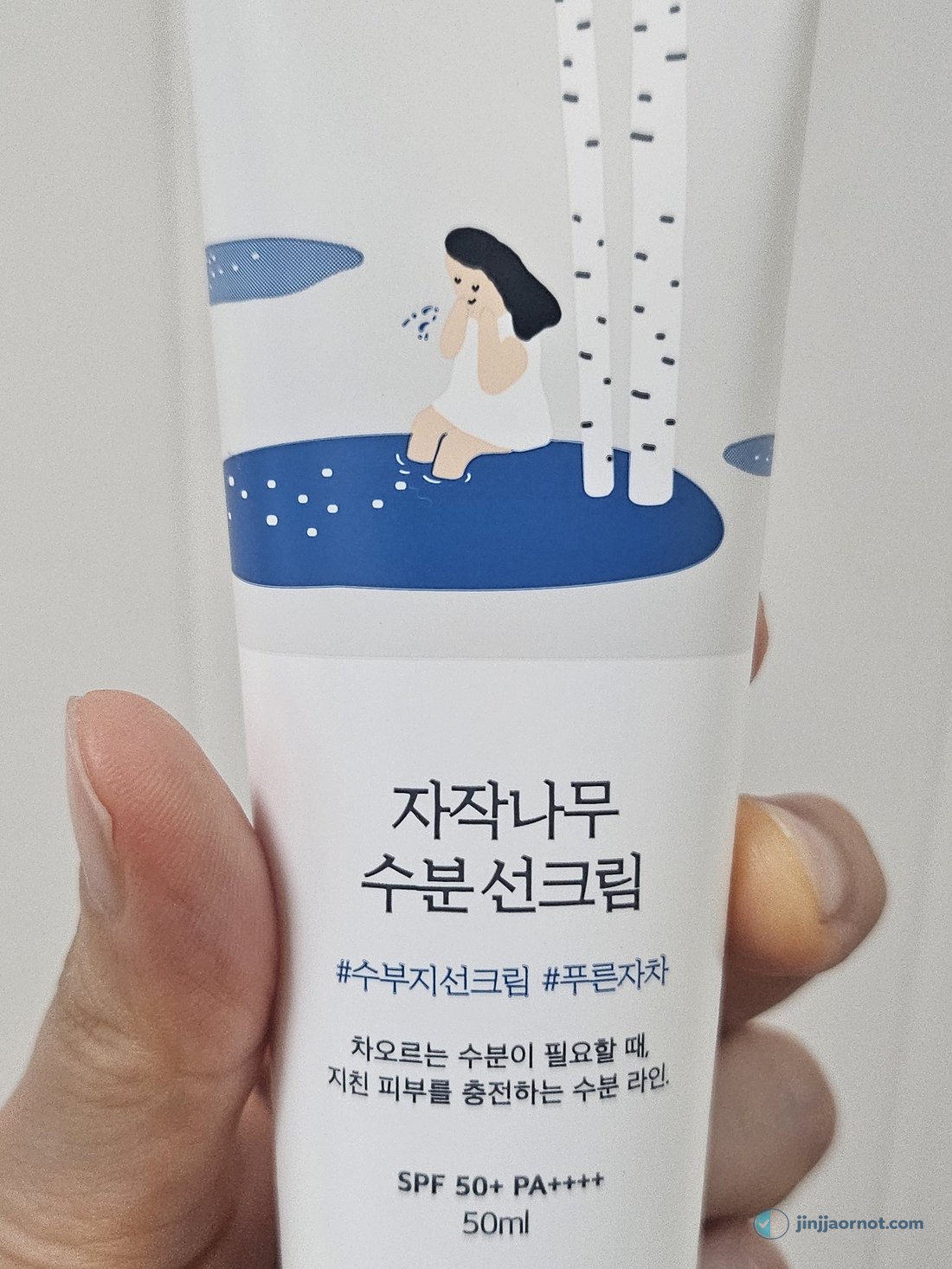
Start here: there are two different tubes
This is the part almost no English review mentions, because almost no English reviewer has held both.
Round Lab sells this sunscreen in the United States. Round Lab also sells this sunscreen in Korea. Same brand, same name, same birch tree on the front — and a different formula inside.
| Korean tube (what I use) | US tube | |
|---|---|---|
| Protection | SPF 50+ PA++++ | SPF 45+ PA++++ |
| UV filters | Newer-generation filters used across Korea and the EU | Avobenzone, homosalate, octisalate |
| Usually sold by | Stylevana, YesStyle, Korean drugstores | Amazon, Target, Ulta |
Why the split? The US Food and Drug Administration has not approved the newer UV filters that Korea, Japan and the EU have used for years. A Korean brand that wants shelf space at Target has to rebuild the formula out of the ingredients the FDA has approved — which are, broadly, the older ones.
I read the filters straight off my box, so you do not have to take my word for it. The Korean tube runs on four:
- Diethylamino hydroxybenzoyl hexyl benzoate
- Ethylhexyl triazone
- Methylene bis-benzotriazolyl tetramethylbutylphenol
- Diethylhexyl butamido triazone
Not one of those four is approved for use in the United States. That is the whole story in a single list — Round Lab could not have shipped this exact formula to Target even if it wanted to.
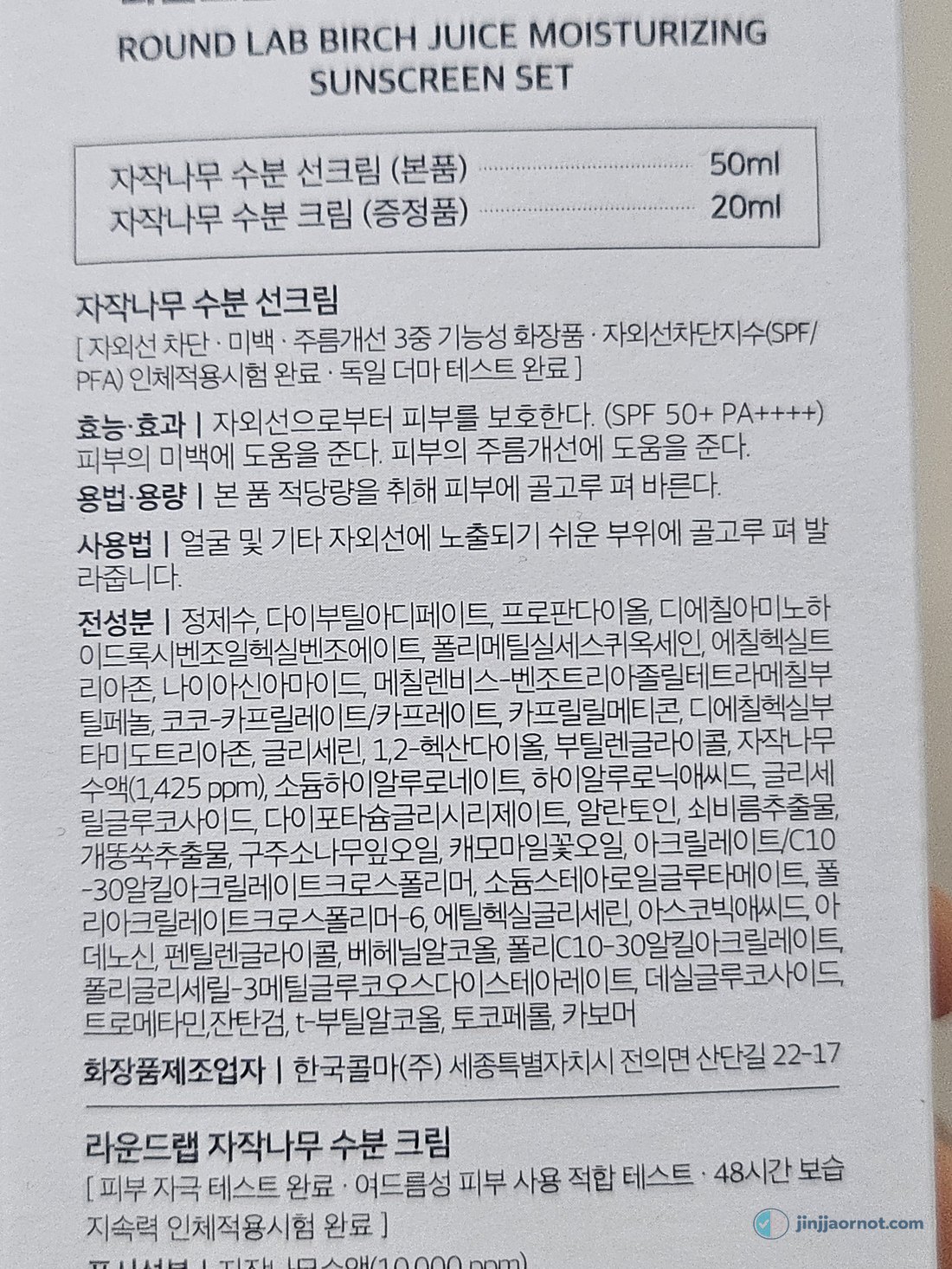
A few other things worth pulling out of that list, since I had it in my hand anyway. Birch sap is in there at 1,425 ppm. Niacinamide and adenosine are both present, which is why the box is registered in Korea as a triple-function product — sun protection, brightening and wrinkle care — rather than sunscreen alone. There are two forms of hyaluronic acid. The box also states it passed a German dermatological test and human application testing for its SPF and PA figures.
So what does that mean for you, practically?
If you want the exact product I have been wearing, look at the SPF number on the listing photo before you buy. 50+ is the Korean tube. 45+ is the US tube. That one number tells you everything.
What it actually feels like
The most useful thing I can tell you is this: the label says cream. It behaves like a lotion.
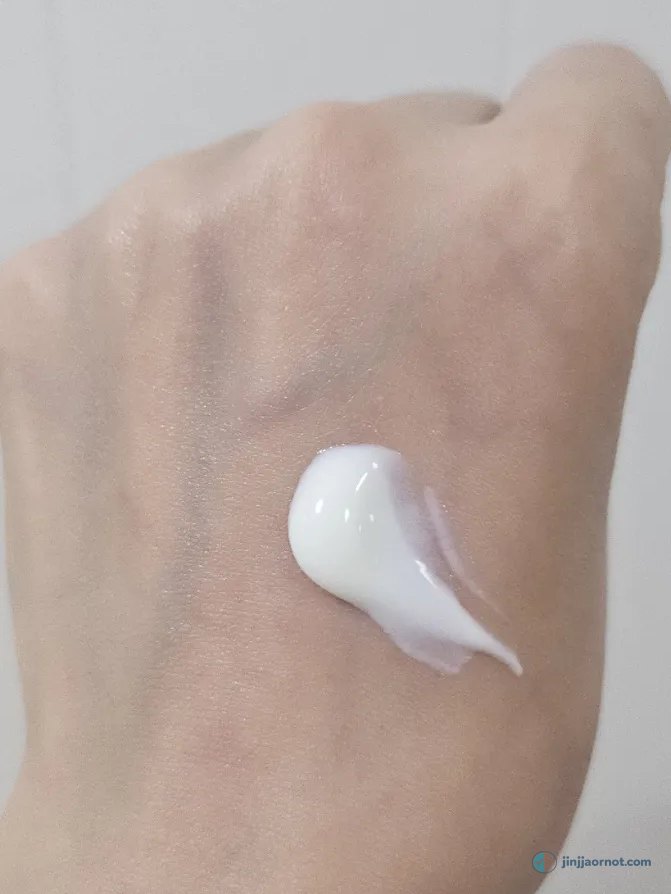
If you handed it to me unlabelled, I would call it a sun lotion without hesitating. There is none of the density you brace for with a cream — that slight resistance where you can feel yourself pushing product across your face. It just goes, smoothly, and then it is gone.
That matters more than it sounds. The reason people skip sunscreen is almost never that they doubt it works. It is that putting it on is a small unpleasant chore every single morning. Take the chore away and the compliance problem solves itself.
That gap between how it applies and how it dries down is the whole product, and it is why I kept reaching for it over everything else on my shelf.
You can see it in the clip: it comes out white and holds a shape for about a second, then thins out the moment it meets skin. No pilling, no rolling, no grabbing.
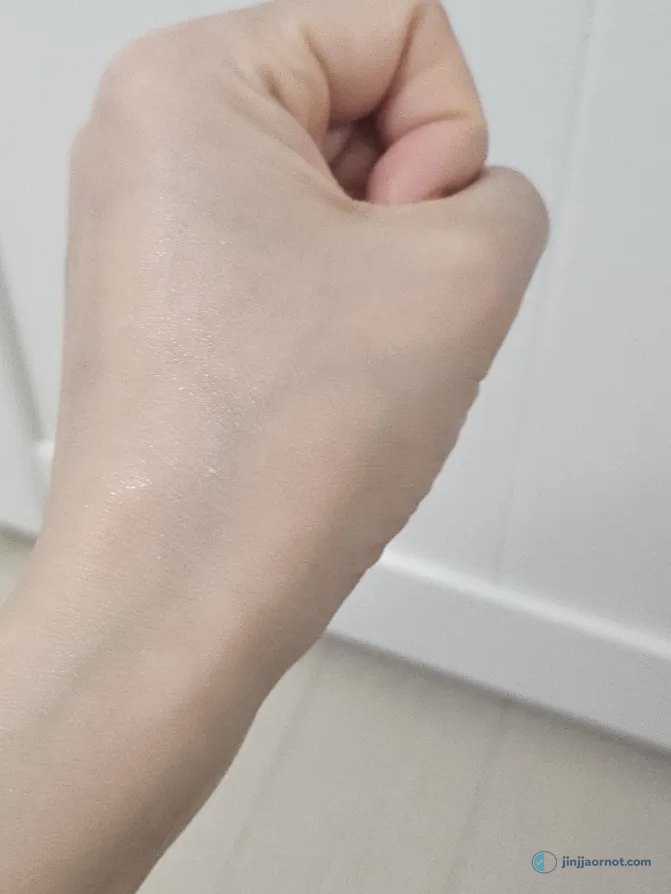
White cast: none
None. Not a trace, not even in the first minute when a lot of sunscreens go grey before they settle.
This is what a chemical sunscreen buys you. There are no mineral particles sitting on the surface scattering light, so there is nothing to go white in a photo with flash. If you have been burned by chalky mineral sunscreens, this is the opposite experience.
One honest limit: I have light-to-medium Korean skin. A sunscreen that disappears on me can still read grey or ashy on deeper skin tones, and I cannot test that on my own face. Please read my "no white cast" as one data point from one person, not a promise about your skin. If your tone is deeper than mine, look for swatches from someone whose skin actually matches yours.
"Almost no oily finish" — but let me be precise
I want to correct something before it becomes a wrong impression, including my own.
I have been using several products from Round Lab, and the rest of what I own from this brand runs extremely low on oil — dry enough that in hot weather it is perfect, but I could already tell that once the air turned cool I would stop reaching for them. They start to feel tight.
Next to those, this sunscreen felt almost rich to me. That was my first reaction and it was misleading, because it was a comparison inside one brand's lineup.
Measured against every other sunscreen I have used over the years, the honest answer is the opposite: this has one of the least oily finishes of any of them. That is the comparison that matters to you, because you are unlikely to own the rest of the Round Lab shelf.
The reason I mention the internal comparison at all is that it tells you something about the brand. Round Lab positions itself as clean, minimal skincare, and I noticed that positioning from the products themselves before I ever read their marketing. That is usually a good sign — when the feel of a product tells you the brand's story without being told.
A month in: no breakouts
Daily use, through the worst of a Korean summer — the kind of humidity where anything heavy on your face declares itself within a week. My skin runs dehydrated and sensitive, which usually means a new sunscreen tells me quickly whether it likes me.
Nothing. No congestion, no small bumps along the jaw, no stinging around the eyes.
One month is long enough to trust for irritation and short-term breakouts. It is not long enough for me to claim anything about long-term results, so I am not going to.
If you wanted mineral, you do not have to leave the brand
Here is something I only noticed standing in the shop with the boxes side by side, and it is the single most useful thing I can hand a reader who has already decided chemical sunscreen is not for them.
Round Lab makes a mineral version of this. Same birch line, same packaging language, a separate tube called Birch Juice Mild-Up. And next to that, a tone-up version. Three tubes, one shelf.
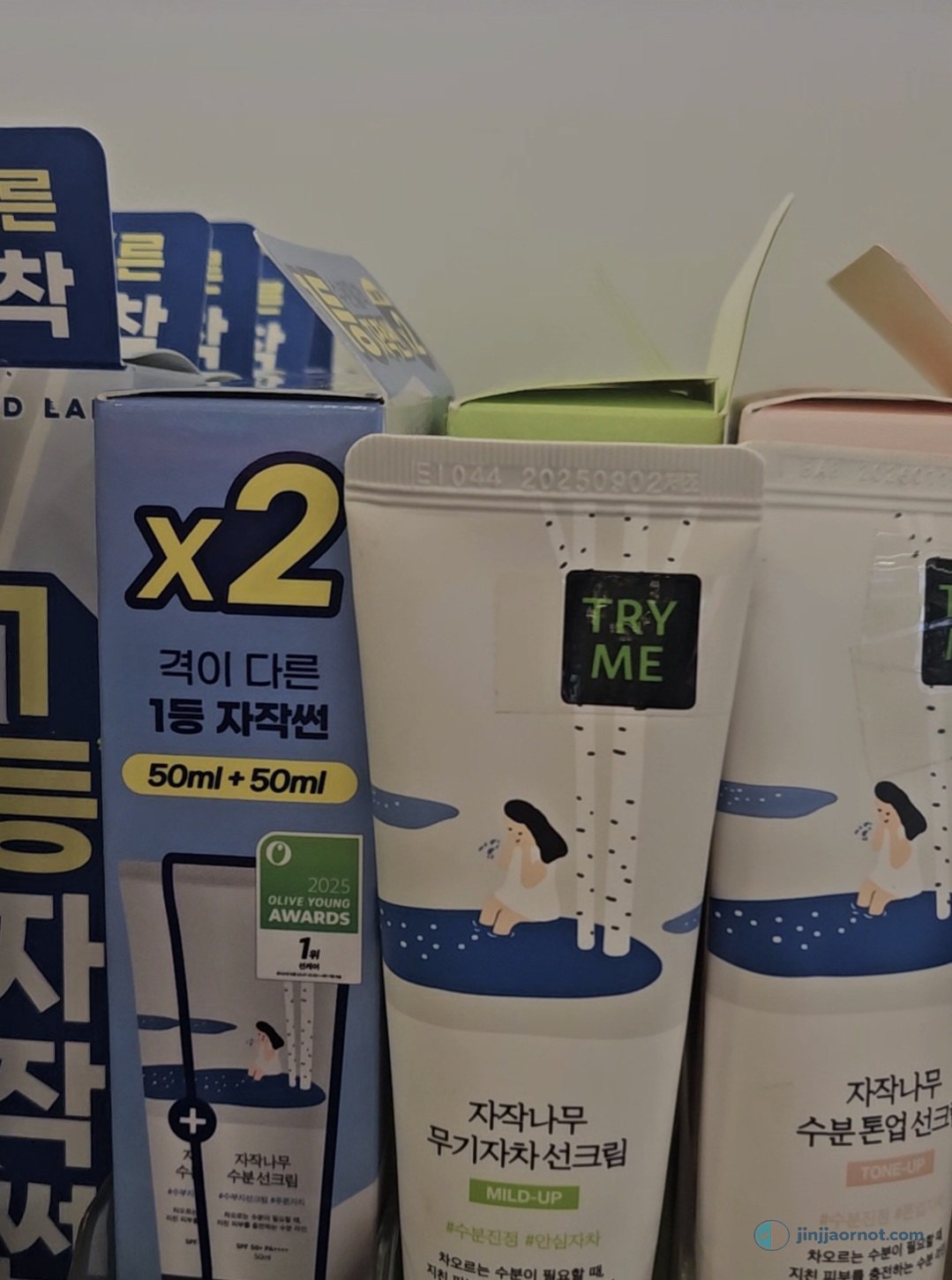
So the honest advice is not "skip this brand if you want mineral." It is buy a different tube from the same brand. I have not tested Mild-Up myself, so I am not going to hand you a verdict on it — but I would rather point you at the right product and admit I have not used it than pretend the choice is chemical-or-nothing.
Worth knowing before you compare: mineral sunscreens are the ones that leave a white cast. If you have been avoiding chemical filters on principle but your real complaint is chalkiness, the tube I actually tested is more likely to solve your problem than the mineral one.
One more thing on the box
My box carries a 2025 Olive Young Awards first-place badge in sun care. Olive Young is Korea's largest beauty chain — close to the role Ulta plays in the US — so this is the closest thing Korea has to a mainstream popularity ranking.
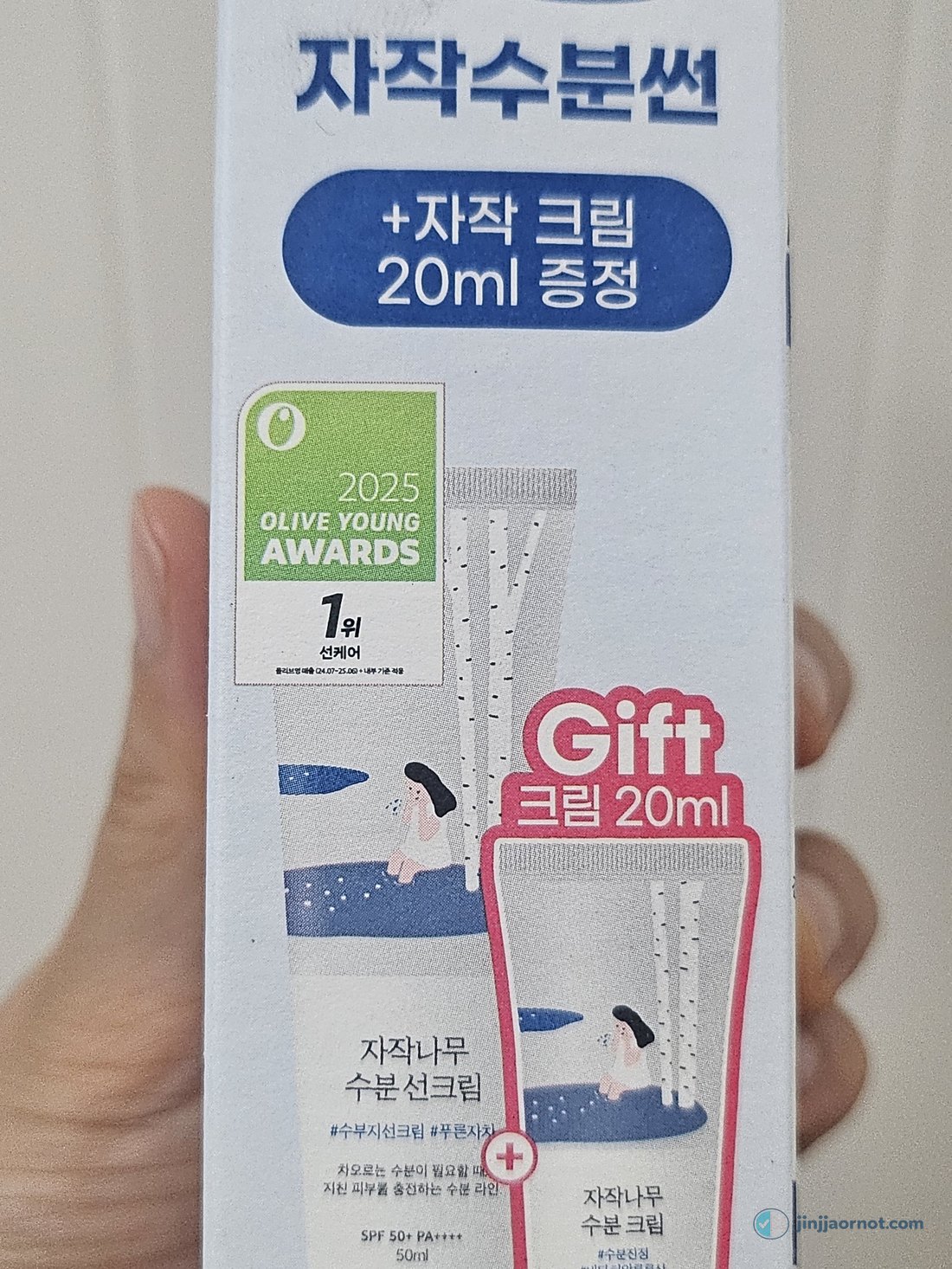
I want to be precise about what that badge means, because award stickers get waved around a lot. The fine print says it is based on Olive Young sales from July 2024 to June 2025, plus internal criteria. That is a sales ranking, not a laboratory result. It does not tell you the sunscreen performs better than another one. It tells you that out of everything on the biggest beauty shelf in Korea, this is what Koreans reached for most.
For what this site does, that is actually the more useful number.
So who is this for?
| If you are… | Verdict |
|---|---|
| Oily or combination, and hate the greasy sunscreen feeling | Buy it. This is the strongest case for this product. |
| Dehydrated or sensitive, like me | Buy it. A month, no reaction, and it does not feel stripping. |
| Wearing makeup over sunscreen daily | Buy it. It sets fast and smooth. Give it a minute first. |
| Very dry, in cold and dry weather | Buy it, and layer. Put your moisturizer on first and let it absorb. This is sun protection, not your hydration step. |
| Committed to mineral-only sunscreen | Buy the other tube. Round Lab Birch Juice Mild-Up is the mineral one in the same line. I have not tested it, but it is the right shelf. |
| Shopping for a deeper skin tone | Probably fine, but verify. No cast on my skin. Find a swatch from someone with your tone before you commit. |
Where to buy — and which one you are getting
Say it once more, because it is the single most useful thing on this page: check the SPF number in the listing photo.
Also on Stylevana
Round Lab Birch Juice Sun Cream (Korean tube)US →These are affiliate links, tracked through Awin — if you buy through one I may earn a small commission, at no extra cost to you. I only link the regional stores I am approved for and have checked myself. They open a search rather than a fixed product page, because Stylevana re-issues its product addresses and I would rather send you to a live shelf than a dead link. Checked 31 Aug 2026.
A note on the Amazon link: I have filtered it to Prime-eligible sellers on purpose. Since the United States ended duty-free treatment for low-value parcels, listings that ship directly from Korea can arrive slowly and can land your buyer with an unexpected customs bill at the door. Prime stock is already sitting in a US warehouse with all of that settled.
Korean sunscreen FAQ
Is Round Lab Birch Juice sunscreen chemical or mineral?
Chemical. Reading off my own box, the Korean tube uses four organic filters: diethylamino hydroxybenzoyl hexyl benzoate, ethylhexyl triazone, methylene bis-benzotriazolyl tetramethylbutylphenol, and diethylhexyl butamido triazone. None of the four is FDA-approved, which is exactly why the American tube is a different formula. If you want mineral, Round Lab makes one — see below.
Does it leave a white cast?
On my skin, none at all — not even in the first minute. I have light-to-medium Korean skin, so please treat that as one data point rather than a universal promise. Sunscreens that vanish on lighter skin can still read grey on deeper tones, and I cannot test that myself.
Is the US version the same as the Korean version?
No. The US tube is SPF 45+ PA++++ and uses US-approved filters including avobenzone, homosalate and octisalate. The Korean tube is SPF 50+ PA++++ and uses newer filters the FDA has not approved. Same name, same brand, different formula. Check the SPF number in the listing photo to tell them apart.
Is it good for oily skin?
Yes — this is its strongest case. Of every sunscreen I have personally worn, this leaves the least oily finish. It is named as a cream but spreads like a lotion, and settles down to almost nothing.
Can I wear makeup over it?
Yes. It sets quickly and smoothly, which is the main thing that makes a sunscreen workable as a base. If your skin is on the dry side, let it sit for a minute before you layer anything on top.
What is birch juice, and why does Round Lab use it?
It is sap from the white birch tree, listed on the ingredient label as Betula Platyphylla Japonica Juice. Korean formulators use it as a hydrating base in place of some of the water in a product. Round Lab built its identity on it and positions itself as clean, minimal skincare — a positioning I noticed from how the products feel before I read a word of their marketing.
Does Round Lab make a mineral version?
Yes — Birch Juice Mild-Up, sitting on the shelf right beside this one in Korean stores, plus a tone-up version. I have not tested Mild-Up, so no verdict from me. But if chemical filters are a dealbreaker for you, you do not need a different brand, just a different tube.
Has it won anything in Korea?
My box carries a 2025 Olive Young Awards first-place badge in sun care. The fine print says it reflects Olive Young sales from July 2024 to June 2025 plus internal criteria — so it is a sales ranking, not a lab result. It tells you what Koreans bought most, which is a different claim from performing best.
How long did you test it?
One month of daily use, through the hottest and most humid stretch of a Korean summer. Long enough to speak honestly about irritation and breakouts. Not long enough for me to claim anything about long-term results, so I will not.
Where do I get the Korean tube outside Korea?
International K-beauty retailers that ship from Asia are your best route — Stylevana and YesStyle both carry Round Lab. The tube on Amazon, Target and Ulta is the US formulation. Again: 50+ is Korean, 45+ is American.