Korean snacks · Tested
Orion Goraebap (Marine Boy): Which One to Buy, and All 16 Shapes
I bought both of these with my own money. Some links below are affiliate links — if you buy through them I may earn a small commission, at no extra cost to you.
Short answer
Buy the regular stir-fried seasoning box — that's the one I'd repurchase. Hot Goraebap is good, but it isn't a spicy version of the same snack; it's a separate product, and it's mild. And if English searches come up empty, try Marine Boy. That's the name Orion sells it under abroad.
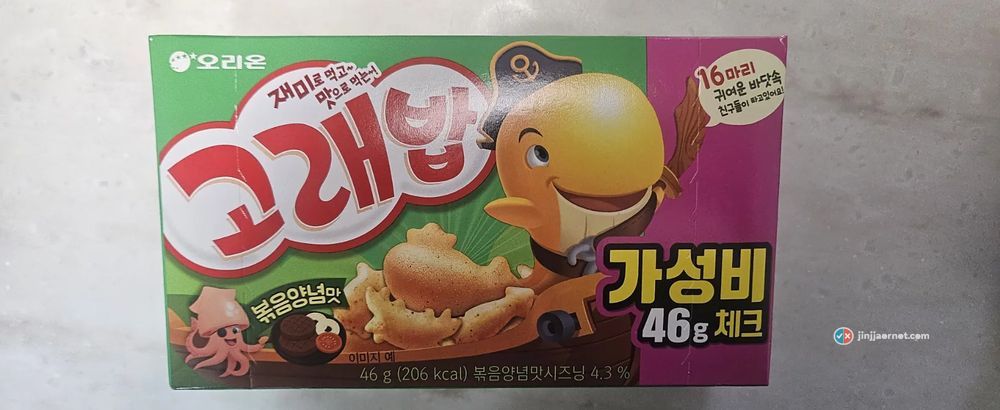
Goraebap (고래밥) has been on Korean shelves since 1984. It is oven-baked rather than fried, lightly salty, and cut into the shapes of sea creatures — which is the entire reason it survived forty years of children growing up and being replaced by new children. You don't eat it so much as sort through it.
Two things about it are almost impossible to find in English. One is the name. The other is what the shapes actually are. I'll fix both.
If you can't find it in English, you're searching the wrong name
고래밥 translates literally as "whale food." But Orion doesn't export it under that name — abroad it's sold as Marine Boy, and listings usually read something like Orion Goraebab Baked Marine Boy Sea Creatures. So if you search "Goraebap" on a US grocery site and get nothing, the product isn't missing. The name is.
This happens constantly with Korean snacks and it costs people the thing they were actually looking for. Search both names and take whichever comes back in stock.
Check Goraebap / Marine Boy on Amazon →All 16 shapes, translated
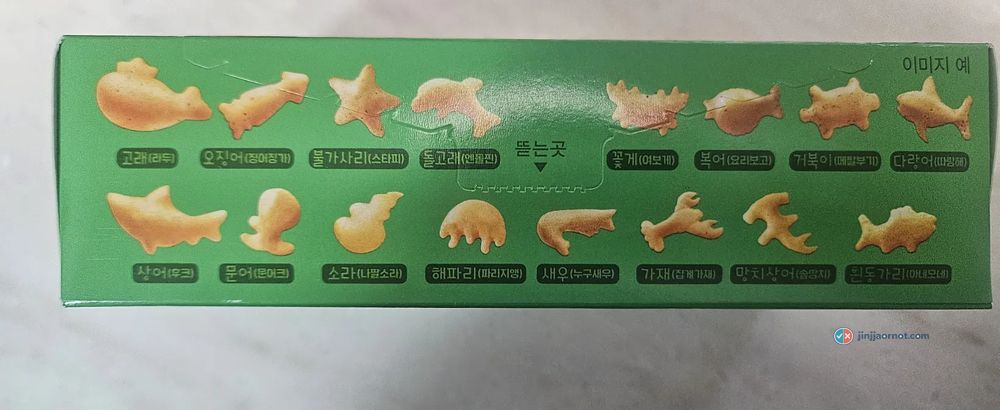
Here's the part no English page seems to have. Every shape is named on the box, and each one also gets a nickname — a small pun that doesn't survive translation but is the reason Korean kids remember them. The dolphin is called 엔돌핀, which collides "dolphin" with "endorphin." The tuna is 따랑해, baby-talk for "I love you." The hammerhead shark is 솜망치, roughly "cotton hammer."
| Shape | Korean | Nickname on the box |
|---|---|---|
| Whale | 고래 | 라두 |
| Squid | 오징어 | 징어징개 |
| Starfish | 불가사리 | 스타피 |
| Dolphin | 돌고래 | 엔돌핀 |
| Blue crab | 꽃게 | 여보게 |
| Pufferfish | 복어 | 요리보고 |
| Turtle | 거북이 | 메딸부기 |
| Tuna | 다랑어 | 따랑해 |
| Shark | 상어 | 후크 |
| Octopus | 문어 | 문어크 |
| Conch shell | 소라 | 나팔소라 |
| Jellyfish | 해파리 | 파리지앵 |
| Shrimp | 새우 | 누구새우 |
| Crayfish | 가재 | 집게가재 |
| Hammerhead shark | 망치상어 | 솜망치 |
| Clownfish | 흰동가리 | 아네모네 |
Read off the side panel of the 46g Korean box. Import listings abroad often mention nine shapes rather than sixteen, so count your own — that's half the game.
Not sure which Korean snack is for you?
Three taps and I'll match you to something from the shelf I actually buy from — and tell you what I left out, and why.
Try the Korean Snack FinderHot Goraebap is not the spicy version. It's a different product.
Jinjja ✓
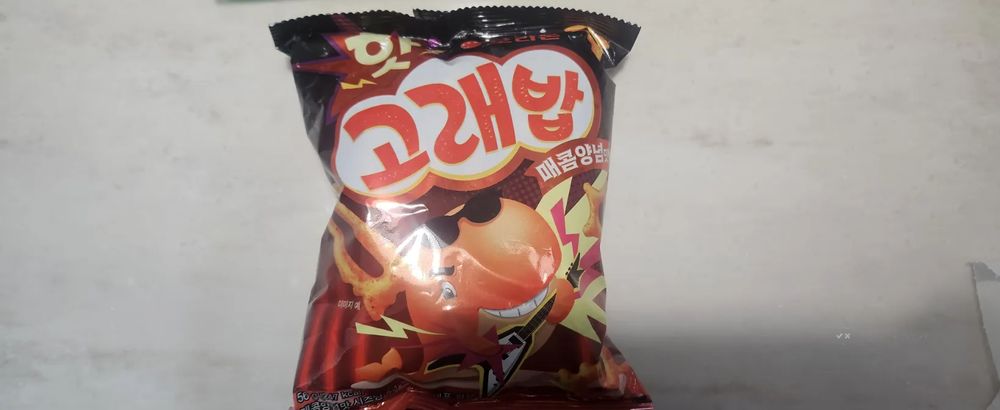
This trips people up. Shoppers look for "spicy Goraebap" and find nothing, because the product isn't branded that way. On the pack it's 핫고래밥 (Hot Goraebap), a sibling product with its own name, its own bag, and a bigger piece size — 56g against the 46g box, with visibly larger crackers.
And it's mild. The label says so before your tongue does.
Korean labelling rules make brands print the concentration of a seasoning named in the product name. So both packs tell you exactly how loud they are:
- Regular box — stir-fried seasoning 4.3%
- Hot Goraebap — spicy seasoning 5.1%
That's a gap of 0.8 percentage points. Not a different category of snack — a slightly heavier dusting of the same idea. And "dusting" is the operative word: the seasoning sits on the outside of the cracker rather than being worked into the dough, so it hits the tongue immediately and then stops.
On a scale where Buldak instant noodles are a 3, I'd put Hot Goraebap at a 1. Which is not a complaint. It means you can eat it by the handful, which is exactly what most people want from a spicy snack and almost never get from a Korean one.
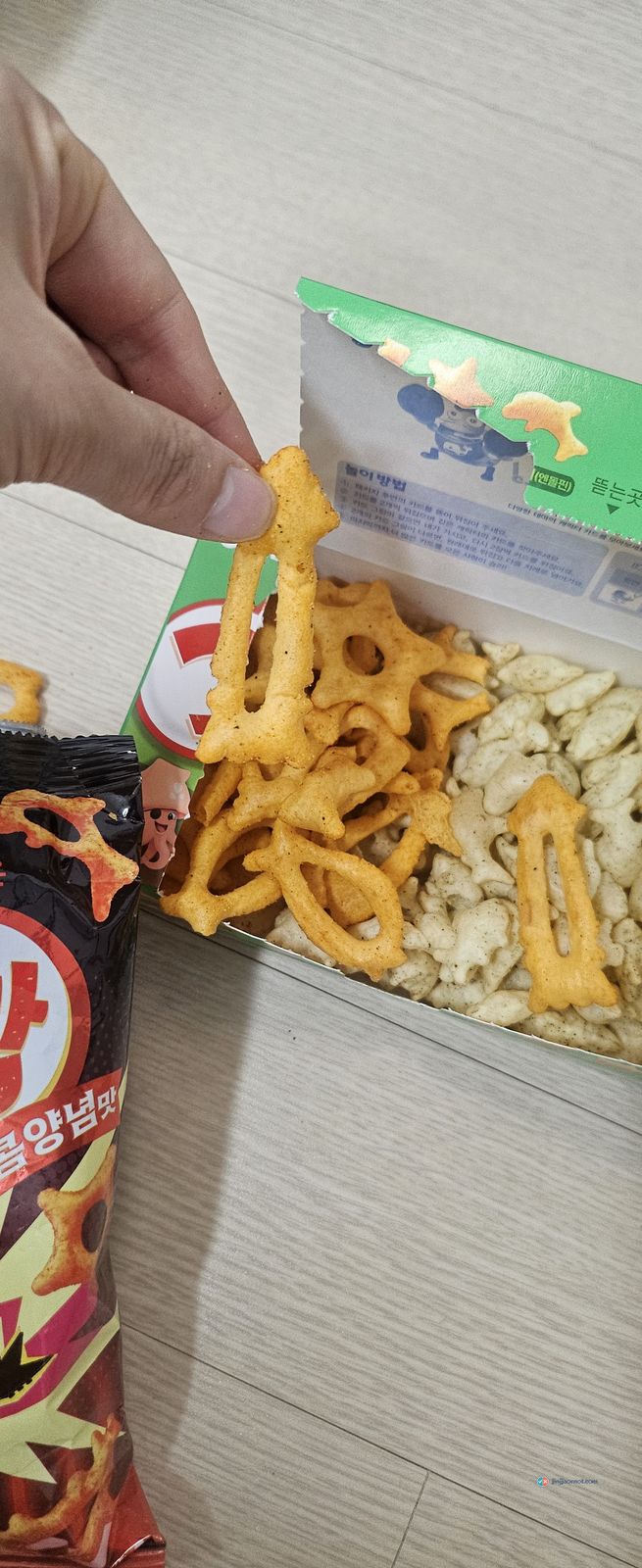
What it actually tastes like: a ramyun soup packet
My first note after eating it was that the seasoning tastes like the powder sachet from instant ramyun. Then I read the Korean ingredient list and found out why that was almost literal. It lists gochujang powder in three separate forms and, right after the rice flour, 부산어묵맛분말 — Busan fish-cake flavour powder.
Gochujang plus fish cake is the savoury-spicy backbone a ramyun sachet is built on. So the snack isn't chasing chilli heat at all; it's chasing broth. If you're the kind of person who finishes the soup at the bottom of the bowl, this is aimed squarely at you.
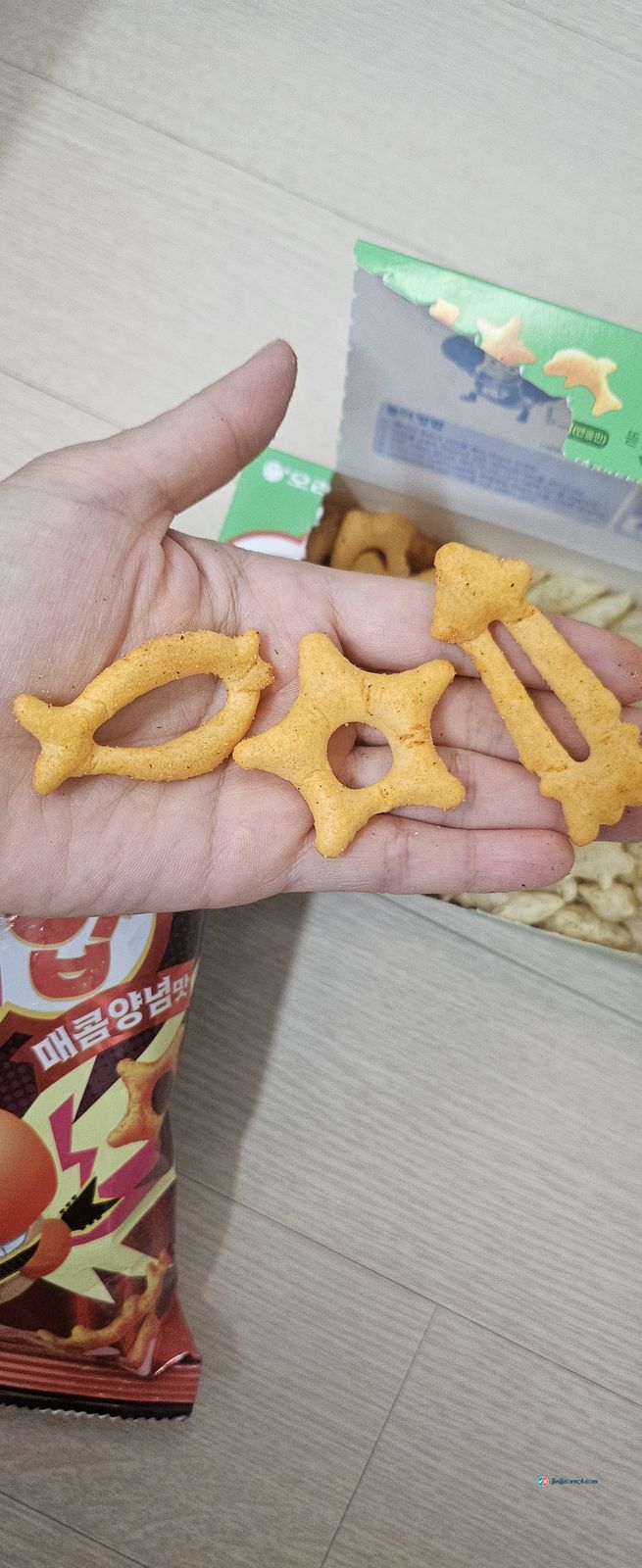
The two, side by side
| Heat | What the Korean label prints | Verdict | |
|---|---|---|---|
| Goraebap (stir-fried seasoning) |
○○○○○ | Stir-fried seasoning 4.3%. 46g / 206 kcal. Sixteen shapes named on the box. | Jinjja ✓ My pick |
| Hot Goraebap (spicy seasoned) |
●○○○○ | Spicy seasoning 5.1%. Gochujang powder + Busan fish-cake powder. Sodium 470mg per bag. | Jinjja ✓ |
Both are made by Orion at its second Iksan plant in Korea. Allergens overlap almost entirely — wheat, milk, soy, beef, squid and shellfish — with Hot Goraebap adding clam.
So which one do you actually buy?
One sourcing note worth your money. The listings I can find for Hot Goraebap ship directly from Korea, which means a long wait and, since the US ended de minimis relief, a customs bill at your door. A Korean grocery is usually faster and cheaper than importing a bag of crackers.
Where to actually buy these
Goraebap / Marine Boy (regular): on Amazon under either name, and in most Korean groceries.
Hot Goraebap: I'm not sending you to Amazon for this one. I checked, and a US search mostly returns unrelated Korean products rather than this bag. Ask at a Korean grocery or H Mart — that is where it actually sits.
Goraebap FAQ
Is Goraebap the same thing as Marine Boy?
Yes. Goraebap (고래밥) is the Korean name and it literally means "whale food." Orion sells the same snack abroad under the English name Marine Boy, which is why searching for Goraebap on an English store sometimes returns nothing. If one name fails, search the other.
Is Hot Goraebap actually spicy?
Barely. On a scale where Buldak instant noodles are a 3, I'd put this at a 1. The Korean label shows why: the spicy seasoning is 5.1% of the product, against 4.3% in the plain version — and it's dusted on the outside rather than worked through the dough. It reads as savoury more than hot.
What does Hot Goraebap taste like?
Like the flavour powder in an instant ramyun soup packet, which turns out to be almost literal. The Korean ingredient list runs to gochujang powder in three forms plus Busan fish-cake flavour powder — the same savoury-spicy base a ramyun sachet is built on. If you like drinking ramyun broth, you'll like this.
How many shapes are in a box of Goraebap?
The box I bought in Korea names sixteen sea creatures on the side panel, each with a joke nickname printed next to it. Import listings abroad often describe nine shapes, so the count may depend on which pack you get. Count your own box — that's half the point of the snack.
Is Goraebap fried?
No, it's oven-baked, which is why the texture is snappy and dry rather than greasy. That also makes it one of the easier Korean snacks to hand to a child without thinking twice about it.
Which one should I buy first, regular or Hot?
The regular stir-fried seasoning box. It's the one I'd buy again, it's the version that's been on Korean shelves since 1984, and it's far easier to find abroad. Add Hot Goraebap on a second order once you know you like the shape and the crunch.