🔥 Korean Snacks · Verdict
Buldak Carbonara vs Original: a Korean Settles It
Heads up: some links below are affiliate links, which means I may earn a small commission if you buy through them — at no extra cost to you. I only recommend Korean products I genuinely rate, and my honest opinion is never for sale.
The short answer
These are the two dry, stir-fried Buldak — you drain the water, unlike the soup version. Original is hotter and sweet-spicy; Carbonara is creamy and milder. I like Carbonara more. Both are incredible with Korean grilled pork belly — Original cuts the fat, Carbonara loves kimchi. Cook them right and you won't mess it up.
There are two Buldak that come in a pink-and-black pair on every Korean shelf: Carbonara (pink) and Original (black). Both are the stir-fried, sauce-coated kind — no broth. I cooked both, ate both with Korean BBQ, and have a clear favorite. Here's the honest breakdown.
Looking for the soupy Buldak instead?
The red "Stew Type" pack is a completely different dish — you keep the broth, not drain it. That one's here: Buldak Tang (the soup one) →
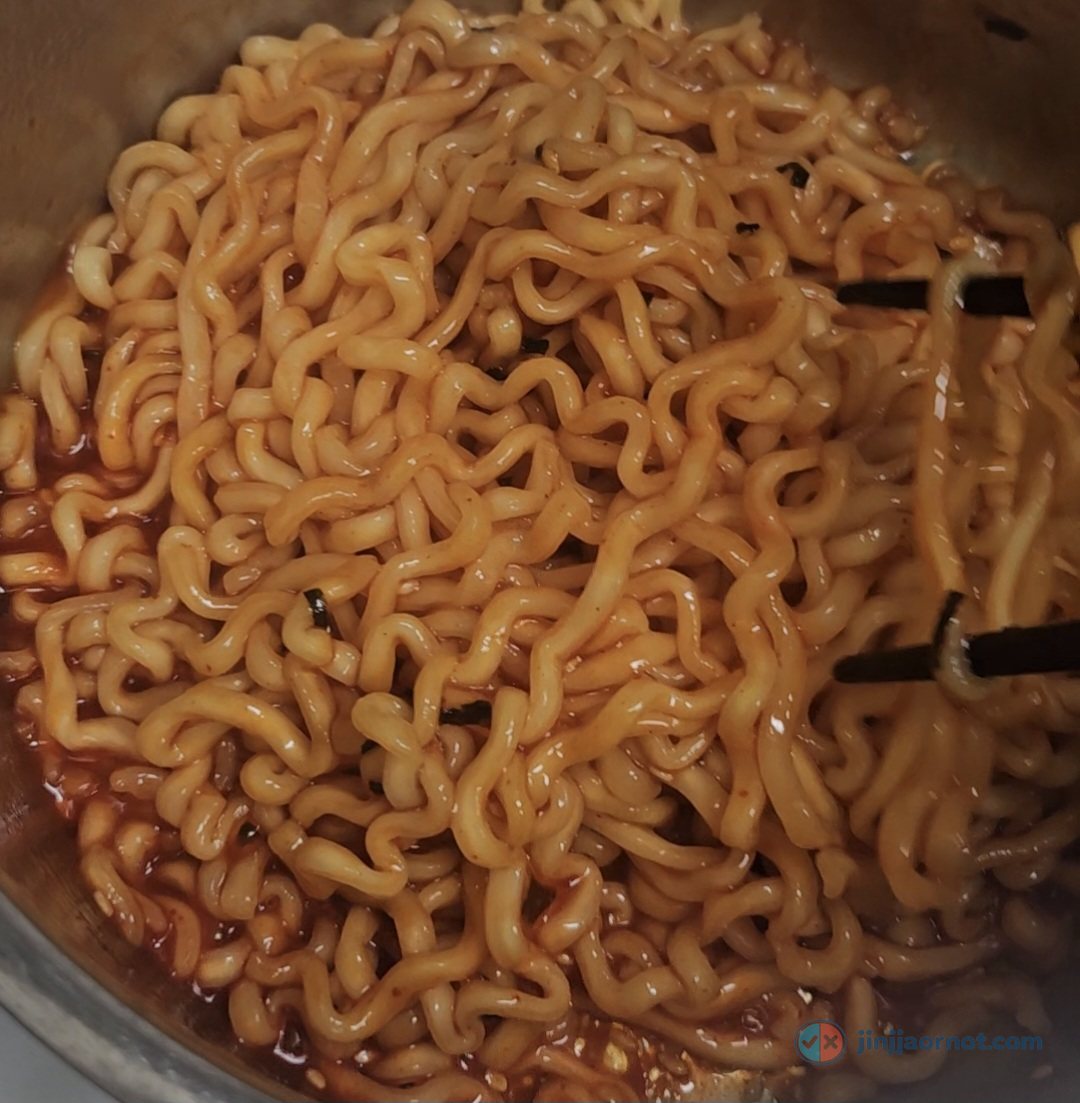
Carbonara Buldak — creamy, milder, my pick
Jinjja ✓ My pick
Pink pack. A creamy powdered cheese sauce goes on top of the usual Buldak chili base, and it wraps the heat in a soft, rich hug. It's the milder of the two, and honestly the one I reached for again. If you've never had Buldak, this is the friendliest way in — you get the flavor everyone's talking about without the sweat.
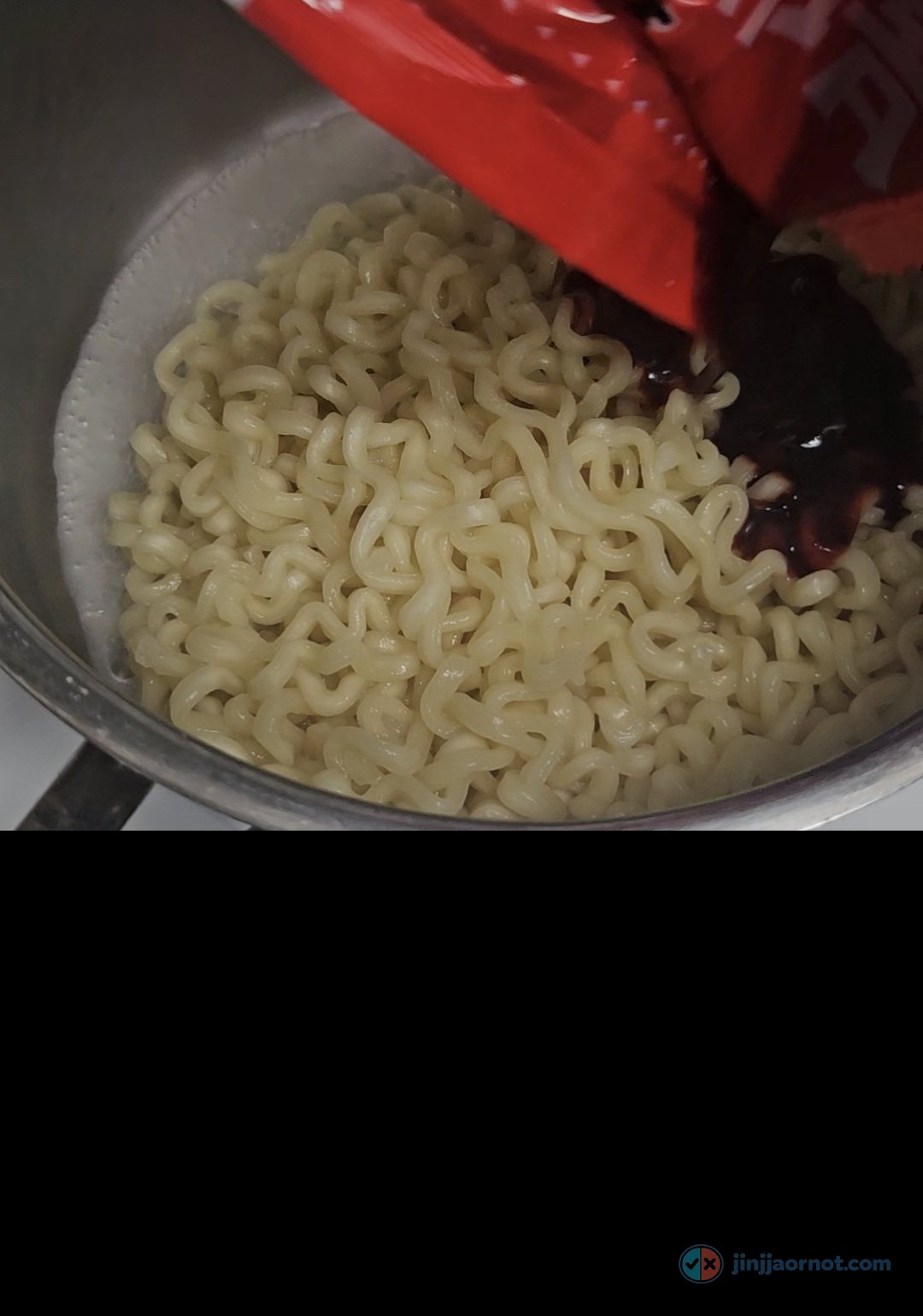
Best pairing — creamy Carbonara + well-fermented kimchi. This surprised me by how well it worked. The cheese sauce is rich, and a good, sour, well-aged kimchi cuts right through it — the tang refreshes your mouth between bites so the richness never gets heavy. If you eat this with kimchi on the side, you'll see what I mean immediately.
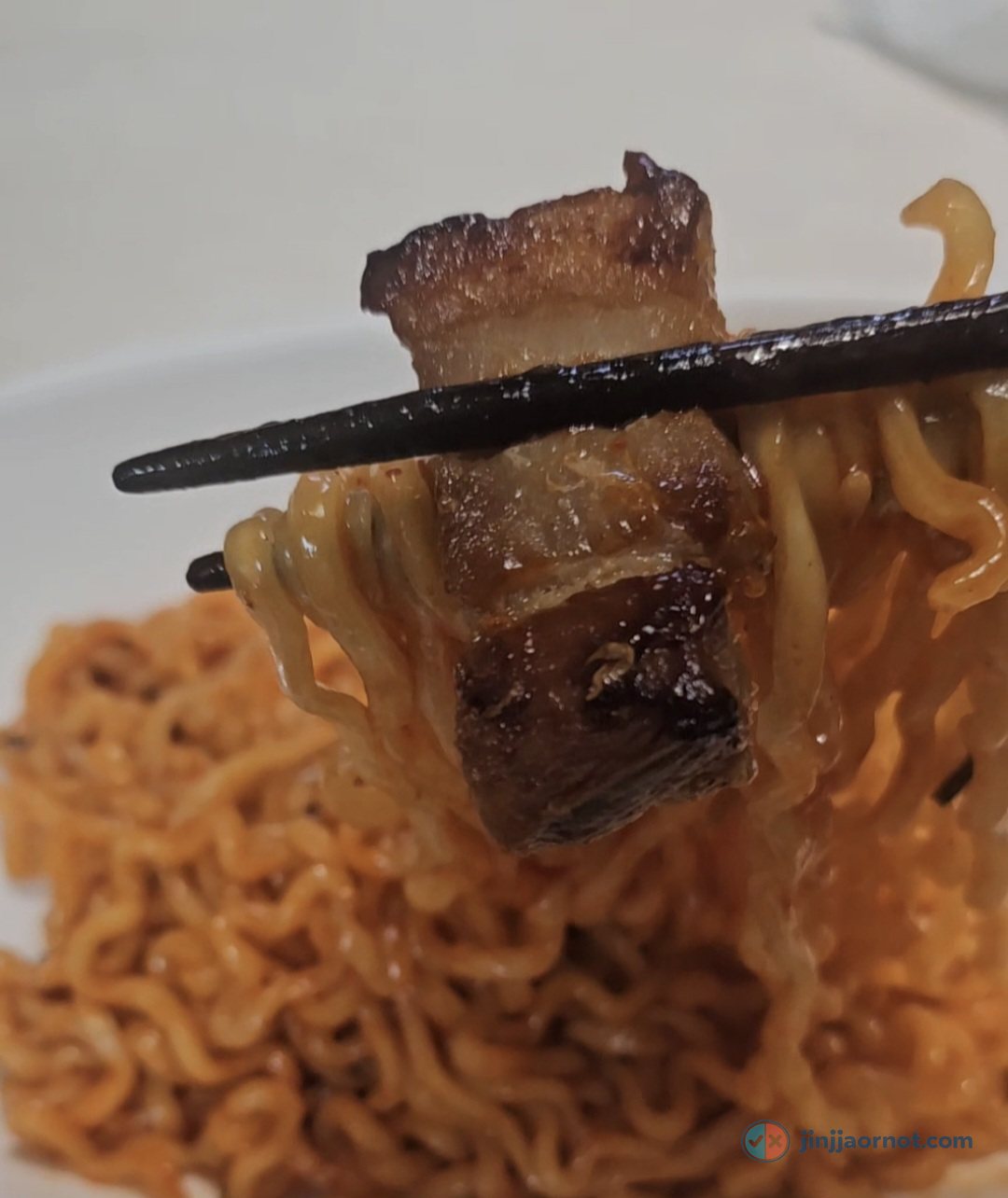
Who it's for: beginners, spice-shy people, and anyone who wants creamy-comforting over pure fire.
Check price on Amazon →Original Buldak — the OG fire, and a pork-belly hero
The classic
Black pack. This is the one that started the whole "fire noodle challenge" era — no cream, no mercy, just a sweet-spicy sauce and real heat. It's not raw chili burn; it's sweet, sticky, and sneaks up on you over a few bites. It's clearly hotter than Carbonara.
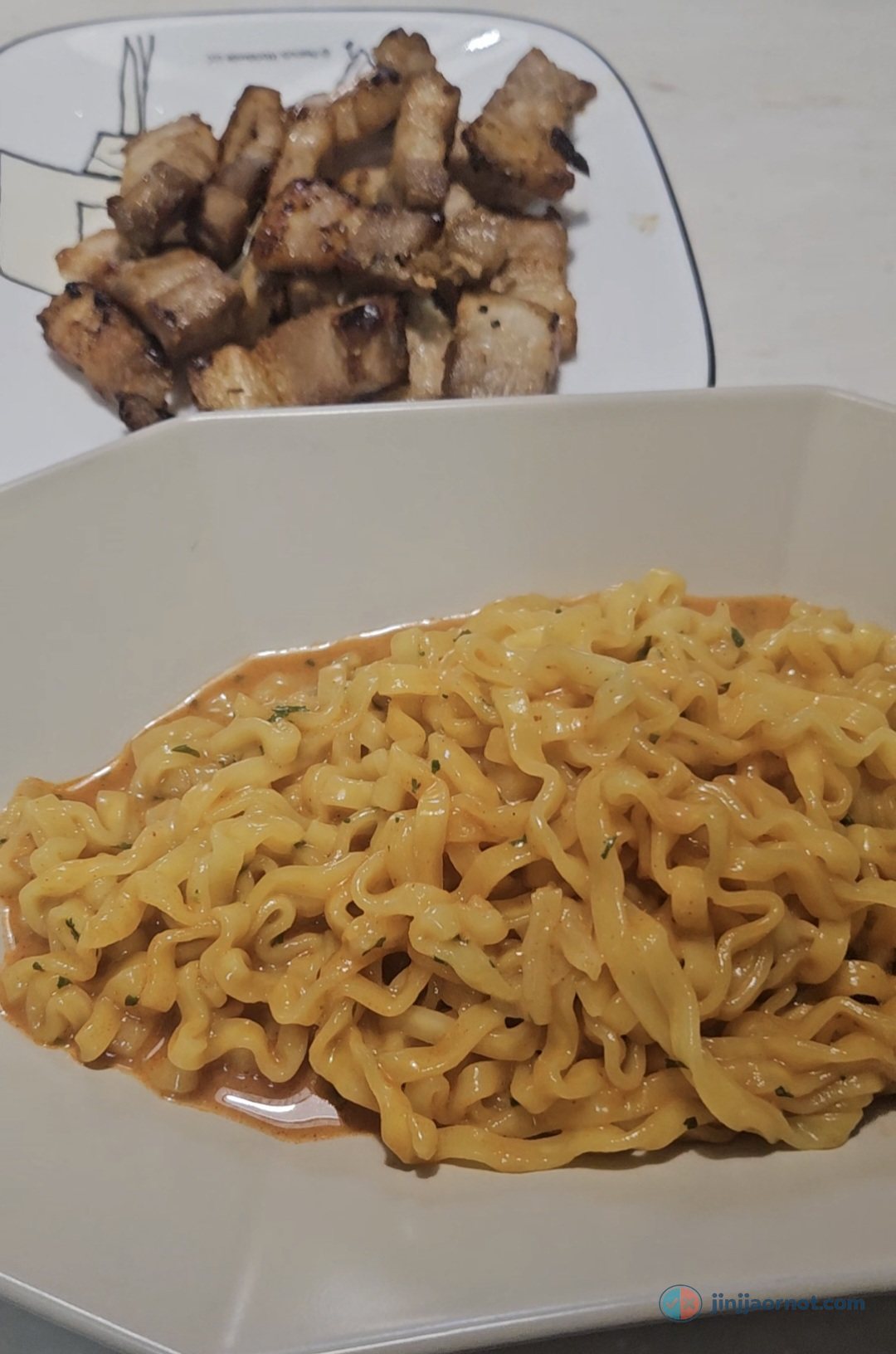
Best pairing — Original + samgyeopsal. Both flavors go well with Korean grilled pork belly, but Original does something special: its sweet-spicy sauce cuts through the fattiness of the pork better than the creamy Carbonara does. The heat and the richness balance each other, and neither one wins. If you're doing a Korean BBQ night, Original is the noodle I'd put on the table.
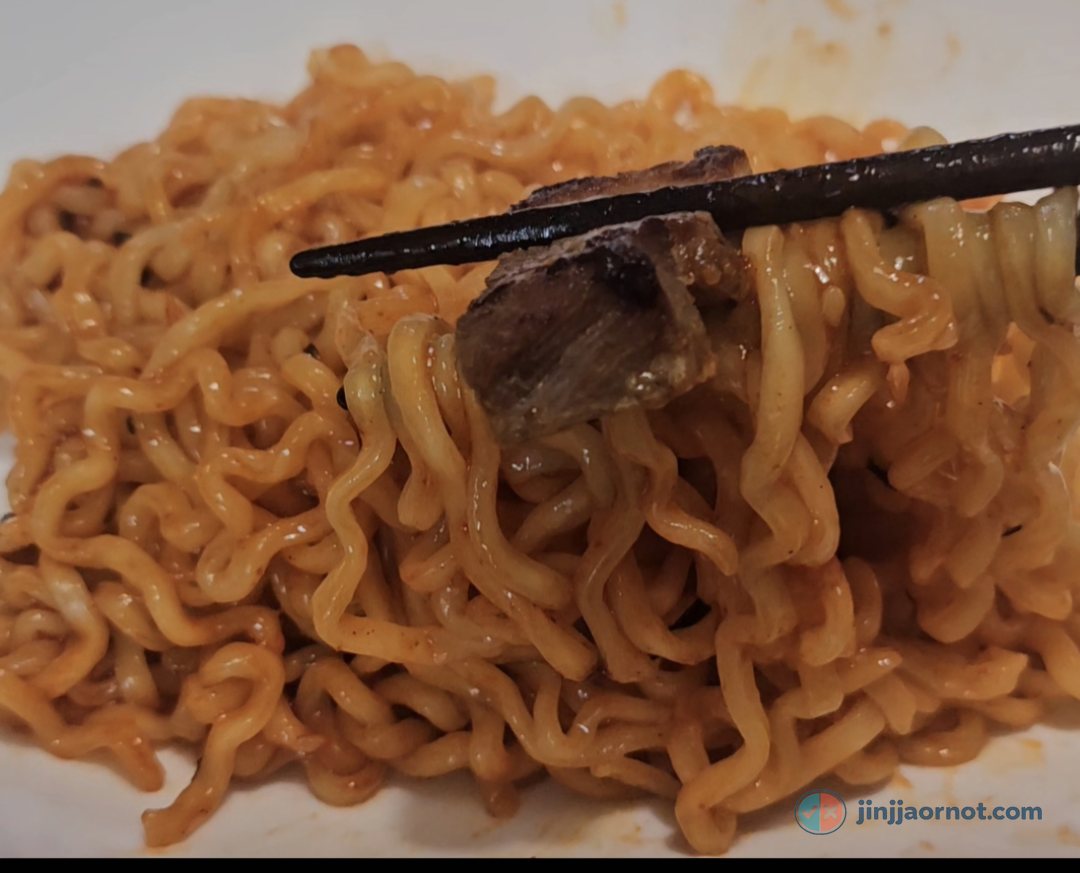
Who it's for: people who want the real, classic Buldak heat, and anyone grilling pork.
Check price on Amazon →Not sure which Korean snack is for you?
Three taps and I'll match you to something off the shelf I actually buy from — and tell you what I left out, and why.
Try the Korean Snack FinderHow to cook stir-fried Buldak (and the one difference that matters)
Both are stir-fried noodles, so the big rule is the same: you drain the water. This is the opposite of the soupy Buldak Tang, where you keep the broth. Here's the shared base:
- Boil the noodles in about 600 mL (roughly 2.5 cups) of water for around 5 minutes.
- Drain almost all of it — leave about 8 spoonfuls of water in the pot. That little bit of water is what lets the sauce coat every noodle.
After that, the two split. This is the part people get wrong:
| Original | Carbonara | |
|---|---|---|
| Heat | Keep it on | Turn it off |
| Then | Add liquid sauce, stir-fry ~30 sec on low, then kill the heat and sprinkle the flake packet | Off the heat, add both the liquid and powder packets and mix well |
| Why | A quick stir-fry deepens the sauce and gives it that glossy, sticky finish | Keeping it off the heat protects the creamy cheese sauce so it stays smooth, not split |
That's really the whole trick: Original wants a quick stir-fry with the heat on; Carbonara wants the heat off so the cream stays creamy. Get that right and both come out the way they're supposed to.
Carbonara vs Original at a glance
| Heat | Flavor | Cook | Best with | |
|---|---|---|---|---|
| Carbonara | 🌶️ | Creamy, cheesy, mild | Heat off, both packets | Kimchi |
| Original | 🌶️🌶️🌶️ | Sweet-spicy, sticky, hot | Stir-fry on heat | Pork belly |
New to Buldak? Start with Carbonara
Creamy, mild, and hard to mess up. The safest way to fall for fire noodles — and my personal favorite of the two.
Want the real heat? Go Original
Hotter, sweeter, stickier. The classic experience — and the better match for a Korean BBQ pork night.
Building your first Korean pantry?
I put together a starter list of the Korean things actually worth buying first — from a Korean.
See the starter list →My honest pick
Between the two, Carbonara wins for me — the creaminess just hits my taste better, and with sour kimchi it's a genuinely great meal. But Original earns its spot the second you bring out grilled pork; it balances the fat in a way the creamy one can't. Get both if you can. And if you decide you want the soupy, spicier cousin, that's the Buldak Tang / "Stew Type".
Buldak Carbonara vs Original FAQ
What's the difference between Buldak Carbonara and Original?
Original is the classic dry fire noodle — sweet-spicy, no dairy, and noticeably hotter. Carbonara adds a creamy powdered cheese sauce that mellows the heat and makes it richer and milder. They're also cooked a little differently: Original is stir-fried with the heat on, while for Carbonara you turn the heat off before mixing in both packets.
How do I cook stir-fried Buldak?
Boil the noodles about 5 minutes, then drain almost all the water — leave roughly 8 spoonfuls. For Original, keep the heat on, add the liquid sauce, stir-fry ~30 seconds, then turn it off and sprinkle the flakes. For Carbonara, turn the heat off first, then add both the liquid and powder packets and mix well so the cheese sauce stays creamy.
Which is spicier, Carbonara or Original?
Original, clearly. Same chili base, but Carbonara's creamy cheese powder tones the heat down a lot — that's why it's the more beginner-friendly of the two.
What should I eat with Buldak?
In Korea, both are excellent with samgyeopsal (grilled pork belly) — the noodles cut the richness of the pork. Original is especially good at balancing fatty pork, while creamy Carbonara pairs beautifully with well-fermented kimchi, whose sour tang cuts through the cheese sauce.
Can I buy Buldak Carbonara and Original in the US?
Yes — both are widely sold on Amazon and at Korean groceries, usually in 5-packs, listed under those names directly. Carbonara is one of the best-selling Buldak flavors in the US.
What about the soup version?
That's a separate product — the red "Stew Type" pack, which Koreans call Buldak Tang. You cook it as a soup and don't drain it. I review it separately in Buldak Tang, the soup one.