🍙 Korean Snacks · Verdict
Korean Seaweed Snacks (Gim), Ranked by a Korean
Some links below are affiliate links — I may earn a small commission if you buy through them, at no extra cost to you. I only recommend Korean products I genuinely rate, and my honest opinion is never for sale.
The short answer
Korean seasoned seaweed (gim) is the snack Americans sleep on — crispy, savory, and light (often ~30 cal a pack). The three I use: Sungkyung holds together best for wrapping rice, bibigo is the crispy all-rounder, and Yangban is for people who love a smoky, fire-roasted aroma. You really can't go wrong.
Here's a snack that quietly out-crunches half the chip aisle and nobody in the US is talking about: Korean gim (김) — thin sheets of roasted, lightly oiled, salted seaweed. It sounds healthy and boring. It is healthy-ish. It is not boring.
I'm Korean, and gim is on basically every Korean dinner table — every single day. Here's the honest truth most reviews won't tell you: all three of these are great, and even Koreans have a hard time telling them apart in a blind taste. The differences are real but small. So don't overthink your first purchase — you genuinely can't pick a bad one.
In Korea we call the best side dishes "rice thieves" (밥도둑) — so good you polish off more rice than you planned. Gim is the original. Here are the three I keep in my kitchen and the tiny things that set them apart.
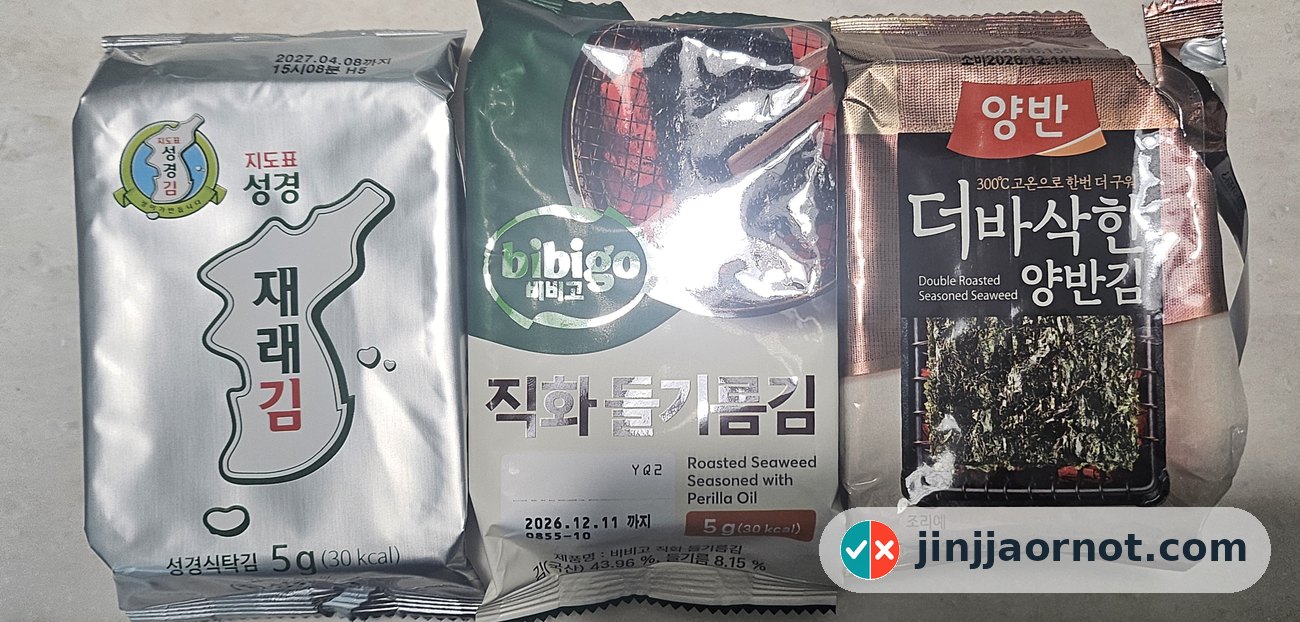
3 kinds of Korean seaweed, compared
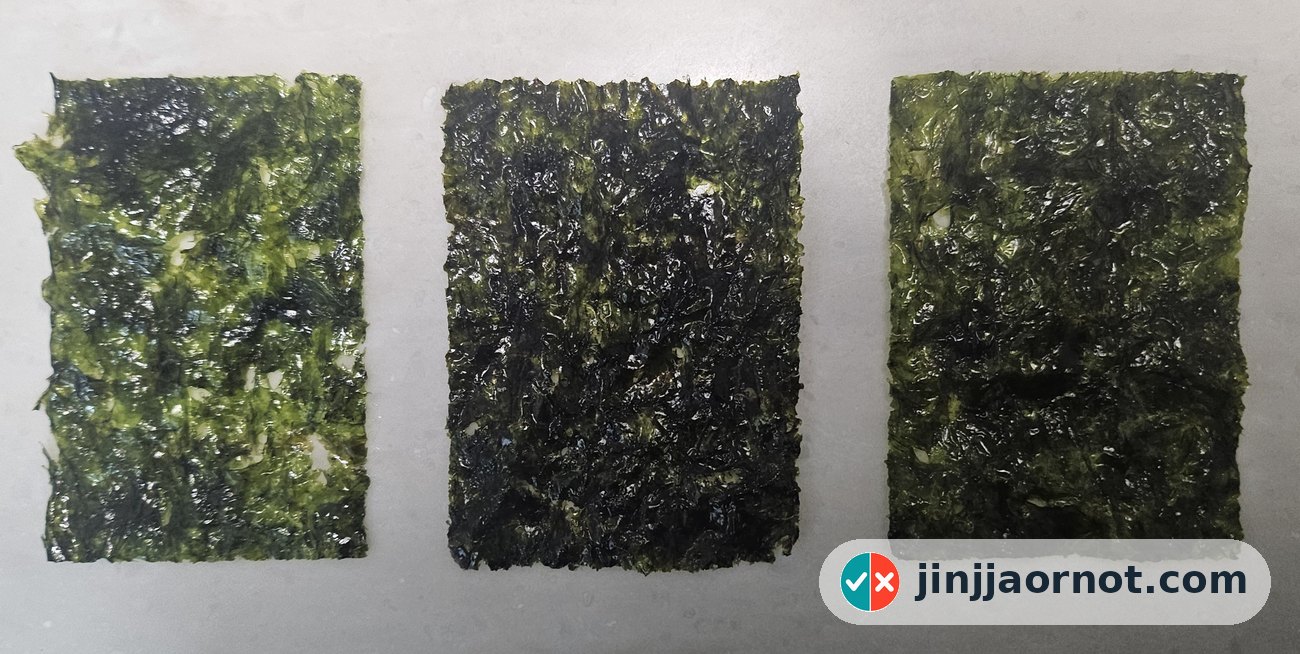
What that photo doesn't tell you: Sungkyung looks the palest and thinnest of the three, so you'd assume it falls apart first. It's the opposite — it's the one that doesn't tear when you wrap rice in it. bibigo is the crispiest, and Yangban is the one that actually tastes flame-roasted.
| Brand | What makes it different | Best for | Verdict |
|---|---|---|---|
| Sungkyung (성경) | Sturdier sheets — doesn't tear easily | Wrapping rice, kids, everyday | Best for rice |
| bibigo | Crispy, clean, easy-going | Snacking straight from the pack | Safe all-rounder |
| Yangban (양반) | Smoky, fire-roasted aroma | People who love that smoky note | For smoke lovers |
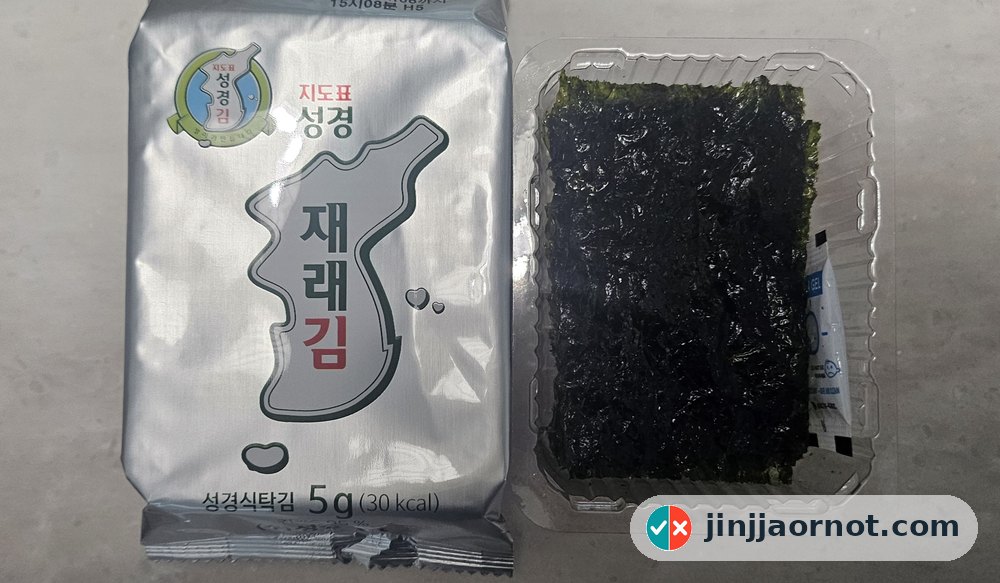
1. Sungkyung (성경) — best for wrapping rice
Jinjja ✓
Two things make this one stand out. First, flavor: it's the most savory-salty of the three. Not aggressively salty — just that clean 짭조름 (jjapjjoreum) note Koreans love, the one that makes you keep reaching for another sheet.
Second, and this surprised me: the sheets are the sturdiest. Look at the comparison photo above — Sungkyung is the palest and looks the thinnest, so you'd bet on it tearing first. It doesn't. It holds together best when you wrap warm rice, which also makes it the safest one for kids' hands. Wrap it around rice once and the "rice thief" thing clicks instantly.
Check price on Amazon →Not sure which Korean snack is for you?
Three taps and I'll match you to something off the shelf I actually buy from — and tell you what I left out, and why.
Try the Korean Snack Finder2. bibigo — the crispy all-rounder
Jinjja ✓
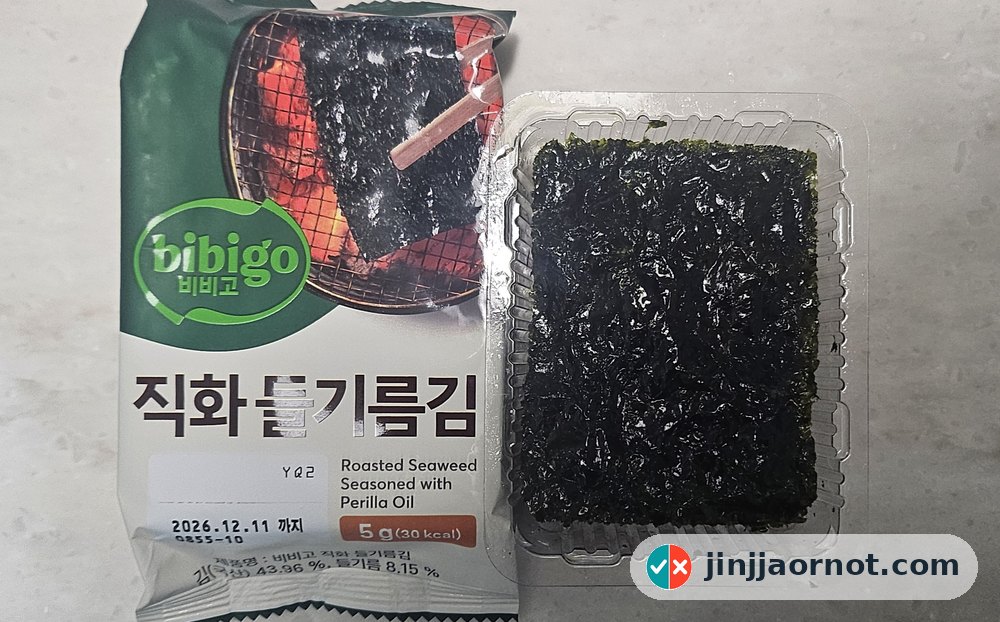
First, a myth to clear up: perilla oil isn't bibigo's special feature. Korean seasoned gim is basically all made with perilla or sesame oil — that's just what gim is. So don't pick a brand because the label says perilla oil.
What actually sets bibigo apart is texture. It's the crispiest of the three, and that's it — that's the whole reason. If Sungkyung is the "wrap the rice" one, bibigo is the "just grab a pack and snack" one.
This is my pick, purely for the crunch. I ran this past my kids too, and at first they reached for bibigo almost every time — the crispiness wins with kids immediately. (What happened later is in "My honest pick" below.)
Check price on Amazon →3. Yangban (양반) — for smoky-aroma lovers
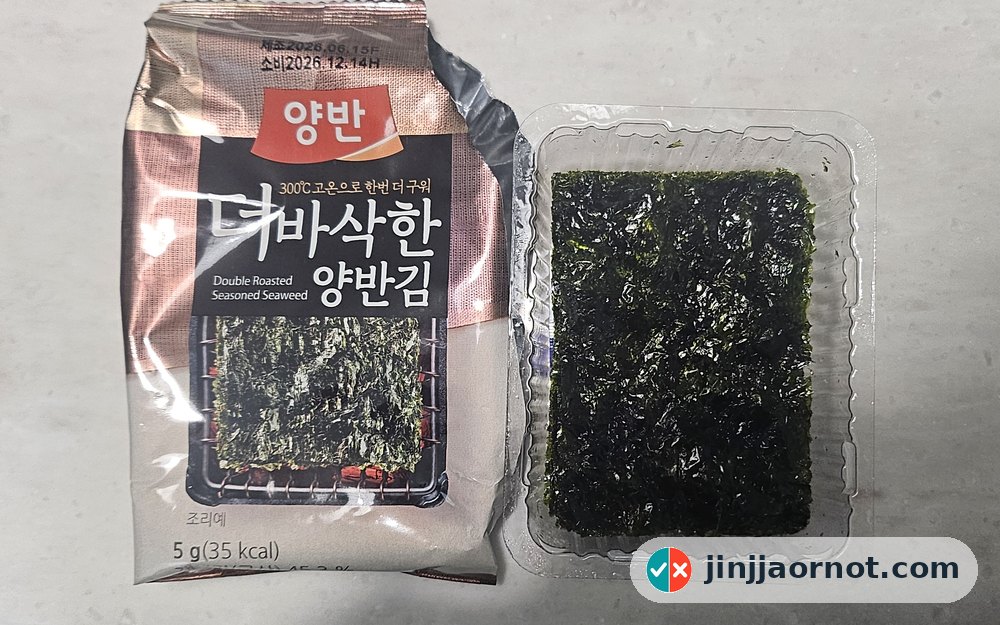
If you love smoke
Yangban's is fire-roasted, so it carries a subtle smoky aroma the other two don't. If you're the kind of person who loves anything smoked or charred, this is your pick. Is it wildly different? No — remember, all three are close. But that little smoky note is a real, likeable difference if you're chasing it.
Check price on Amazon →Lighter than the chip aisle
A single pack of seasoned gim is often around 30 calories and low in fat — it's mostly seaweed, a little oil, and salt. It's a genuinely lighter way to get that salty-crispy snack fix, and it's a popular lunchbox pick for kids. (Seasoned versions still have salt and oil, so it's a snack, not a salad — but as far as crunchy snacks go, it's a light one.)
Building your Korean pantry?
I put together the Korean staples actually worth buying first — from a Korean.
See the starter list →How to eat it (the Korean way)
Three moves: (1) wrap a bite of warm rice in a sheet — the classic; (2) crumble it over a rice bowl or bibimbap; (3) just eat it straight from the pack like chips. All three are correct. Don't overthink it.
Buy the multipack, not the singles
One practical note for US shoppers. In Korea, gim is almost always sold in bundles of 20 single-serving packs, and that's how everyone buys it — it's dramatically cheaper per pack than grabbing them individually.
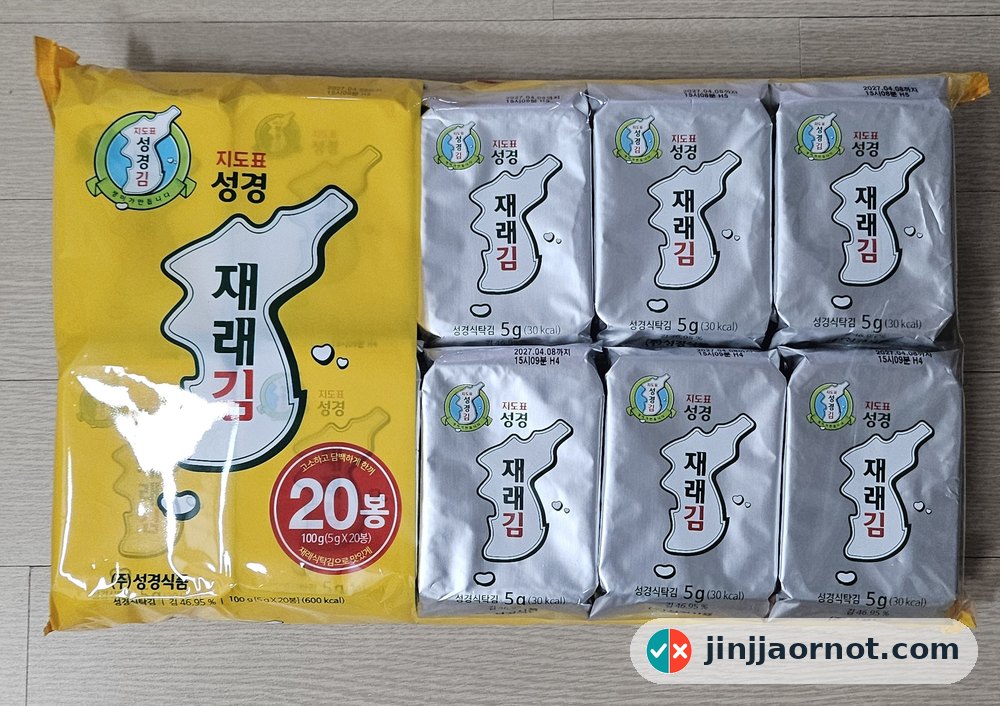
On Amazon you'll often see small 3- or 4-packs at a price that makes gim look expensive. It isn't. Look for the multipack listings, or grab a bundle at H-Mart if there's one near you — same product, a fraction of the per-pack price.
My honest pick
Mine is bibigo, and the reason is one word: crunch. Not the ingredients, not the label — just the texture. That's what I reach for.
But the more interesting result came from my kids, because it changed. At first they picked bibigo almost every time — crispy wins instantly with kids. Over time they moved to Sungkyung, and when I asked why, it was the flavor: Sungkyung is the more savory-salty one, and that's what they ended up craving. Crunch got them first; taste kept them.
So if you're buying for kids, that's a genuinely useful order: start with bibigo, then try Sungkyung once the novelty wears off.
And the honest overall answer: they're all good, and the gaps are small. Buy bibigo for crunch, Sungkyung for savory-salty flavor and for wrapping rice, Yangban if you want smoke. There's no wrong choice — every one of them is a rice thief, and all three are jinjja good.
Korean seaweed FAQ
What is Korean seaweed snack (gim)?
Thin sheets of dried, roasted seaweed brushed with oil and lightly salted. Koreans eat it with rice or straight from the pack. Crispy, savory, and low in calories — a lighter alternative to potato chips. "Gim" (김) is simply the Korean word for this edible seaweed; it's the same seaweed used to wrap gimbap and (in its Japanese form, nori) sushi.
How do you pronounce "gim," and what does it mean?
It's pronounced "geem" — one syllable, rhyming with "seem." The Korean spelling is 김. The word just means the edible seaweed itself. You may also see it romanized as "kim," and it's the same plant known as nori in Japanese — Koreans season it with oil and salt and eat it as a snack or with rice.
Why do Koreans call seaweed a "rice thief"?
A "rice thief" (밥도둑) is a side dish so good it makes you eat more rice than you meant to. Seasoned gim is the classic example — wrap rice in it and the bowl vanishes. It's a compliment.
Is Korean seaweed a healthy snack?
Compared to typical chips, gim is very light — often around 30 calories a pack, low in fat, made of seaweed, oil, and salt. A genuinely lighter option and a popular kids' lunchbox snack, though seasoned versions do contain salt and oil.
Which one should I buy first?
Honestly, all three are great and very close — even Koreans struggle to tell them apart. Go by use: Sungkyung holds together best for wrapping rice, bibigo is the easy crispy all-rounder, and Yangban has a smoky aroma. All are easy to find on Amazon and Korean grocery sites.