🍪 Korean Snacks · Verdict
Korean Yakgwa: 3 Brands Compared, and Why Only One Reaches You
Some links below are affiliate links — I may earn a small commission if you buy through them, at no extra cost to you. I bought all three of these with my own money at Korean shops, and my honest opinion is never for sale.
The short answer
Yakgwa is a fried, syrup-soaked Korean pastry, and in Korea it is not one product but a ladder — from a supermarket bag to a department-store box. I bought three and read all three Korean labels. All three list syrup second. Only one lists honey at all. The one I like most has a two-month shelf life and can't be exported. The one you can actually buy is the supermarket one — and it's the only one of the three with honey in it.
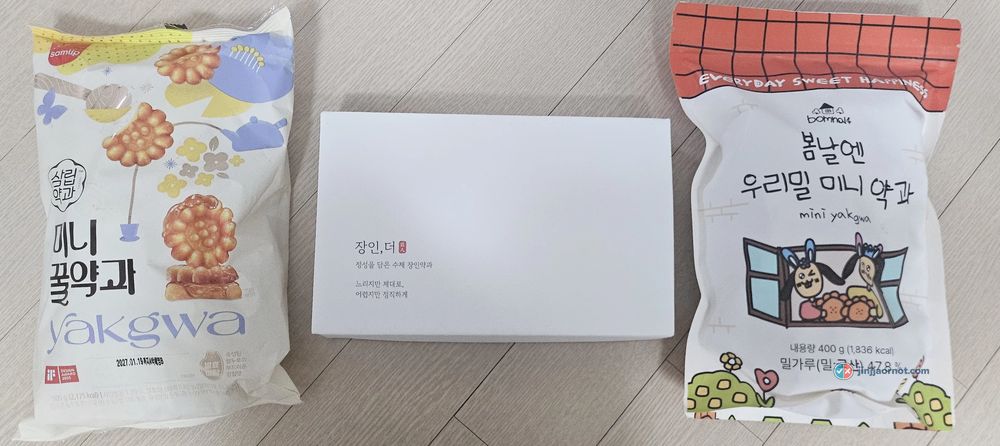
If you've only met yakgwa (약과) through an Amazon listing, you've met one version of it. In Korea it isn't one thing. It's a ladder, and where a bag sits on that ladder changes what's inside it.
The ladder, from the top down
| Tier | What it is | Where you find it |
|---|---|---|
| Master-artisan yakgwa | Holiday gift, not a snack. You hand it to someone. | Ordered, boxed, seasonal |
| Golden Piece | A recent brand that treats yakgwa as a luxury object. Fusion flavours, designed packaging. | Department stores and pop-ups |
| Jangin (장인) | Artisan maker. Famous for its broken pieces — more on that below. | Selected shops only |
| Bomnalen (봄놸엄) | Born on social media. Sells out weekly, ships chilled. | Online, chilled or frozen |
| Samlip | The default. Made by Korea's largest bakery group, on every supermarket shelf. | Everywhere, including abroad |
Americans meet the bottom rung. That is not an insult — the bottom rung is where most Koreans meet it too, because it's the one that's there when you want yakgwa today. But knowing the ladder exists changes what you expect from the bag.
It's also worth knowing this stopped being an old-fashioned sweet a few years ago. Yakgwa came back hard, hard enough that a fast-food chain in Korea put pieces of it on soft-serve ice cream as a limited dessert. That's how far it went.
The broken ones cost less, so people wanted them more
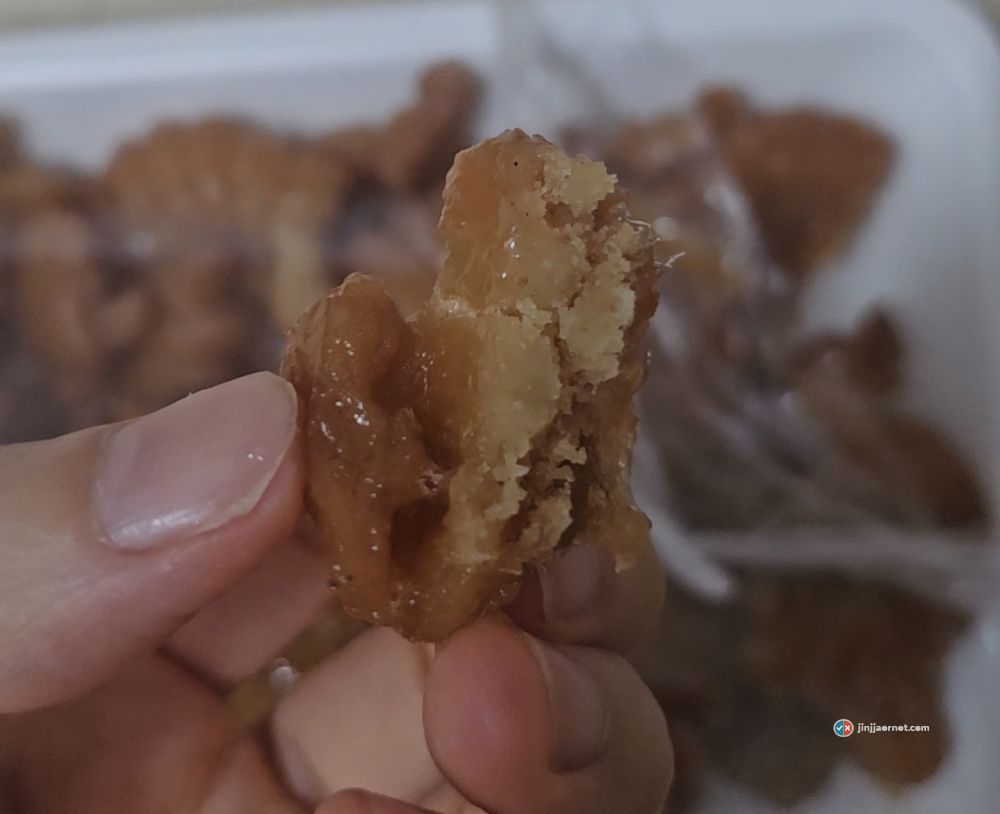
This is my favourite thing in Korean snacking right now and there's no English equivalent for it.
When yakgwa is made, some pieces tear or lose their shape. Those are seconds. Jangin sold them off cheap as paji yakgwa (파지약과) — literally "broken yakgwa" — because they couldn't be sold as whole ones.
Then people decided the broken ones tasted better.
Look at the photo. A torn piece is open, so syrup gets into the middle instead of sitting on the surface. You end up with crisp edges and a soaked, chewy centre in the same bite. Whether that's the real reason or not, the demand was real: for a while people were posting online asking strangers to go to the shop and buy some for them, because you couldn't get it where they lived.
So the maker started selling the defect on purpose. The mistake became the product.
Of the three in front of me, this is the one I like most. The crispness and the chew exist at the same time, which the other two don't quite manage. It's also the one you almost certainly cannot buy, and I'll explain why further down.
Not sure which Korean snack is for you?
Three taps and I'll match you to something off the shelf I actually buy from — and tell you what I left out, and why.
Try the Korean Snack FinderAll three Korean labels, side by side
This is the part you can't do from an English package. Korean law puts the full ingredient list in order of weight on the back, so three bags in one kitchen is three honest answers.
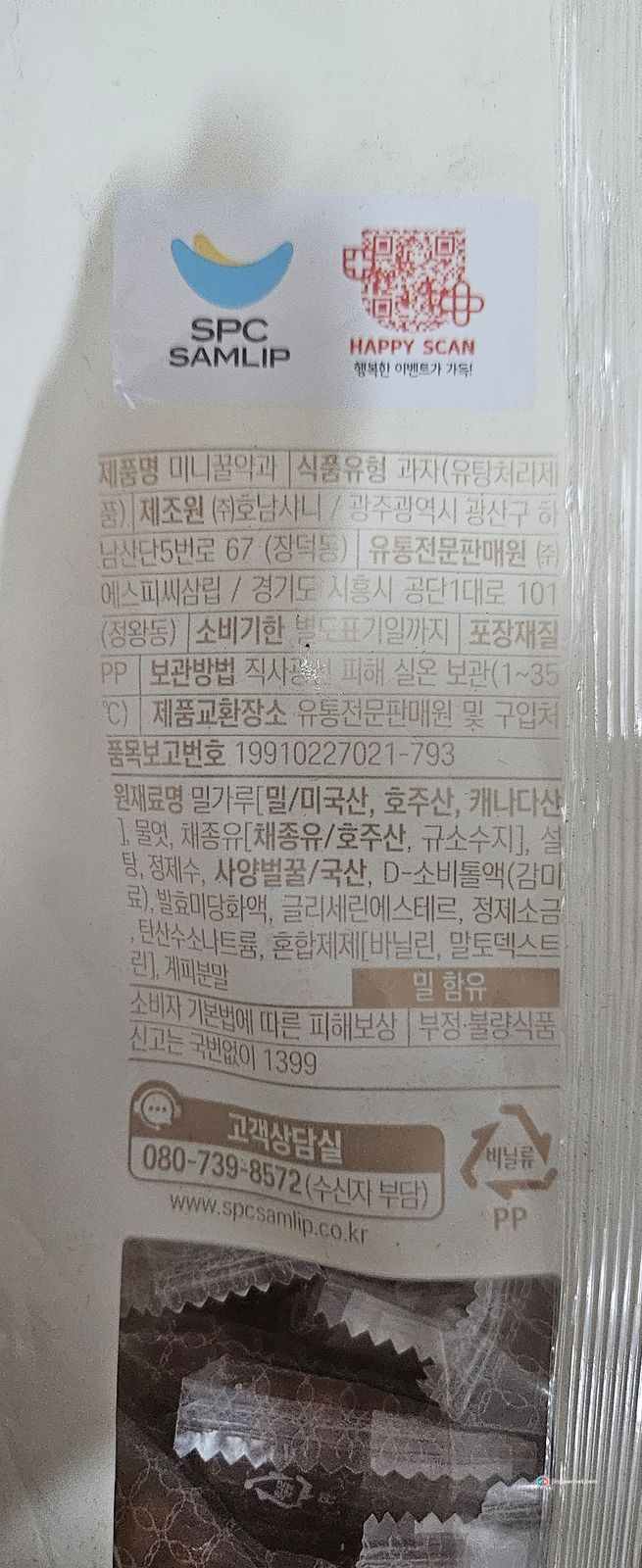
| Samlip | Jangin paji | Bomnalen | |
|---|---|---|---|
| 1st ingredient | Wheat flour (US/AU/CA) | Wheat flour (AU/US) | Wheat flour, Korean, 47.8% |
| 2nd | Starch syrup | Starch syrup | Starch syrup |
| 3rd | Rapeseed oil | Corn oil | Soybean oil |
| Honey? | Yes — 6th | None | None |
| Sugars /100 g | 21 g | 26.2 g | 23 g |
| Fat /100 g | 15 g | 10.8 g | 18 g |
| Notable | Fermented rice malt liquid | Glutinous rice, Korean | Five Korean grain powders |
| Storage | Ambient, 1–35°C | Cool place, wrapped not sealed | Cool — and the packet also advises freezing |
| Shelf life | ~17 months | 2 months from production | ~19 months (frozen) |
Three things jump out.
All three list syrup second, not honey. I assumed the premium ones would use traditional rice syrup and the cheap one would use corn syrup. I was wrong — that's what reading the actual labels is for. "Honey cookie" is the English name, not the recipe.
The only one with honey in it is the cheapest, most ordinary bag. Samlip lists Korean honey sixth. Jangin and Bomnalen contain none at all. I checked one of the big US export listings out of curiosity and its four ingredients were flour, corn syrup, soybean oil and palm oil — also no honey.
They're not competing on the same thing. Samlip has honey and fermented rice malt. Jangin has glutinous rice, which none of the others do. Bomnalen has Korean wheat at 47.8% and five roasted Korean grain powders — black rice, black barley, small black soybean, black bean, black sesame — which is why its pieces are dark.
What they actually taste like
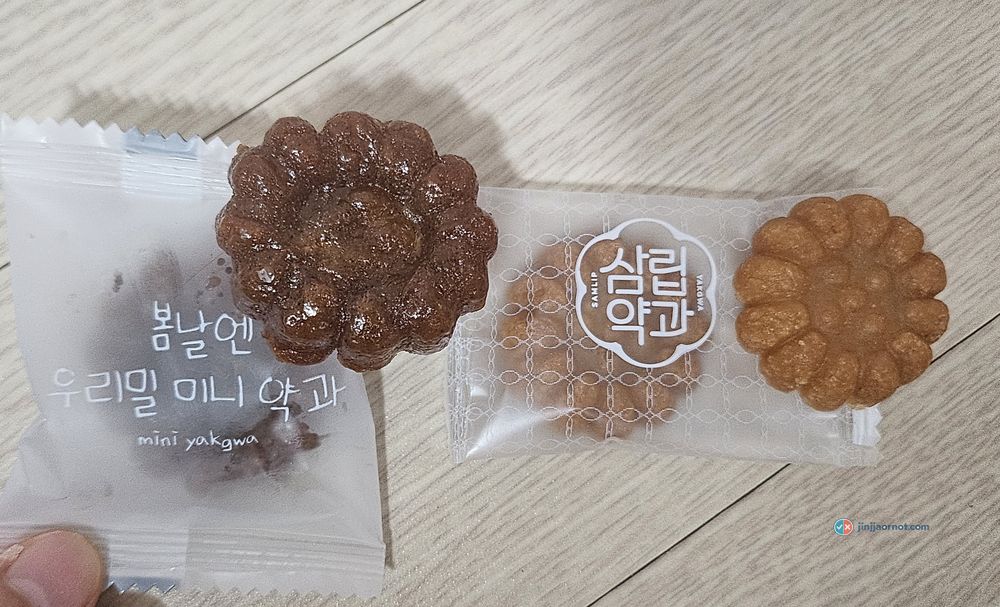
I ate all three and wrote down what I thought before I did the maths on the labels. The two lined up better than I expected.
| Brand | What I tasted | What the label says |
|---|---|---|
| Samlip | Light, not oily, plain in a good way | Lowest sugar (21 g) and lowest fat (15 g) of the three |
| Bomnalen | Sweeter, heavier, more weight in the mouth | Highest fat (18 g), higher sugar (23 g) |
| Jangin paji | Crisp and chewy at the same time. Best of the three. | Only one containing glutinous rice |
I'm not going to claim the glutinous rice is definitely why Jangin's texture is different — I can't prove that from a bag. But it's the one ingredient the other two don't have, and it's the one texture the other two don't have.
One note on Bomnalen: this small version is good, and the larger version I've bought before was chewier and better. If you ever get the choice, take the big one.
Why only Samlip reaches you
I assumed this was about distribution muscle — Samlip is Korea's biggest bakery group, so of course it's the one that gets exported. That's part of it. But the labels say something more specific.
Storage decides who gets exported
Samlip: sealed, ambient, good for about seventeen months. Jangin: wrapped in film rather than sealed, two months from production. Bomnalen: sold chilled, with freezing advised on the packet. Only one of those three can cross an ocean and sit in a warehouse.
Bomnalen has run pop-up stalls at Korean supermarkets in California and Virginia around the autumn holiday. That's a three-day event, not a shelf you can order from, and I'm not going to pretend otherwise.
So the version that reaches your door isn't the best yakgwa in Korea. It's the one that was built to survive the trip — and that's also why it arrives in decent condition instead of stale.
My verdicts
| Brand | Verdict | Why |
|---|---|---|
| Jangin paji yakgwa | Bought again | Best of the three. Crisp and chewy together. Two-month shelf life, selected shops only. |
| Bomnalen | Will buy again | Sweeter and heavier. The bigger version is better. Chilled, so hard to get abroad. |
| Samlip | Bought again | Not because it's the best. Because it's the one that's there. |
Bought again Samlip mini honey yakgwa
I keep buying this one, and I want to be precise about why: not because I rate it above the other two, but because when I want yakgwa today, this is what the supermarket has. That's a real reason to buy something and I'd rather say it plainly than dress it up. It's light, it's not greasy, it has the lowest sugar of the three, and it's the only one with honey in it.
Check yakgwa on Amazon →A word on that search: most of what comes back is export-only sellers you won't have heard of, not Korean supermarket brands. If you want the bag Koreans actually pick up, look for Samlip on the package. And whichever you get, warm it for about ten seconds before eating — several of the listings say the same thing, and they're right.
The two I'm not linking
I'm not putting a button on Jangin or Bomnalen, because I couldn't find a way for you to actually buy them and a dead link is worse than no link. If that changes I'll come back and update this page.
That's the honest shape of this category: the best yakgwa in Korea mostly stays in Korea, because good yakgwa doesn't keep. What you can buy is the version engineered to last, and it's a genuinely decent one.
Yakgwa FAQ
What is yakgwa?
A Korean fried wheat pastry soaked in syrup and moulded into a flower shape. The texture sits between a doughnut and a dense chewy biscuit. It's one of the oldest Korean sweets — historically a wedding and holiday food — but it's now sold in supermarket bags as an everyday snack.
Does yakgwa actually contain honey?
Often not. Of the three Korean packages on this page, all three list syrup second and only one lists honey at all — Samlip, in sixth place. The other two contain none. A widely sold US export listing I checked had four ingredients: flour, corn syrup, soybean oil, palm oil. "Honey cookie" describes the flavour, not the recipe.
What is paji yakgwa?
Broken yakgwa. Pieces that tore during production and were sold off cheap as seconds. Korean buyers decided the broken ones tasted better — a torn piece lets syrup soak into the middle — and demand grew to the point where the maker started selling the defect deliberately.
Which brand can I buy outside Korea?
In practice, Samlip. It's the only one of the three packed for ambient storage with a shelf life over a year. The artisan one lasts two months and comes wrapped rather than sealed; the social-media brand ships chilled. Availability here is decided by storage conditions, not by quality.
How should I eat it?
Warm it. About ten seconds in a microwave loosens the syrup and softens the middle, and it's a noticeably different snack afterwards. Koreans eat it with tea or coffee. It's rich, so one or two pieces is the serving.
Is it very sweet?
Yes, but it varies more than you'd think. Across these three the printed figures ran from 21 g to 26 g of sugar per 100 g. The plain supermarket bag was the lightest of the three in both sugar and fat — which surprised me.